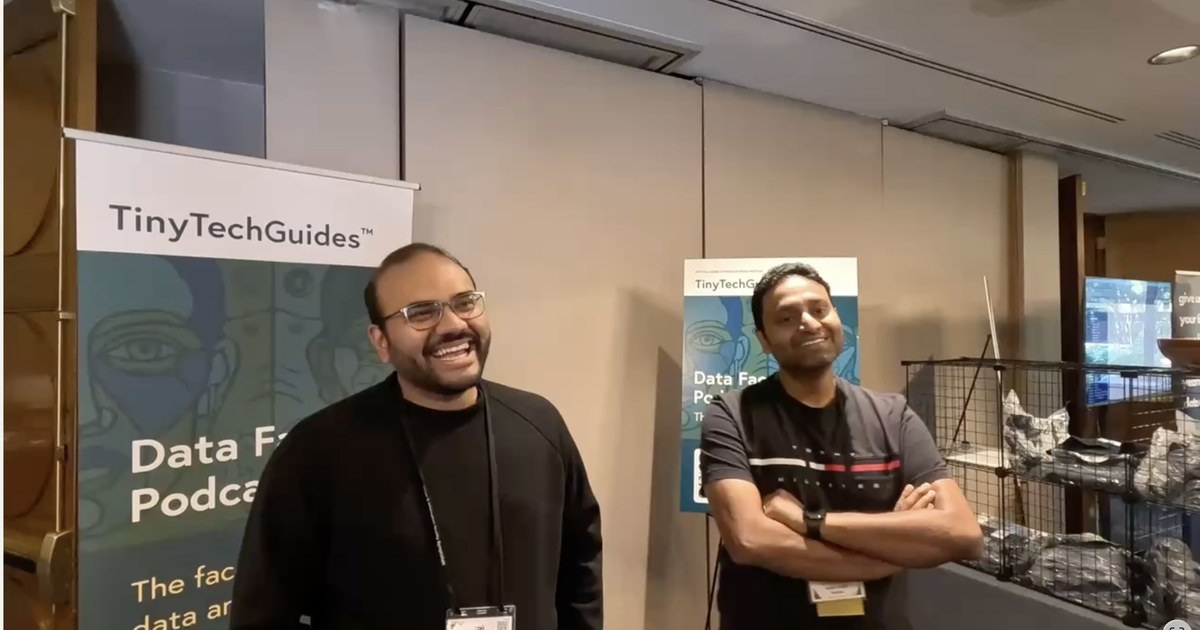
Why data quality and trust are the AI foundation, from CDOIQ 2026
This is one of three themes I pulled from 24 conversations at the 20th annual CDOIQ Symposium, where TinyTechGuides was the official media partner. For the full roster and the other two themes, agentic AI and the chief data officer role at 20 years, start with the main field notes from CDOIQ 2026.
Agentic AI drew the crowds and the CDO role got personal, but data quality was the theme nobody could avoid. How can you trust what AI tells you when you cannot trust the data underneath it? Over and over, leaders told me the AI conversation keeps dragging everyone back to fundamentals they hoped were solved 20 years ago, and they are not.
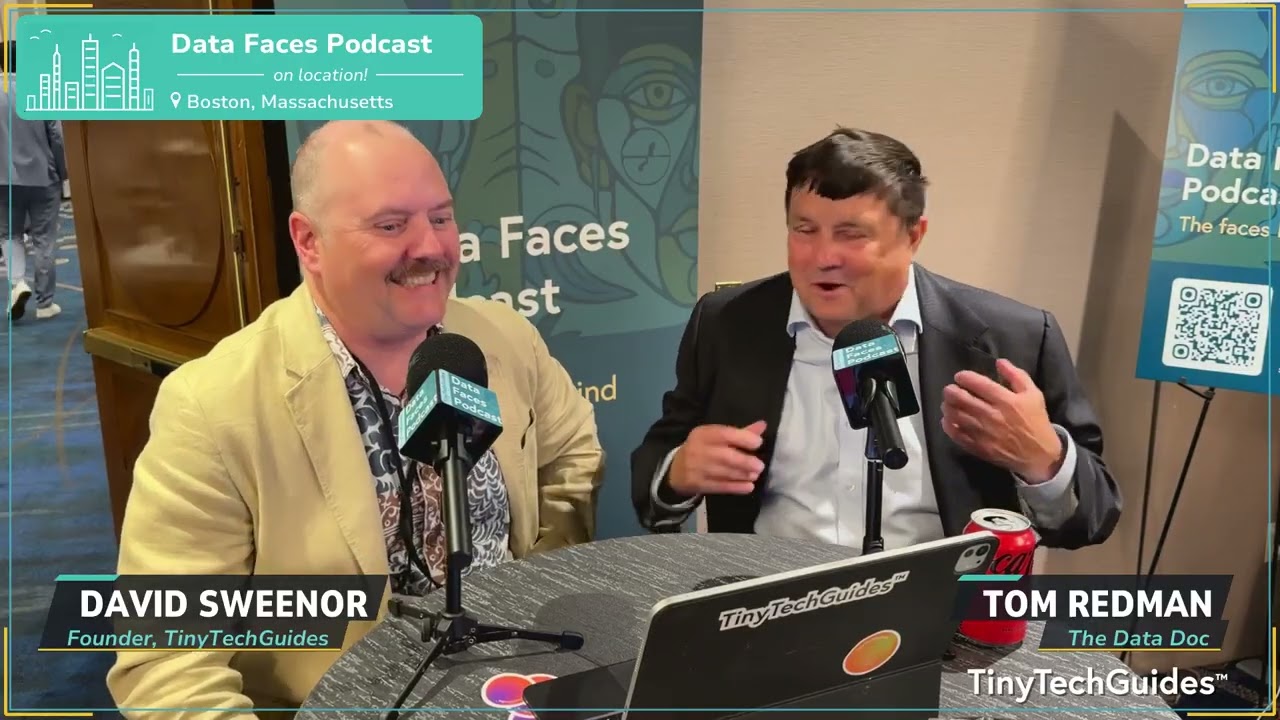
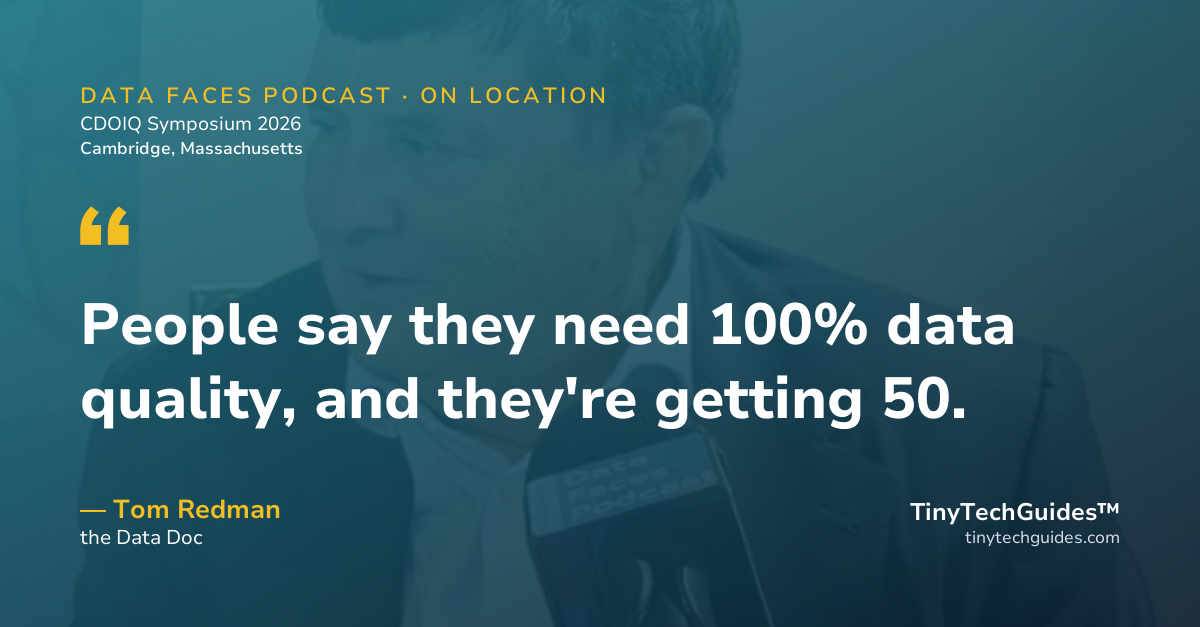
Tom Redman, the Data Doc and president of Data Quality Solutions, revisited the study that made his name, the one where only 3 percent of companies tested met basic data quality standards. His unpublished follow-up work suggests things have gotten no better since. Tom’s real point is about people, since the regular folks without data in their titles do most of the data work and hold the key to fixing it, and misaligned incentives manufacture bad data on purpose, like the badge scans that measure marketers on volume while salespeople drown in unqualified leads. If the data quality pitch worked, why are we still having this conversation 30 years later?
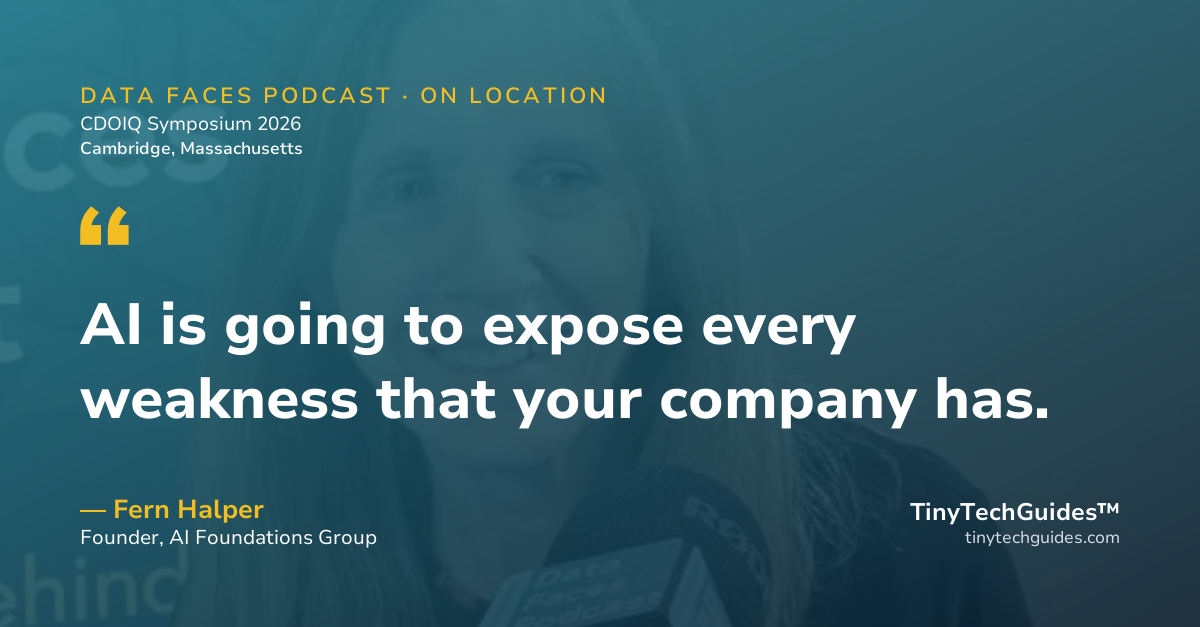
Fern Halper, founder of the AI Foundations Group and VP of research at TDWI, arrived with a warning for every executive chasing the AI budget. AI will expose every weakness your company has. She separates data governance from AI governance, notes that the median score on TDWI’s data governance maturity model still sits at 58 out of 100, and points out that trust in unstructured data trails structured data by roughly 20 percentage points, right when generative and agentic AI make unstructured data essential. Companies hit a value ceiling, she told me, the moment they run generative AI without their own data underneath it.
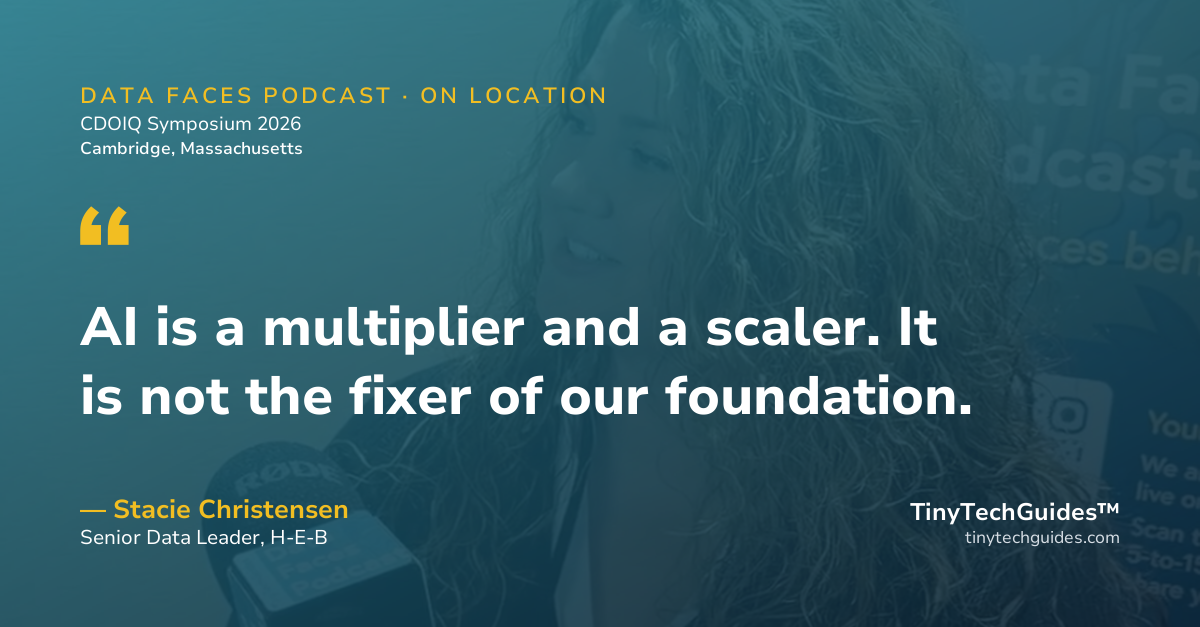
Stacie Christensen, a senior data leader at H-E-B with 22 years in the industry, grades our collective data quality somewhere between a D plus and a C minus, and she is the one who framed the whole event’s fear for me. AI is a multiplier and a scaler with nothing positive to scale when the foundation is missing. She makes the case that governance belongs at the moment of data creation, because bad data gets exponentially more expensive the further down the pipeline it travels, and she uses circular data flows as her favorite red flag for hidden complexity.
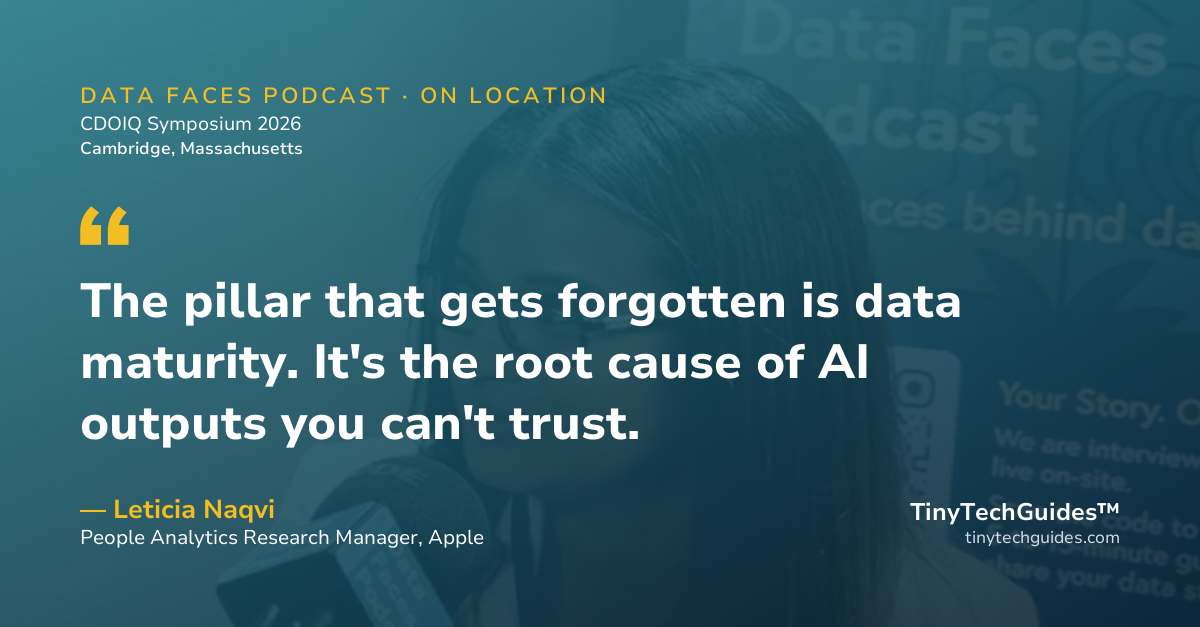
Leticia Naqvi, a people analytics research manager at Apple, brought more than a year of research on organizational AI readiness, built on four pillars of leadership alignment, data maturity, innovation culture, and change management. She warns that the pillar leaders forget is data maturity, and it sits underneath every AI output they will ever trust. Her advice for CDOs wondering where to start is an honest current-state assessment and one function at a time rather than a big-bang rollout, since she watched four external partners each hold a different meaning for a single data definition.
The foundation theme ran through the largest group of conversations, so here is where the rest of them landed.
- Danette McGilvray, Granite Falls Consulting: She compares most data cleanup to a murder scene where someone hauls the body away without investigating, which is why the same crime scenes keep happening. Her Ten Steps methodology starts with the question too many teams skip, whether anyone actually cares about the problem they are excited to fix.
- Jonathan Agee, Validatar: The question that started his company is the one every leader is asking now, how do I know this data is right? He grades the state of data quality a C and argues for treating quality like software QA, with prevention that starts in development rather than firefighting in production.
- Kelley Kassa, BARC US: Her research found data management is the number one priority for corporate performance management teams, ahead of AI, because finance teams know their foundation is not ready. Only 9 percent of finance AI in North America is in production, and her line on accountability sticks, the agent does not go to jail when the number is wrong.
- Gwen Thomas, The Data Governance Institute: When she registered datagovernance.com in 2003, a search on the term returned 52 hits, and 39 of them were IBM. She explains how governance pulls AI projects out of POC purgatory by handling the edge cases, and why organizations govern for the same reason cars have brakes, so they dare to go fast.
- Dan Everett, Insightful Research: After a path into brain science that began with his son’s autism diagnosis, he makes the case that AI adoption is really change management. Recent studies, he notes, show claimed productivity gains shrink once domain experts have to validate the output on the back end.
- Intuit Credit Karma (Veenit Shah and Puneet Singh): Their team keeps credit scores current for about 140 million members across more than 100 tables and 40,000 columns, monitored on five data quality pillars. An AI remediation agent now compresses root cause investigations that once took 30 to 40 minutes into just a few, with guardrails and security review gating every step up the maturity curve.
Where this leaves you
Every one of these leaders came at data quality from a different angle, and they landed in the same place. AI scales a weak foundation rather than fixing it, and it does so with confidence that makes the errors harder to catch. The teams pulling ahead governed data at the moment of creation and measured quality where the work happens, and they refused to trust an output they could not trace back to something real.
This is one theme of three. Head back to the full CDOIQ 2026 field notes for the complete roster, or read the other two themes on agentic AI and the context problem and the chief data officer role at 20 years. All 24 interviews are on the Data Faces Podcast on-location hub.
Frequently asked questions
Why is data quality such a big theme for AI?
AI systems act on the data they are given, so poor data quality produces poor and often confidently wrong outputs. Tom Redman’s research found only 3 percent of companies met basic data quality standards, and BARC found 70 percent of companies say less than half of their unstructured data is usable for AI. As Stacie Christensen of H-E-B put it, AI is a multiplier with nothing positive to scale when the foundation is missing, so weak data becomes more expensive and more visible once AI acts on it.
Where should a company start with data quality for AI?
Leaders at CDOIQ 2026 recommended governing data at the moment of creation rather than downstream, because bad data gets exponentially more expensive the further it travels. Danette McGilvray advised starting with whether anyone actually cares about the problem, and Leticia Naqvi of Apple recommended an honest current-state assessment and starting with one function rather than a big-bang rollout. Every leader landed on the same first step, fixing the foundation before scaling AI on top of it.
What is the difference between data governance and AI governance?
Fern Halper of TDWI drew the line clearly. Data governance covers the quality, ownership, and control of the data itself, while AI governance adds oversight of the models, agents, and automated decisions built on that data. Confusing the two leads to mistakes, because governing the AI without governing the underlying data leaves the foundation untrusted. Both matter more as generative and agentic AI make unstructured data essential.
About David Sweenor
David Sweenor is the founder and host of the Data Faces podcast, where he talks with the people who are making data, analytics, AI, and marketing work in the real world. He is also the founder of TinyTechGuides and a recognized top 25 analytics thought leader and international speaker who specializes in practical business applications of artificial intelligence and advanced analytics.
With over 25 years of hands-on experience implementing AI and analytics solutions, David has supported organizations including Alation, Alteryx, TIBCO, SAS, IBM, Dell, and Quest. His work spans marketing leadership, analytics implementation, and specialized expertise in AI, machine learning, data science, IoT, and business intelligence. David holds several patents and consistently delivers insights that bridge technical capabilities with business value.
Books
- Artificial Intelligence: An Executive Guide to Make AI Work for Your Business
- Generative AI Business Applications: An Executive Guide with Real-Life Examples and Case Studies
- The Generative AI Practitioner’s Guide: How to Apply LLM Patterns for Enterprise Applications
- The CIO’s Guide to Adopting Generative AI: Five Keys to Success
- Modern B2B Marketing: A Practitioner’s Guide to Marketing Excellence
- The PMM’s Prompt Playbook: Mastering Generative AI for B2B Marketing Success
Follow David on Twitter @DavidSweenor and connect with him on LinkedIn.
Related Posts
Build data products for the hundredth use case
Your AI stack will be wrong in 12 months