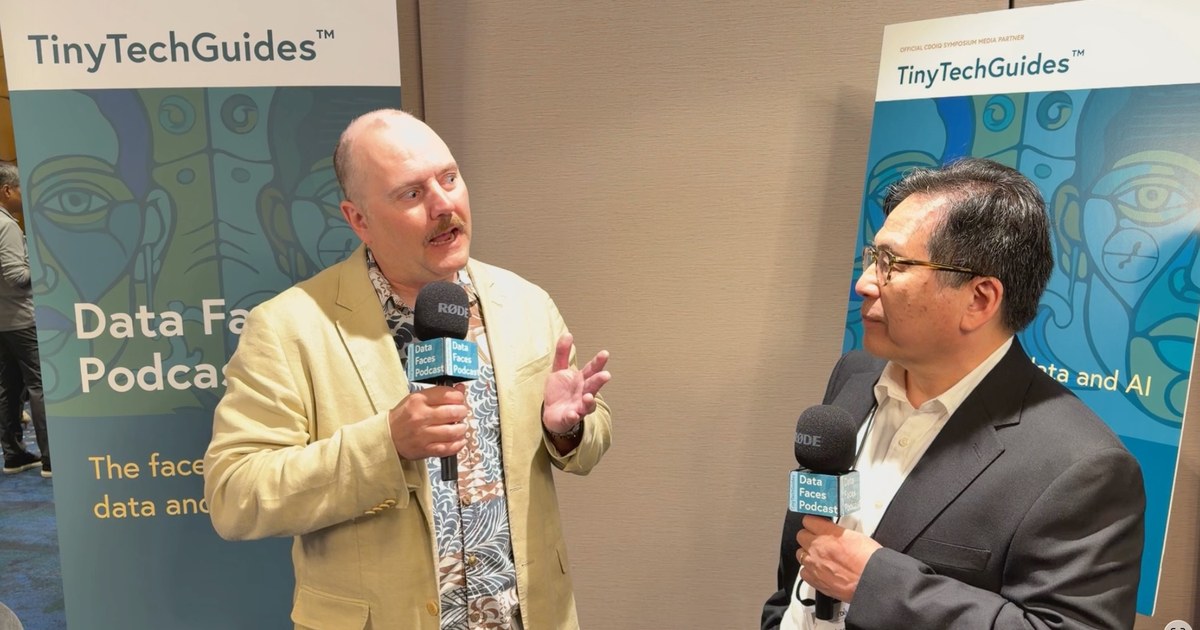
What the people who invented the CDO role think of it now, from CDOIQ 2026
This is one of three themes I pulled from 24 conversations at the 20th annual CDOIQ Symposium, where TinyTechGuides was the official media partner. For the full roster and the other two themes, agentic AI and data quality as the AI foundation, start with the main field notes from CDOIQ 2026.
CDOIQ is where the chief data officer role was born, so the 20th anniversary put the job itself on the table. If the job description changes every single year, how do you know when you have the right person in the seat? The people who invented the role and the people living it now agreed on one thing, that it is being rewritten in real time, with the pressure coming straight from AI.

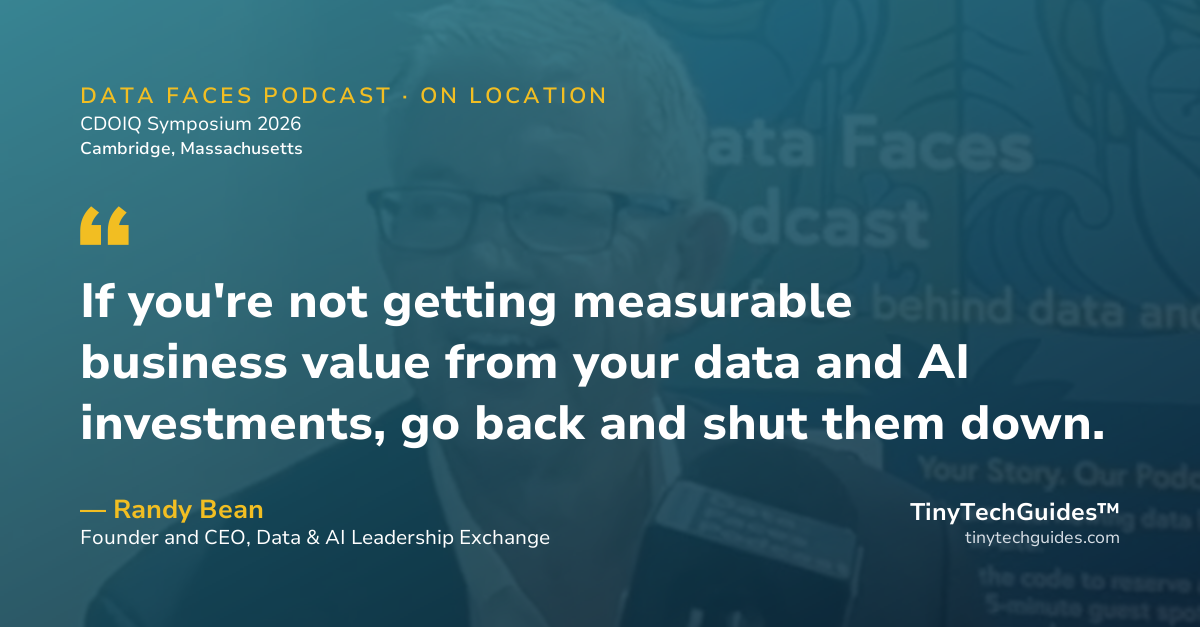
Randy Bean, founder and CEO of the Data & AI Leadership Exchange, has organized the CDOIQ chief data officer panel for 12 years, and his test for data leaders is blunt. If you are not getting measurable business value from your data and AI investments, or a clear path to it, go back to the office this afternoon and shut them down. He has watched the role move from defensive risk and compliance work to an offensive, business-focused mandate, and he told me every chief data officer from last year’s panel will be out of that seat by the end of this year. His read on the hype is the line worth taping to your monitor, AI is overestimated in the short term and underestimated in the long term.
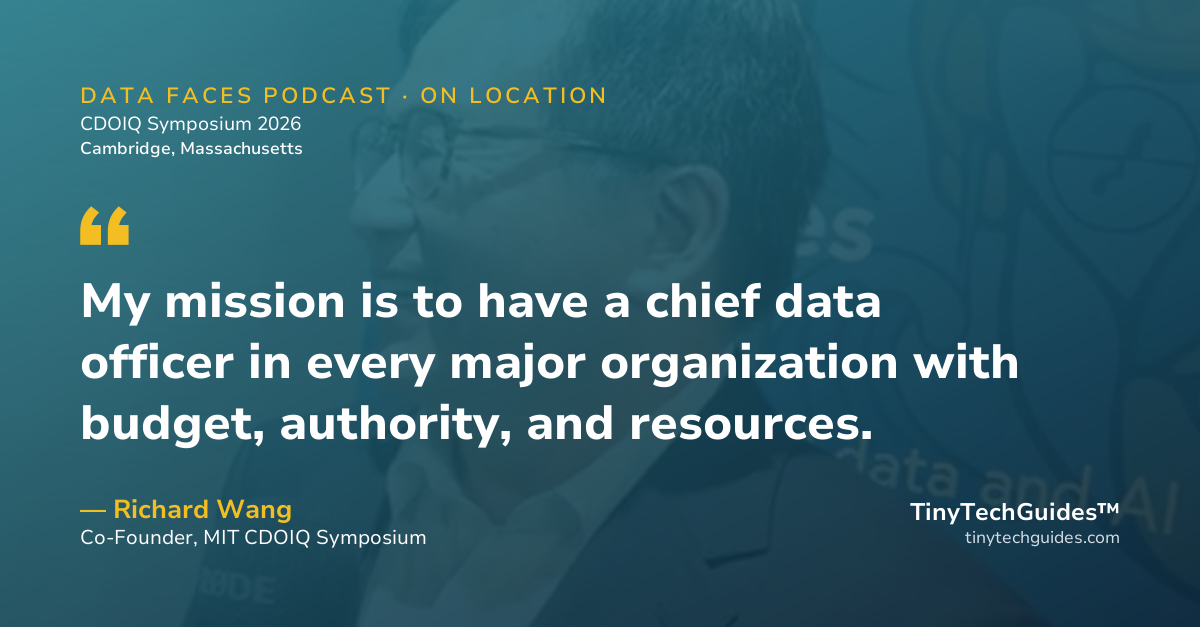
Richard Wang, co-founder of the MIT CDOIQ Symposium, gave one of the conversations I will remember longest, fresh off a standing ovation and a Lifetime Achievement Award. He traced the arc from a two-year assignment at the Pentagon that convinced him every major organization needs a chief data officer with budget and authority, to a world with more than 2,000 CDOs today. He also coined a term every data leader will recognize the second they hear it, data archaeology, the cycle where organizations lose the people who hold the knowledge and end up digging up and repeating the same work.
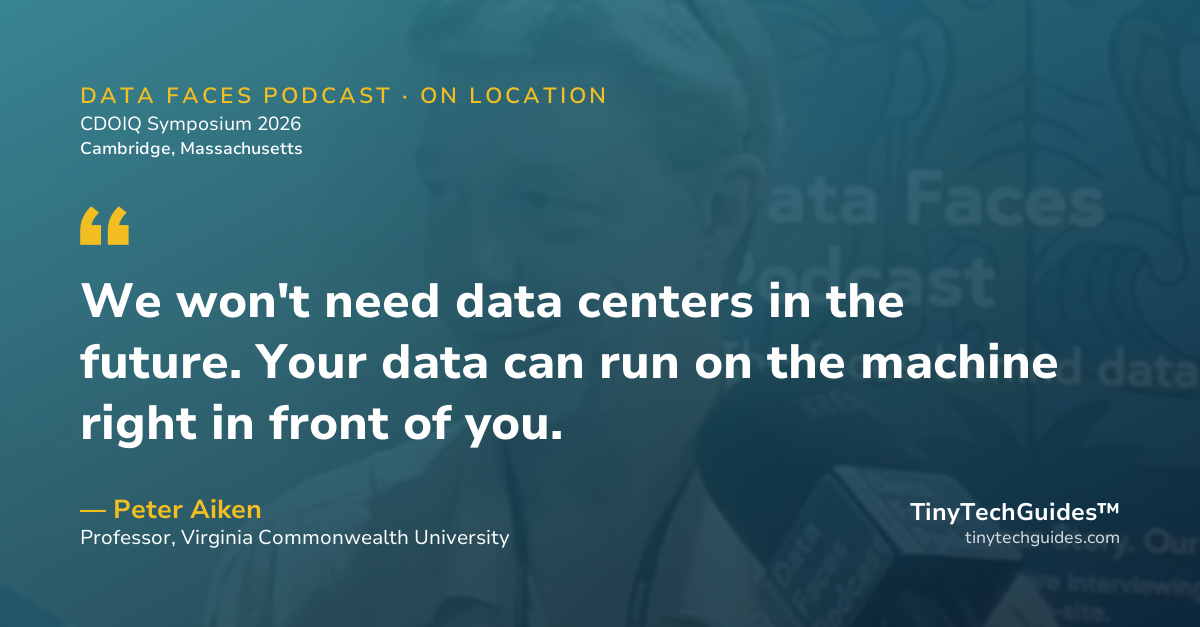
Peter Aiken, a professor at Virginia Commonwealth University, wrote the first book on the chief data officer role 20 years ago, and he still argues data needs one throat to choke. He is blunt about the odds, the average CDO lasts about a year and a half, and the best ones have been fired three times, because doing the job right means telling people things they do not want to hear. His button carries the rest of the message, grow tomatoes, not data centers, and his Anything Awesome premise is the warning underneath all the AI hype, since bad data plus anything awesome still produces bad results.
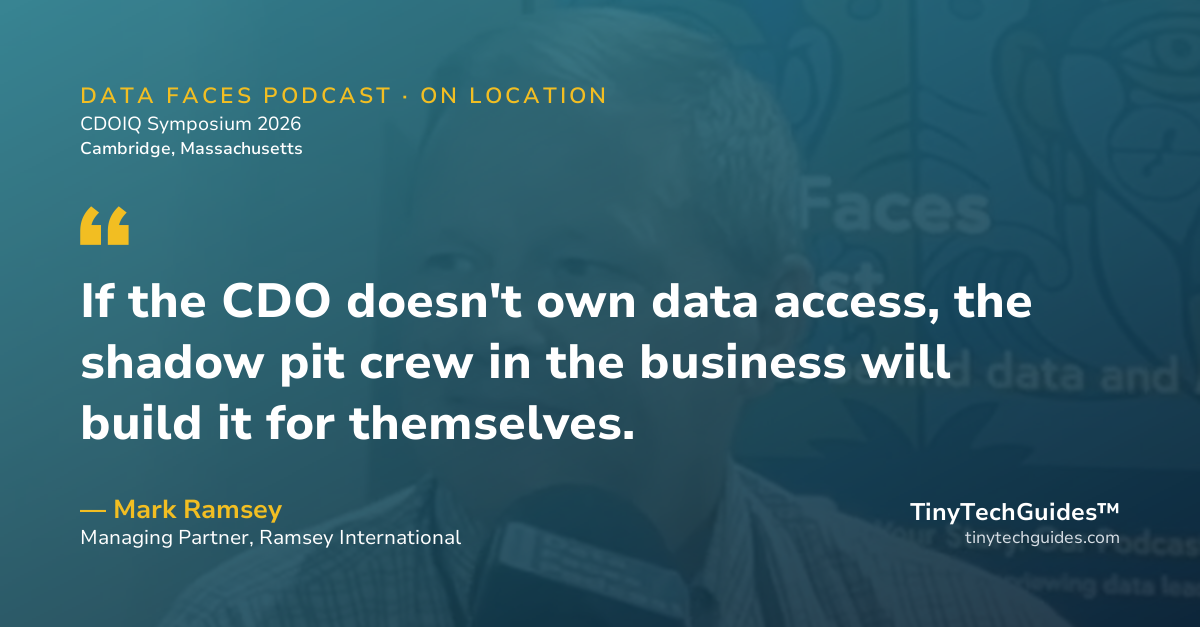
Mark Ramsey, managing partner at Ramsey International, took up professional motorsports in his 50s and turned it into Data at Speed, a book that maps the five crashes every chief data officer will hit. The first one he named stuck with the room, the shadow pit crew, what forms when the CDO does not drive access to data and the business quietly builds its own workaround. He also put a number on the stakes, half of CDOs do not survive three years, and he argued that blocking generative AI only pushes employees toward free tools that expose company data.
The rest of the CDO conversations circled the same question from different chairs.
- Stuart Madnick, MIT: A Lifetime Achievement honoree who helped launch the data quality work that became CDOIQ, he traced 40 years from the Total Quality Management movement to the insight that data is a manufactured product. His warning for the AI era is direct, by every measure he has seen, attackers are using AI more aggressively and more efficiently than defenders.
- John Ladley, author and advisor: When he asked ChatGPT for a data model and got the rudiments back in 38 seconds, he called it career altering and postponed retirement to fold AI into a third edition of his governance book. His take on the profession is humbling, a field that is only 40 years old still has not figured out its 1.0.
- Leigh Felton, AI for Job Security Foundation: She spent 20 years at Microsoft and built its first ethical AI enablement program, and she argues you cannot de-bias a system built to recognize historical patterns. She makes the case for governing AI like an environment that shapes how people think, closer to OSHA than to a tool you pick up and put down.
Where this leaves you
Twenty years ago, the chief data officer job meant defense, risk, and cleaning up messes. These leaders described a job that is now about proving business value fast enough to keep the seat, with AI raising the bar every quarter. A CDO keeps that chair by holding a real mandate, the authority to drive data access and kill what does not deliver, and that matters more than whether the role reports to technology or the business.
This is one theme of three. Head back to the full CDOIQ 2026 field notes for the complete roster, or read the other two themes on agentic AI and the context problem and data quality as the AI foundation. All 24 interviews are on the Data Faces Podcast on-location hub.
Frequently asked questions
How has the chief data officer role changed in 20 years?
Leaders at CDOIQ 2026 described the CDO role moving from defensive risk and compliance work toward an offensive, business-value mandate. Randy Bean of the Data & AI Leadership Exchange traced that arc directly and noted survey data showing 42 percent of CDOs report under technology and 33 percent under business leadership. AI is accelerating the change by forcing data leaders to prove measurable value or shut initiatives down.
Why do chief data officers have such short tenures?
Multiple leaders cited high turnover, with Mark Ramsey noting that roughly half of CDOs do not survive three years and Randy Bean predicting every member of last year’s CDO panel would leave that role within a year. Most of them traced it to a mandate problem. When the CDO does not own data access and cannot show business value, the role becomes a target, and AI has raised the stakes on proving that value quickly.
Where should the chief data officer report?
Opinions varied, but the leaders agreed the mandate outweighs the reporting line. Peter Aiken argued data belongs in the business rather than in IT, because every business problem has a data component, and that power and influence matter more than the org chart. Survey figures shared at the event put 42 percent of CDOs under technology and 33 percent under business leadership, with the rest split elsewhere.
About David Sweenor
David Sweenor is the founder and host of the Data Faces podcast, where he talks with the people who are making data, analytics, AI, and marketing work in the real world. He is also the founder of TinyTechGuides and a recognized top 25 analytics thought leader and international speaker who specializes in practical business applications of artificial intelligence and advanced analytics.
With over 25 years of hands-on experience implementing AI and analytics solutions, David has supported organizations including Alation, Alteryx, TIBCO, SAS, IBM, Dell, and Quest. His work spans marketing leadership, analytics implementation, and specialized expertise in AI, machine learning, data science, IoT, and business intelligence. David holds several patents and consistently delivers insights that bridge technical capabilities with business value.
Books
- Artificial Intelligence: An Executive Guide to Make AI Work for Your Business
- Generative AI Business Applications: An Executive Guide with Real-Life Examples and Case Studies
- The Generative AI Practitioner’s Guide: How to Apply LLM Patterns for Enterprise Applications
- The CIO’s Guide to Adopting Generative AI: Five Keys to Success
- Modern B2B Marketing: A Practitioner’s Guide to Marketing Excellence
- The PMM’s Prompt Playbook: Mastering Generative AI for B2B Marketing Success
Follow David on Twitter @DavidSweenor and connect with him on LinkedIn.
Related Posts
Build data products for the hundredth use case
Your AI stack will be wrong in 12 months