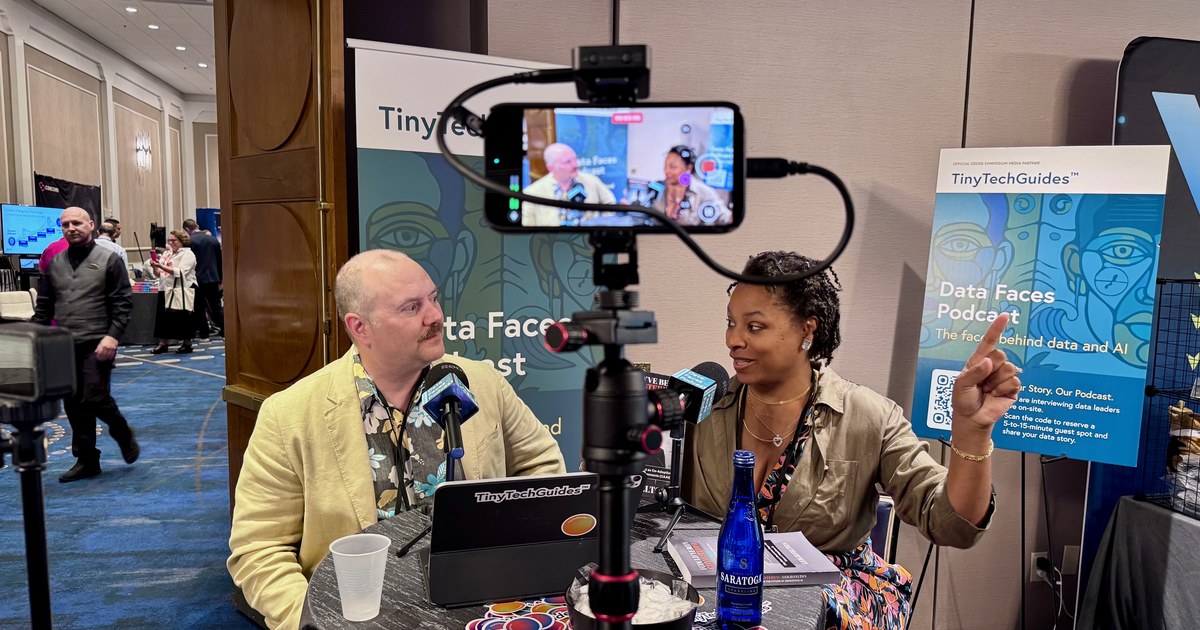
The context problem behind the agent hype, from CDOIQ 2026
This is one of three themes I pulled from 24 conversations at the 20th annual CDOIQ Symposium, where TinyTechGuides was the official media partner. For the full roster and the other two themes, the CDO role at 20 years and data quality as the AI foundation, start with the main field notes from CDOIQ 2026.
Agentic AI was the pervasive topic on the floor this year. Everyone wants agents, and almost nobody has the data plumbing to feed their voracious appetites. So what exactly are all these agents supposed to run on? That question, the context problem, showed up in nearly every conversation about where AI is headed.
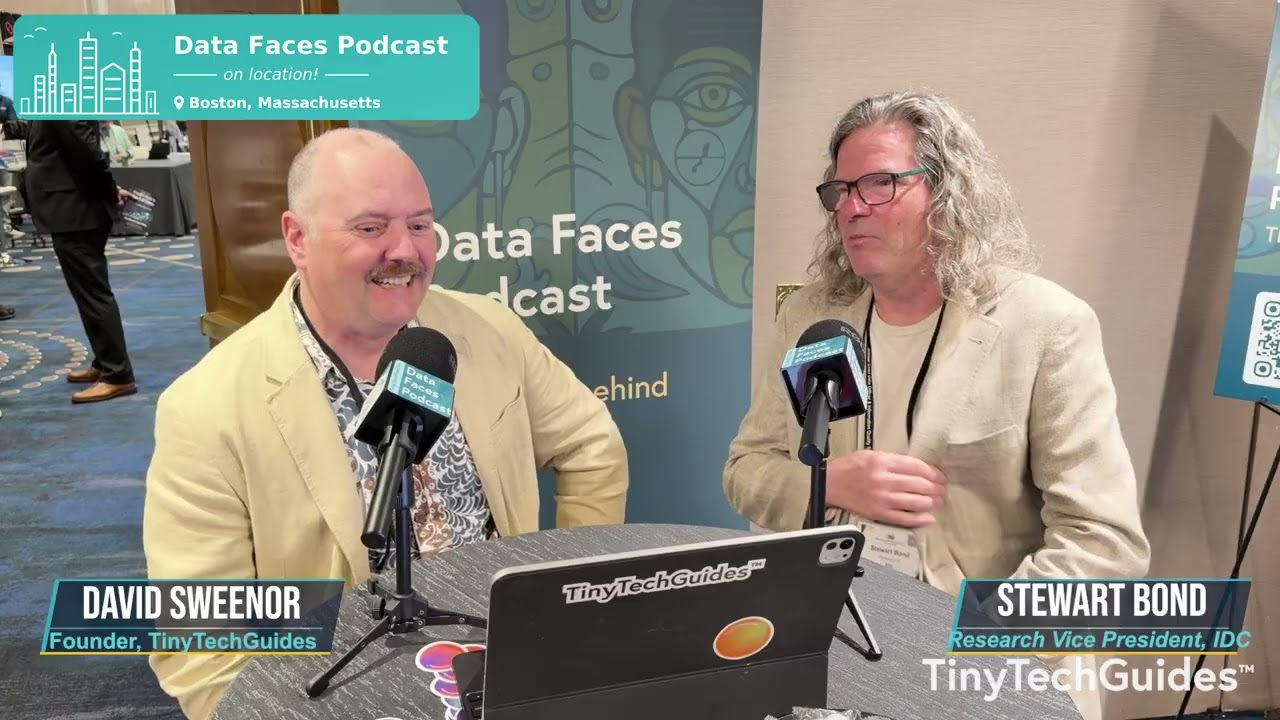
Stewart Bond, VP of Data Intelligence Software at IDC, came off his session with a question that pokes at a decade of investment. Is the data lake already obsolete? He argues that agentic AI favors federated architectures over centralized ones, because agents need data in real time where it lives, and latency is the enemy of agentic AI. He walked me through IDC’s model lake convergence idea, the forecast that the model itself becomes the analytical layer by 2029, which pushes data quality, security, and governance closer to the source and turns policy into code that runs on every access rather than a committee that approves it later.
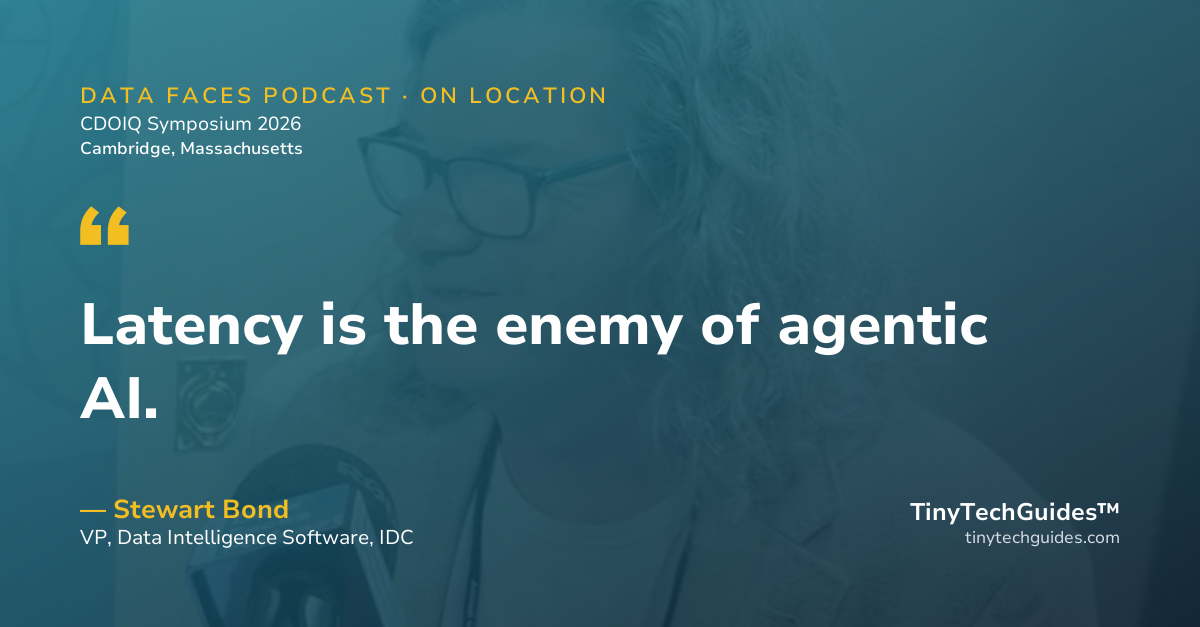
Kevin Petrie, VP of Research at BARC US, returned to the show with a number that should stop any agent project cold. In BARC’s survey, 70 percent of companies said less than half of their unstructured data is currently discoverable and usable for AI. He compares enterprise unstructured data to his kids’ Lego bin, real value buried in a free-for-all, and he makes the case that five to fifteen well-governed agents beat 70,000 ungoverned ones. He also gave the fear a name that landed with the whole room, vibe slop, the mess you get when teams deploy agents on shaky foundations, and he expects agent cleanup and consolidation to become next year’s project.
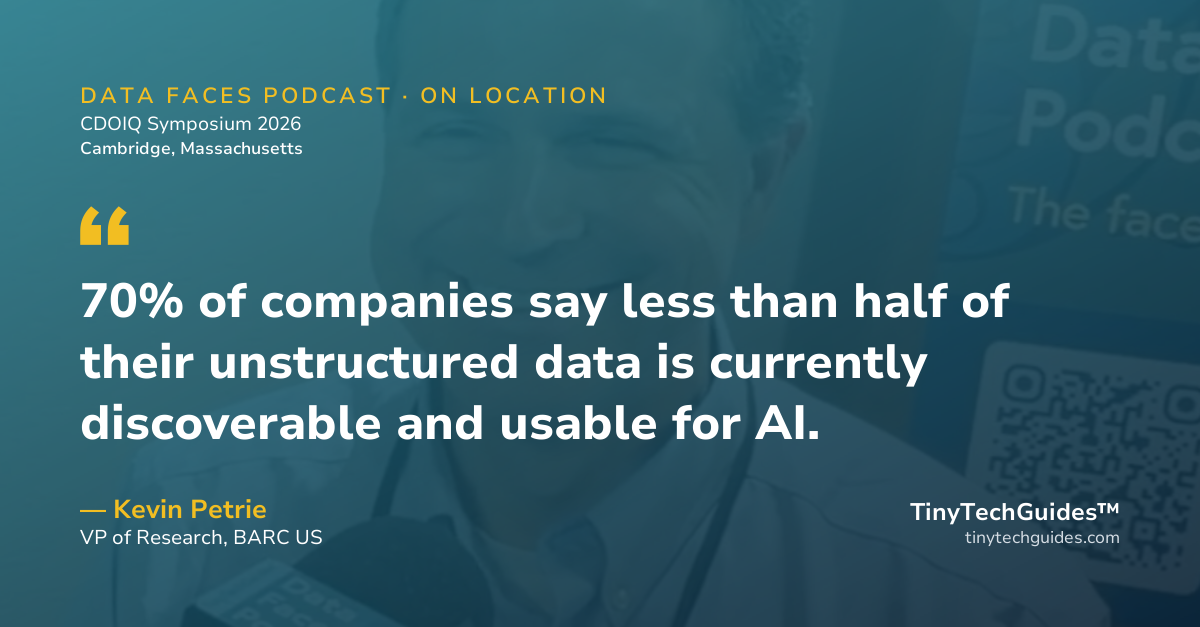
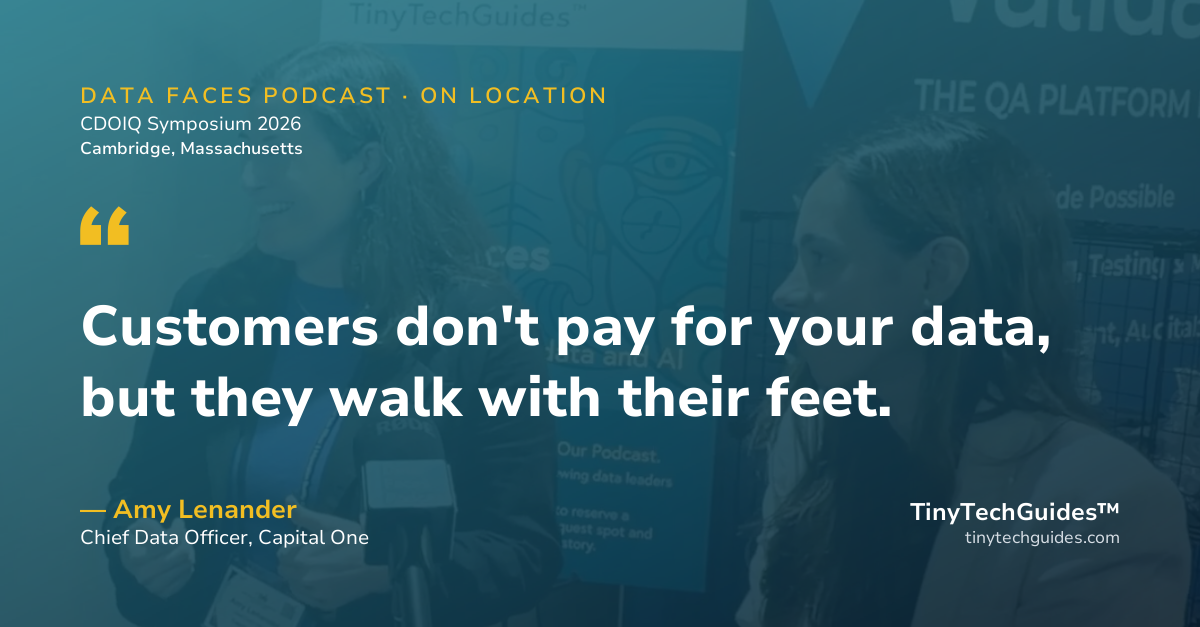
Amy Lenander and Christina Egea of Capital One showed what solving the context problem actually looks like at scale. Amy is Capital One’s Chief Data Officer and Christina is SVP of Enterprise Data, and their answer is to treat data like a product. A usage analysis revealed that nine categories of data covered most of the company’s needs, and every data product gets a single accountable owner. Those products now launch use cases three times faster and cut the cost of maintaining standardized data by 30 percent. Christina was refreshingly honest about the hardest part, which is getting started, and the constant tension between building fast for one use case and building something that scales to a hundred.
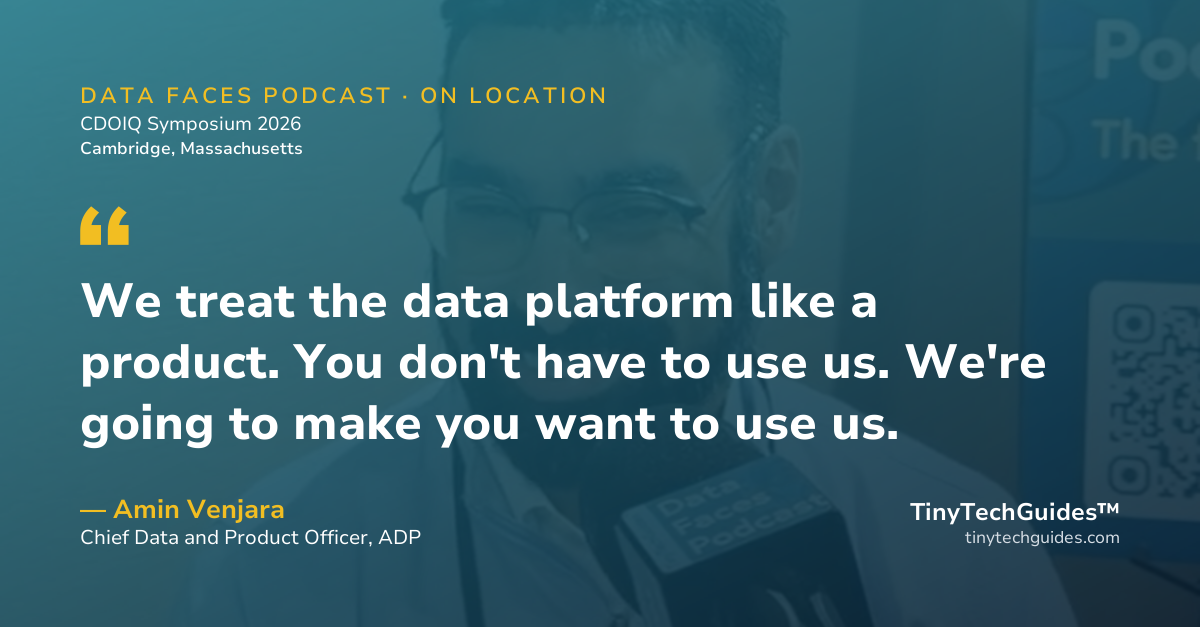
Amin Venjara, chief data and product officer at ADP, gave the framework that made the context problem concrete. Value equals data plus capabilities, and his team runs ADP’s internal data platform like a product that builders across the company choose to use rather than a service they are forced to accept. He described the annual Data and AI Day that drew 2,100 people and the hackathon that feeds it, and a data product that hands chat and agent experiences full customer context, so no team rebuilds the same stitching work twice.
Three more conversations rounded out the picture on agents and context.
- Douglas Laney, Infonomics: The founder of infonomics predicts we will see the first billion dollar business run by a handful of people and a swarm of AI agents. He also warned that traditional data quality dimensions do not translate to unstructured data and AI slop, and that token costs are already making some organizations rethink swapping cheap labor for expensive inference.
- Terry Dorsey, Denodo: She draws a deliberate line between delivering data and delivering information, and argues AI succeeds when you treat it as one capability among many rather than one big encapsulated project. Data quality, in her words, sits in the eye of the consumer.
- Steven Moskowitz, Industry Forward: He works with manufacturers who own the AI, own the technology, and still get no value, because manufacturing runs on wide data, a richer mix of timestamps, images, CAD drawings, and equipment signals than most industries manage. His cognitive KPIs, like mean time to root cause, measure how AI changes thinking rather than how often people click it.
Where this leaves you
The teams making agents work had all done the same unglamorous work first. They moved data quality, governance, and context to where the agents actually reach for data before chasing the newest model. Everything an agent does downstream depends on that groundwork, and no amount of orchestration makes up for a foundation the agent cannot trust.
This is one theme of three. Head back to the full CDOIQ 2026 field notes for the complete roster, or read the other two themes on the chief data officer role at 20 years and data quality as the AI foundation. All 24 interviews are on the Data Faces Podcast on-location hub.
Frequently asked questions
What is the context problem in agentic AI?
The context problem is the mismatch between what AI agents need and what most data environments provide. Agents act in real time and need governed, discoverable data where it lives, but leaders at CDOIQ 2026 described most enterprise data as centralized, slow, and largely unstructured. BARC found that 70 percent of companies say less than half of their unstructured data is usable for AI, which means agents often have nothing trustworthy to act on.
Why do agents favor federated data architectures over data lakes?
According to IDC’s Stewart Bond, agents cannot wait for batch processes to move data into a central lake, because latency is the enemy of agentic AI. Federated architectures let agents reach data in real time where it already lives, which pushes data quality, security, and governance closer to the source. Bond expects the model itself to become the analytical layer, what IDC calls model lake convergence, by around 2029.
How should enterprises prepare their data for AI agents?
Leaders at CDOIQ 2026 recommended treating data like a product with clear ownership, moving governance to the point of data creation, and favoring a small number of well-governed agents over thousands of ungoverned ones. Capital One and ADP both described running internal data platforms as products, which gave chat and agent experiences the full context they need. Agents need trustworthy, real-time data they can act on without amplifying errors.
About David Sweenor
David Sweenor is the founder and host of the Data Faces podcast, where he talks with the people who are making data, analytics, AI, and marketing work in the real world. He is also the founder of TinyTechGuides and a recognized top 25 analytics thought leader and international speaker who specializes in practical business applications of artificial intelligence and advanced analytics.
With over 25 years of hands-on experience implementing AI and analytics solutions, David has supported organizations including Alation, Alteryx, TIBCO, SAS, IBM, Dell, and Quest. His work spans marketing leadership, analytics implementation, and specialized expertise in AI, machine learning, data science, IoT, and business intelligence. David holds several patents and consistently delivers insights that bridge technical capabilities with business value.
Books
- Artificial Intelligence: An Executive Guide to Make AI Work for Your Business
- Generative AI Business Applications: An Executive Guide with Real-Life Examples and Case Studies
- The Generative AI Practitioner’s Guide: How to Apply LLM Patterns for Enterprise Applications
- The CIO’s Guide to Adopting Generative AI: Five Keys to Success
- Modern B2B Marketing: A Practitioner’s Guide to Marketing Excellence
- The PMM’s Prompt Playbook: Mastering Generative AI for B2B Marketing Success
Follow David on Twitter @DavidSweenor and connect with him on LinkedIn.
Related Posts
Build data products for the hundredth use case
Your AI stack will be wrong in 12 months