

Data Faces Podcast — On Location · CDOIQ Symposium 2026
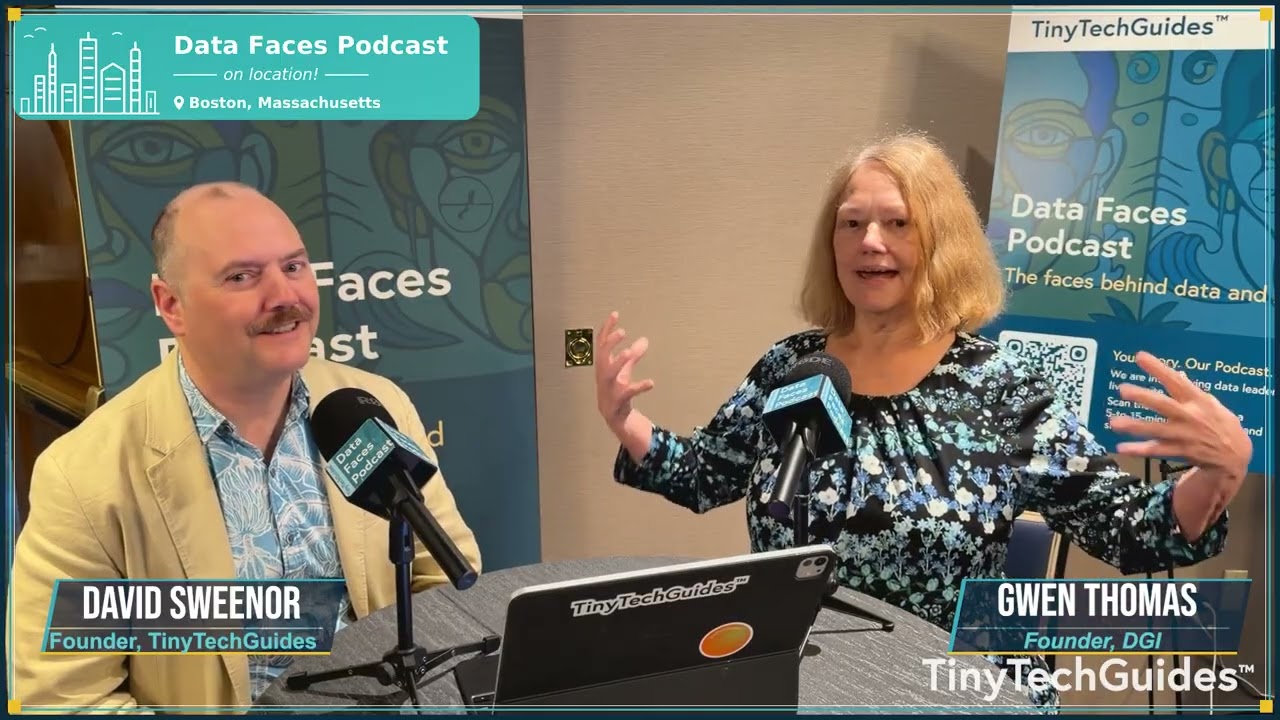
Gwen Thomas, founder of The Data Governance Institute, on governance from the mainframe era to AI, escaping POC purgatory, and why organizations govern so they dare to go fast.
Listen: YouTube · Spotify · Apple Podcasts · Amazon Music
About Gwen Thomas
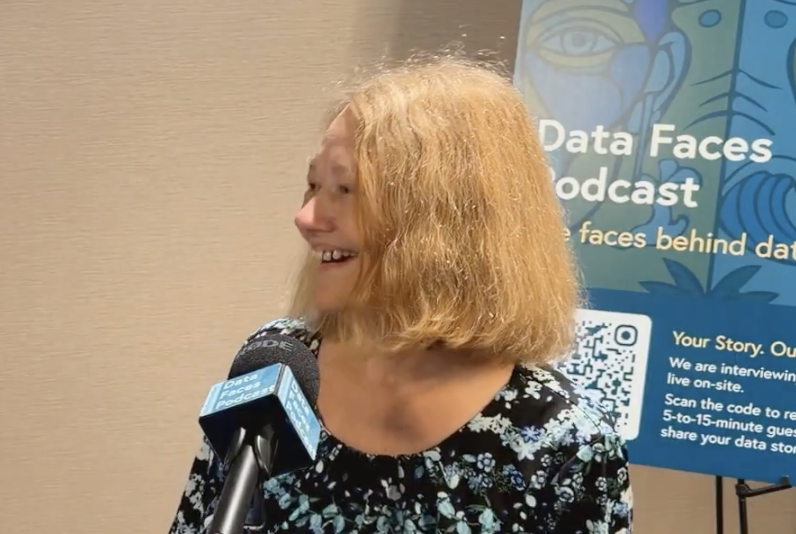
Gwen Thomas is the founder of The Data Governance Institute, which she launched when she set up datagovernance.com in 2003. A pioneer of the discipline, she has spent two decades helping organizations frame governance as an enabler rather than a compliance burden.
In this interview
- How data governance evolved from built-in mainframe discipline to a compliance-era reputation it has since outgrown
- Why value messaging now has to reach every employee, and what happens to teams that skip it
- Why anyone can build a POC that handles the common scenario, and why edge cases are where governance proves its value
- How to talk about governance as an enabler of giant data-related risks
→ Browse all on-location interviews: Data Faces Podcast — On Location
Full transcript
David Sweenor 0:04 Hello, and welcome to the Data Faces podcast. On location, we’re coming to you live from the CDOIQ event in Cambridge, Massachusetts. Seated next to me is Gwen Thomas, founder of the Data Governance Institute. Welcome to the podcast. Thank you so much. So Gwen, can you tell us a little bit about yourself and the work you do?
Gwen Thomas 0:23 Sure. I founded the Data Governance Institute in 2003. When we set up datagovernance.com and the guidance on that, a global search on the term data governance gave a total of 52 hits and 39 of them were IBM. So there you go. We’ve been doing consulting and guidance and evolving with the industry ever since then.
David Sweenor 0:53 Well, that’s amazing. And so, you know, the name of the show is Data Faces. So I always like to get behind the people in their professional career. So what did you want to be when you were a little one, when you grew up?
Gwen Thomas 1:06 I wanted to be a composer. I wasn’t sure whether I wanted to be John Philip Sousa and do marches or John Williams and do the next Superman theme. But I actually studied music composition in college until I realized what the life would be that way and went off to make a living instead. And then a few years later, I discovered that data flowed through big systems the way a melody flows through a symphony. And there were functions where you’re putting out the big chords and others where you’re building the hallelujah chorus. And I said, well, I can get lost in this field forever. And I have. And you did. Yes, I have.
David Sweenor 2:01 Okay. Okay. So you mentioned this, the founder of Data Government Institute. It’s been out there quite a while. How have things changed or evolved over time, and what’s stayed the same?
Gwen Thomas 2:16 And that’s a great, great question to ask. So our site has pretty much focused on the evergreen concepts that don’t change over time. But how it got started is… Well, I remember mainframes. Sure. And during my in-between time, I did work with companies that used mainframes. And, you know, those things were so frigging expensive. You could not afford to have any mistakes in them. So careful planning and governance was built in every step of the way. It didn’t even… need the phrase data governance. It just was. Then we went to the wild, wild west of new systems. Everybody could code. Everybody could throw standards out. And it was time to bring it back. So when we first started publishing on the topic, it was bringing out the foundations and reminding everyone that it could be used for oh so many situations. And then the financial crash came along.
David Sweenor 3:32 Right.
Gwen Thomas 3:32 Sarbanes-Oxley and 2008. And then it kind of got the reputation of being compliance driven.
David Sweenor 3:41 Okay.
Gwen Thomas 3:42 even though that’s just a slice of the pie. So that’s changed now.
David Sweenor 3:45 I mean, I think a lot of people still think of it as sort of a compliance-driven thing. You know, we know the regulated industries are probably further ahead.
Gwen Thomas 3:51 Yeah, yeah, yeah, because they got the budgets. I mean, most of us who were consulting at that time were being paid by the big banks.
David Sweenor 4:00 Part of the whole thing here with AI data governance, a lot of guests have said, People are maybe one of the bigger impediments to achieving this and the alignment of value. And so I’m curious if you’ve seen this in your work.
Gwen Thomas 4:21 Absolutely. Let’s remember that most organizations are hierarchical. And you have different roles, different mandates at every level. So the what’s in it for me changes depending upon your level. Maybe what’s in it for the whole organization, what’s in it for my department, what’s in it for my program, what’s in it for my project.
David Sweenor 4:48 And…
Gwen Thomas 4:51 At some places, extra steps like governance can be seen as an impediment instead of a value add. So you certainly have to work on that opinion. The other challenge that we have, you know, the bum, bum, bum, bum.
David Sweenor 5:08 Right.
Gwen Thomas 5:09 AI is a big bang. It is a big blast. We know what it’s doing. But data exists everywhere.
David Sweenor 5:17 Right.
Gwen Thomas 5:18 It is connected through processes, it’s connected and managed through many other processes. It’s more of a shotgun, not a ballistic. So we have to teach our teams to do a much better job of showing the value of their particular piece of it and showing that it is part of the aggregated pile-on effect of doing this right.
David Sweenor 5:48 Sometimes that’s hard to do. It’s extremely hard. When I was at a very large company, I grew up at IBM, if I wasn’t there to do my thing.
Gwen Thomas 5:57 I sat across the table with your teams many times.
David Sweenor 6:00 Yeah, and trying to be like, well, how does my thing fit into the mothership and what they’re doing? It was very difficult sometimes.
Gwen Thomas 6:07 And so data leadership has changed because for several years, data leaders focus was on, can I carve myself out of IT? Then it was, can I demonstrate that we are managing ourselves well. And then can I bring us into the era of data science and can I bring us here? But the high level messaging was left to the higher ups. Now we are finding in the very distributed, vast environments that we work on, we have to push that value messaging down to every, every employee, or we kind of risk them being automated out of their jobs.
David Sweenor 6:57 Right, right, right. That makes a lot of sense to me. So back to data governance, and there’s this interrelationship with AI governance. In your work, are they sort of separate teams? Is it one team doing both? Or how are organizations… I guess aligning themselves to tackle both. Maybe they’re not, I don’t know.
Gwen Thomas 7:20 I see so many models out there. Sometimes there is an overarching governance team and these are streams within them. Sometimes a A data leader becomes a data and AI leader. Sometimes they are very separate. Someone else said, you know, there’s a time and a place for separate because AI can plunge ahead with POCs that way. But of course, another theme at this conference is trying to get AI projects out of POC purgatory.
David Sweenor 7:57 Right.
Gwen Thomas 7:59 governance enables that because let’s let’s look at what governance does anybody can put together a proof of concept that hits the tiny slice of the most common scenario sure and they can hard code all the rules and context works right on my laptop that’s about it But life is all about edge cases. It’s about the outer parts of the bell curve, and that’s where governance really shows its value. It enables value on one side of the bell curve, and it prevents disaster on the other end of the bell curve.
David Sweenor 8:39 Sometimes it’s a tough sell because I don’t think anybody wakes up in the morning and says, I want to be governed today. So, like, where do you start with this? You know, with companies that are maybe reluctant or resistant to it.
Gwen Thomas 8:52 But when you drive on the interstate, aren’t you really glad that there’s signage and that you can know if the road is not going to fall out from under you and maybe curbs where they belong? Oh, for sure. So that type of government sometimes fades into the background so much we don’t even think that it’s government. But it’s what enables it. Someone else was saying… Why do cars have brakes? So we dare to go fast. Right.
David Sweenor 9:24 Right. Okay.
Gwen Thomas 9:26 So why do we govern? So we dare to take giant data-related risks. Okay. All right.
David Sweenor 9:33 Well, Gwen, where can people find out more about you and your work if they have questions and want to follow up?
Gwen Thomas 9:40 We’ll start at datagovernance.com. And, of course, I’m on LinkedIn. If you’re a data person, then of all the Gwen Thomases that are out there, chances are the algorithm will bring me up to the top.
David Sweenor 9:55 All right. Well, Gwen Thomas, founder of the Data Governance Institute, thank you for joining the Data Governance Institute.
Gwen Thomas 9:59 Oh, that was fun. Thank you.