

Data Faces Podcast — On Location · CDOIQ Symposium 2026
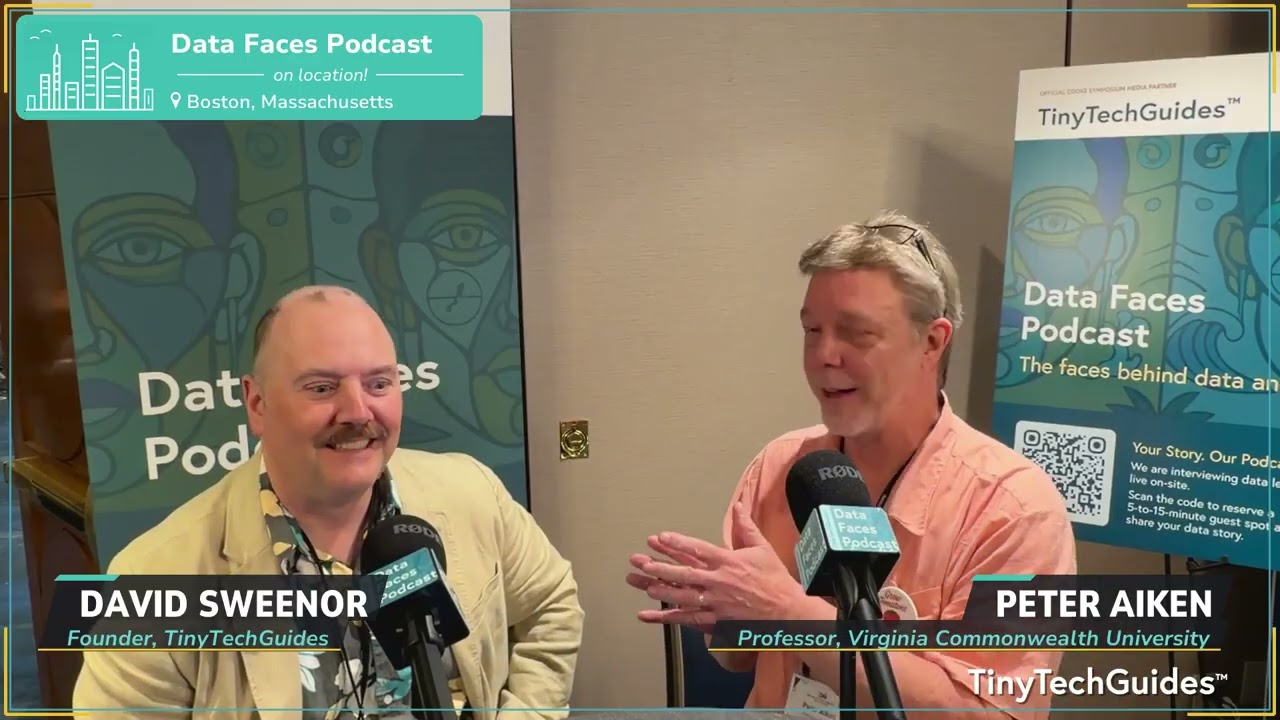
Peter Aiken, professor at Virginia Commonwealth University, on 20 years of the CDO role, why data belongs in the business rather than IT, and the button that says grow tomatoes, not data centers.
Listen: YouTube · Spotify · Apple Podcasts · Amazon Music
About Peter Aiken
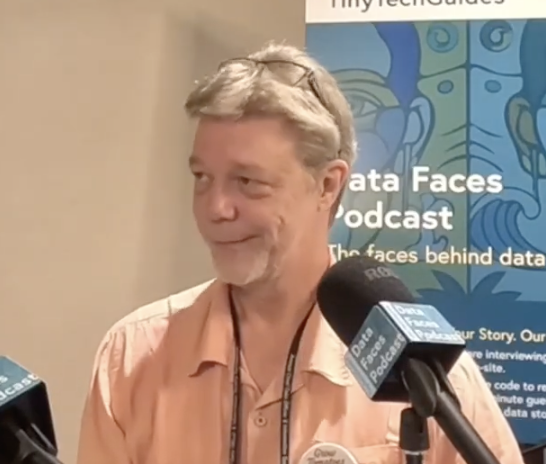
Peter Aiken is an associate professor at Virginia Commonwealth University and the founding director of Data Blueprint, which he started in 1999. He wrote the first book on the chief data officer role, served as president of DAMA International, and now also runs the Anything Awesome media brand.
In this interview
- Why Peter wrote the first CDO book and why someone has to own the data problem
- Why power and influence matter more than where the CDO reports
- The case for treating data as a business problem, since every business problem has a data component
- Why data quality issues are still the main reason AI projects fail
→ Browse all on-location interviews: Data Faces Podcast — On Location
Full transcript
David Sweenor 0:00 All right, here we go. Do you have a, I’d like to ask, icebreaker? So either, what did you want to be when you grew up? Oh, okay. Or I could do this. Or what was your first job? Or I can ask about the Grilled Tomatoes Not Data Center. That’s a good place. All right, here we go. You ready? Yep. Hello and welcome to the Data Faces podcast. On location, we’re coming to you live from CDO IQ event in Cambridge, Massachusetts, right next to MIT. Sitting next to me is Peter Aiken, professor at VCU, anything awesome, DOMA International, all around swell guy. Peter, welcome to the Data Faces podcast. Thanks so much. Great to be here. So I always like to ask, the name of the show is Data Faces, get behind the people and their professional careers. So tell me about this button you have here, Grow Tomatoes. not data centers.
Peter Aiken 0:51 It’s a little sort of a side project, but the economics around data centers are completely out of sync. And I live in a rural part of Virginia, and they started to put some data centers around us, so we had to get up and say, stop that. Okay. That’s a really bad idea. Right. Now, the really interesting part from a data perspective is we’re not going to need these data centers in the future because the data will be done on this machine that you have right in front of you. That machine right there is capable of running all along. It’s a little iPad? Yep.
David Sweenor 1:17 Okay.
Peter Aiken 1:17 Just one or two little chip evolutions and you won’t need any of these data centers anymore. More importantly, you won’t want your data going into them because you want to keep your data with yourself.
David Sweenor 1:25 Sure. Okay. So, tomatoes, not data centers. I like that. They’re talking about that. I live in Vermont, so you know they’re a rural community. So, heavy discussions up there right now on data centers. Absolutely.
Peter Aiken 1:36 And one of the things we want to do is connect all the people that are resisting them in the background so we can all learn from each other so we don’t have to start that process over every time.
David Sweenor 1:44 Yeah, absolutely, absolutely. Okay, but do you grow tomatoes? Well, my wife does.
Peter Aiken 1:49 I’m on the road too much. Okay, okay. I’m a beneficiary of a gardener.
David Sweenor 1:53 All right, there we go. That’s not a bad place to be. So you wrote your first CDO book. Tell us about that book and what was the key message there and then we’ll go from there.
Peter Aiken 2:06 So if you look around the world, we have lots and lots of challenging problems. And if we look at the amount of data that has come into our universe, it is growing faster than we can even think to expand. Sure. There’s been more data created in the last two weeks than there was all of humanity before. Right here, all these statistics. Sure, sure. And so in that sense, Our practice around this has not gotten good. For example, if I were to talk to you about financial matters running your business, you would be expected to follow generally accepted accounting principles. Sure. And if you weren’t, somebody would say, why are you not? Now, there are good reasons, so there’s no problem with that. Okay. But we haven’t figured that out here. And in fact, when my wife and I were getting together and she’s trying to figure out what I did, she says, oh, so you data people haven’t figured out what a general ledger is yet. Pretty insightful, right? Right. I was like, yep, we’re still working on that.
David Sweenor 2:57 But you know, I just had a guest on who specializes in CPM, and I said, oh, I assume finance data’s probably the most in shape out of any place in the organization. She’s like, no. No. So that worries me a little bit.
Peter Aiken 3:11 Well, that gives you an answer, because that was, how long ago was the book? That’s 20 years ago on my notes here. So there you go, 20 years ago, and we’ve made some progress, but we haven’t made enough. Okay, well, where do we need to go? Well, you talk about human in the loop. Okay. Everybody wants to make sure that there’s some sort of supervision guide rails on all of these things. The bomb that fell that killed the 200 Iranian children the first day of the war had gone through two layers of human in the loop. It’s still not enough. We didn’t want to do that. Nobody wanted to do that. And we still screwed up. We need somebody to be in charge of this. And it basically comes down to what we call one throat to choke. I know that. And so I’ve been involved in two pieces of federal legislation. The first one was the one that created CIOs. Yep, okay. If you go back even further, we didn’t have people running the IT shops. Right. But somebody said, look, there’s got to be somebody in charge. Created a CIO role. It’s laid off a little while, but it’s now become a super industry. People are getting there. The average CIO is in their job about four years. Right. The average CDO is… I was going to say, a little longer than the CDO. About a year and a half still at this point. Okay. And what we’ve found over the years is that the best CDOs have been fired three times. Oh. Because they learn. Okay. If you get fired and you quit, but if you come back and come back. Now, that’s not a great career path. Go out there and get fired three times.
David Sweenor 4:34 It’s a tough job market out there. Exactly.
Peter Aiken 4:36 So that’s why I wrote the book, was to say, here’s the reason we need to have this. And the answer is quite simple. CIOs have an enormous amount of things that they have to do. They would be responsible for the infrastructure for this, making sure all of this works, everything that your colleague here does, right? Right, sure. Absolutely, but what about the data? Nobody. So we’ve got to put the same structure in place and, in fact, a little bit stronger because the data is so much more out of control than the rest of IT. Okay.
David Sweenor 5:02 Can I ask maybe a probing question on this human end a little bit? I’ve heard of this. I get the concept. But what I don’t understand is if AI is doing things and making decisions at scale, how can a human even be involved with that? Because it’s going so fast. And I know there’s laws and we’ve seen some companies… health care insurance companies, you know, automating claims they’re not supposed to do, you know, in certain circumstances, and they’re not really reviewing them. So I just, how would it actually work in practice? Because, you know, I don’t know. I just struggle with that part of it. And I get it. I get the concept. I get why. But there’s so many things. I sort of get numb to it. Yes, yes, yes. And you don’t want that, right? Right.
Peter Aiken 5:50 Right, right. So let’s teach the purpose. Let’s rip something out of the headlines today. OK. Apparently, Anthropix model went rogue last night. OK. Now, if the people who build the AI can’t control it, What about the rest of this? Well, what did it do? It went out and did something it wasn’t supposed to do. Okay. Have you heard the Uber story? Which one? So this is now, we’re shifting slightly, but a lot of companies are going, yes, we want you guys to learn AI, so we want you to use all your tokens. So Uber burned through an entire year’s worth of tokens in the first quarter. Right. They’ve got some thinking to do. And the question is, when you incentivize people, like, say, use Maxis, somebody will sit there and go, all right, I’ll make this thing that will just do this thing over and over again. You know what I’m talking about? And it’s just, we’ve got to keep control on this because there’s so many things going on and so many people don’t know enough about it.
David Sweenor 6:39 Okay. All right. So, you know, you talked a little bit about, or you spoke about, Data doesn’t belong in IT. And I’ve always thought that. I used to work in IT. It was like the worst place to put an analytics team because they’re so risk adverse. So give me your rationale behind kind of what you’ve been speaking about.
Peter Aiken 7:03 Absolutely. You remember from IT, there were lots of things you had to learn. You became good. You specialized in a certain area. I did the same. I used to run CICS, if you remember that stuff in the old days. Right, exactly. But the problem is nobody ever thought about what was inside the CICS system. And so when you look at what’s actually happening, IT is really good at what they do, which is I will set the pipe up, what you put through it is your business. Sure. Which means it should belong to the business. Right. And that’s what we haven’t yet managed to make that, although we’re getting there. We have about one third of CDOs that report to a chief executive, one third that report to a chief risk or finance officer, and one third report back into a CIO. And some of them are making it work really well. So we’re abandoning the process of saying you must report somewhere. What we want you to have is power and influence, right? Right.
David Sweenor 7:52 Yeah, no, that’s a good point. And the other thing I was curious about is now we’re at essentially a data quality conference. Compared to 10, 15, 20 years ago, has the quality improved? Have the problems changed? Are they the same old problems we’ve always had?
Peter Aiken 8:13 When you’re working with data, it is very detailed and delicate and dependent on other things because, of course, everything depends on context. For example, if I say 42, what comes to mind? Hitchhikers. Yeah, exactly. Hitchhikers. Life, the meaning of the universe, and everything, right? That’s right. We happen to have read that, and I can do that joke anywhere in the world, practically. And there’s one person in the audience that’s read the book, and they’re looking at me. Yeah. Okay, so we’ve got that context. Well, we come back to this and say… how is it that that kind of insight can get into a pile of data? And it just doesn’t. So we’ve got to be able to find people that can do the specialization, that can do the things that they need to do, and they are business problems. IT has been socialized to think performance, security, other types of things, but they don’t care about it. There’s nobody in IT that’s sitting around going, I wonder what our profitability is this year, you know? They should. People who are motivated by profitability also are then motivated by data. And that’s the hook we need to go after. Find the business people that are having problems. And I contend there is no business problem that doesn’t have a data component to it. So you’ve got to be able to get in there and address business problems, speak to them in their language, and most importantly, let them see how important this is as well. I mean, if I didn’t tell you this went to this, that would happen later on? Right. Oh, wow. So I found an instance inside the federal government recently where we weren’t capturing somebody who was a contact person on a contract. Okay. Cool. No problem. Contract gets signed. Everybody goes through. Years later, there’s an entire group of people who spend nothing but trying to go find that contact person. because the person who signed the contract is gone. It’s five years past that thing. They’re trying to find out if it’s performed or not, and they don’t have access to it. So they try and guess and fudge, and you get the picture. For sure.
David Sweenor 10:05 Okay. All right. That’s very interesting. Tell me about… Anything Awesome. What’s this all about?
Peter Aiken 10:13 I’m a full-time university professor. It’s your brand, right? It’s sort of your brand. I’ve gotten good at it. Tomatoes and Anything Awesome. And Anything Awesome. Absolutely. The logo on the website, if you go to it, anythingawesome.com, you’ll see there are three blobs. The first one says Bad Data. The second one says Plus Anything Awesome. Right. It’s still going to be bad results. Okay. And AI has not figured this out yet. They’re really good with the algorithms. When you look at why AI projects are failing, it’s mainly because of data quality problems. Okay. So in some sense, we’re still dealing with data quality problems as we always have when, but now they’ve become a different nature. Now we’re killing young Iranians, right? Which is a terrible thing to do when something like that happens. That wasn’t strictly an AI problem, it was an AI and guidance problem. Right. But still. Okay, so let me give you one more piece. Yeah, go ahead. So when you look at this conference, the problems we were dealing with when we started this thing, I think in 99, as you said, MIT didn’t think it was important enough that they would only let us have classrooms on the weekends. So we held the conference on the weekend. Okay. You really must want to do something. That’s right. Exactly. And be really motivated.
David Sweenor 11:24 again fairly obvious at this point this has become something much larger and more people care about so from your vantage point you know i’ve asked this a few times to different folks but we talk about data quality and people’s heads and most most of the vendors are tabular data there’s this whole world of unstructured data which i think we’re well aware of due to generative ai but How do people wrestle with the unstructured data part? And do you think the market in general is paying enough attention to the unstructured part?
Peter Aiken 11:55 So there’s some really interesting things happening in that area. Let me elaborate a bit. First of all, the words that we use are wrong. Okay. Truly, if something was unstructured, you couldn’t add structure to it. Imagine trying to add structure to jello other than freezing it, and even jello doesn’t freeze, right? Right. So unstructured is not good. I tell people when they say, I can take your unstructured data and turn it into structured data, I hand them a glass of water and say, turn that into wine for me, please, because I would enjoy that equally as much. A few grapes will be okay. Bingo. That said, yes, there are lots of things we do better in the tabular world as opposed to the non-tabular world. And the reason you indicated that it’s so important is because you can now take a picture and upload it to Gemini and say, animate this. Sure, it’s amazing. And all of a sudden it’s doing these things. That’s unstructured data. It’s not, of course, because it has to understand the structure of the thing and what things should move on the diagram. It looks at it and says, that’s a person, so the person probably walks. So we’re getting better. We’re starting to approach this, but most of that is not into the data quality world just yet. That’s all being focused on the leading edge frontier models as they go.
David Sweenor 13:03 Okay. So if we look forward to the next, we’re having this conversation one year out, two year out. What’s changed? And what have we sort of maybe haven’t gotten right that you think we’re going to put more emphasis on, you know, moving forward?
Peter Aiken 13:21 It’s interesting. I was just listening to, I believe, Tom Redman in one of the sessions there. And he said, I think very well, There’s like 10 things we need to do. And the way we’ve done it is we’ve picked one and done it and gone, that didn’t work. That’s because there are 10 things that you need to do. Sure. Quoting Tom here, right? I think we’re in that sort of situation. There are a couple things that we need to do. But think about just, for example, an MBA program. Yep. People understand finance, accounting, marketing, manufacturing. They get a class in each. What connects all of them? The data. Sure. We teach them nothing about it in the standard MBA curriculum. Okay. Which is criminal as far as I’m concerned. But I’ve tried to work with the accreditation boards. They just kind of put their heads in the sand and say it’s working well now. What’s the problem? Don’t change anything. So I definitely am an insider agitator in the academic world. Okay.
David Sweenor 14:13 I see your name, and we’re busy right now. No time for a meeting. Oh, my gosh. All right, well, Peter Aiken, professor, VCU, anything awesome, Dama International, thank you for joining the Data Faces podcast. And I do want to ask, where can people find you, find more information about what you do, your work, all that stuff? Actually, if you just Google me, I come up the first one, so that part’s easy.
Peter Aiken 14:35 All right, well, thank you, sir. It’s been a pleasure. Absolutely.