Josh Howard of Databricks on why context decides the agentic enterprise
Listen now on YouTube | Spotify | Apple Podcasts | Amazon Music
▶ Watch the full episode and read the transcript: Forget AGI. Your AI is dumb without your data.
Twenty-five years, same fight
Over the past 25 years, I’ve seen my share of hype cycles. Sometimes it feels like Groundhog Day, with things on repeat. At IBM, I built predictive analytics solutions and data warehouses. At SAS, Dell, TIBCO, and Alteryx, I marketed advanced analytics to companies that said they wanted to be data-driven, only to watch them revert to their complex spreadsheets the next day. Every five to seven years, a new shiny technology shows up that promises to usurp the previous one, and every time, the work is the same. You clean up your data, you get leadership aligned, and you convince people to change how they make decisions.
The current wave is agentic AI, and the technology behind it is certainly impressive. Frontier models can write better code than most engineers, pass the bar exam without breaking a sweat, and reason through problems that used to require a PhD. Anthropic, OpenAI, and the rest of the foundation model crowd are racing toward something that looks an awful lot like AGI. Meanwhile, on the 101 corridor through San Francisco, every billboard is selling agents, and every shoe company is now an AI company. Allbirds just signed a $50 million convertible facility to pivot into GPU-as-a-Service and rename itself NewBird AI, and the stock popped more than 350 percent on the announcement.
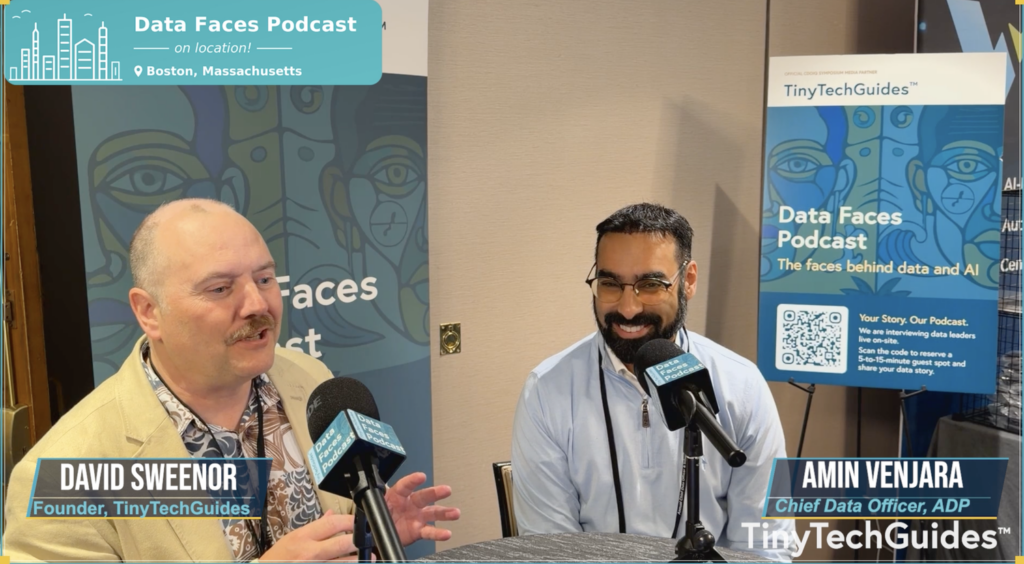
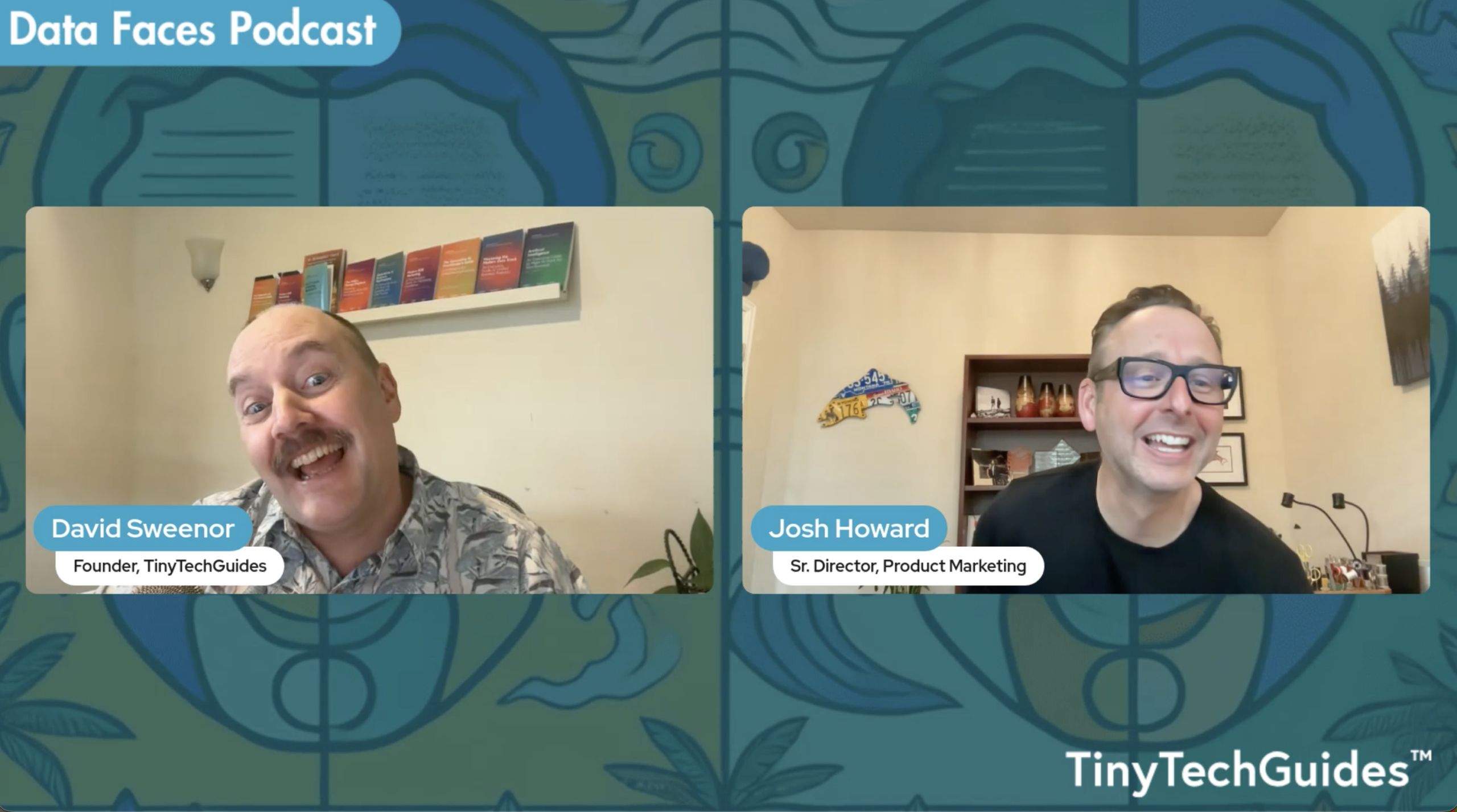
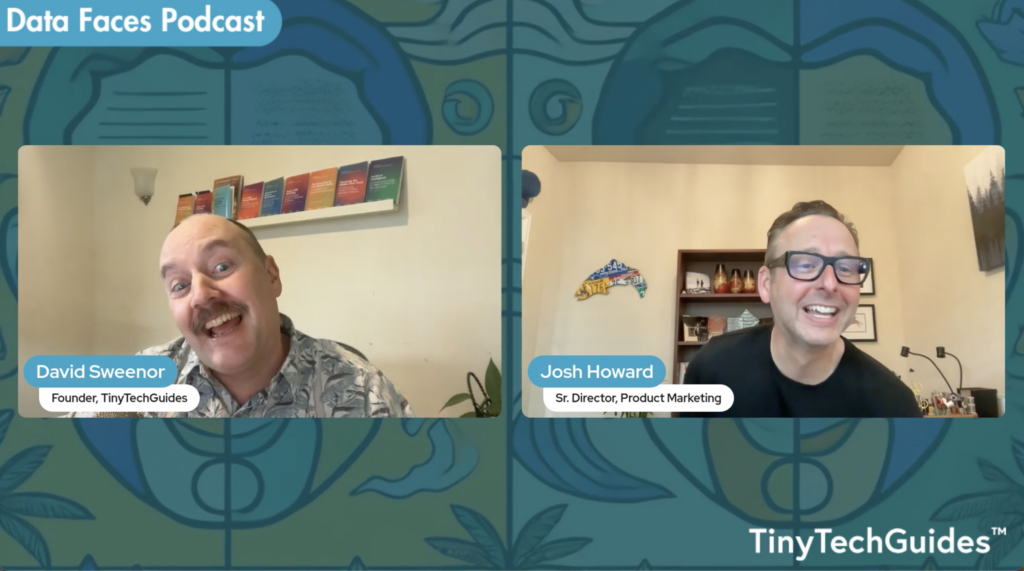
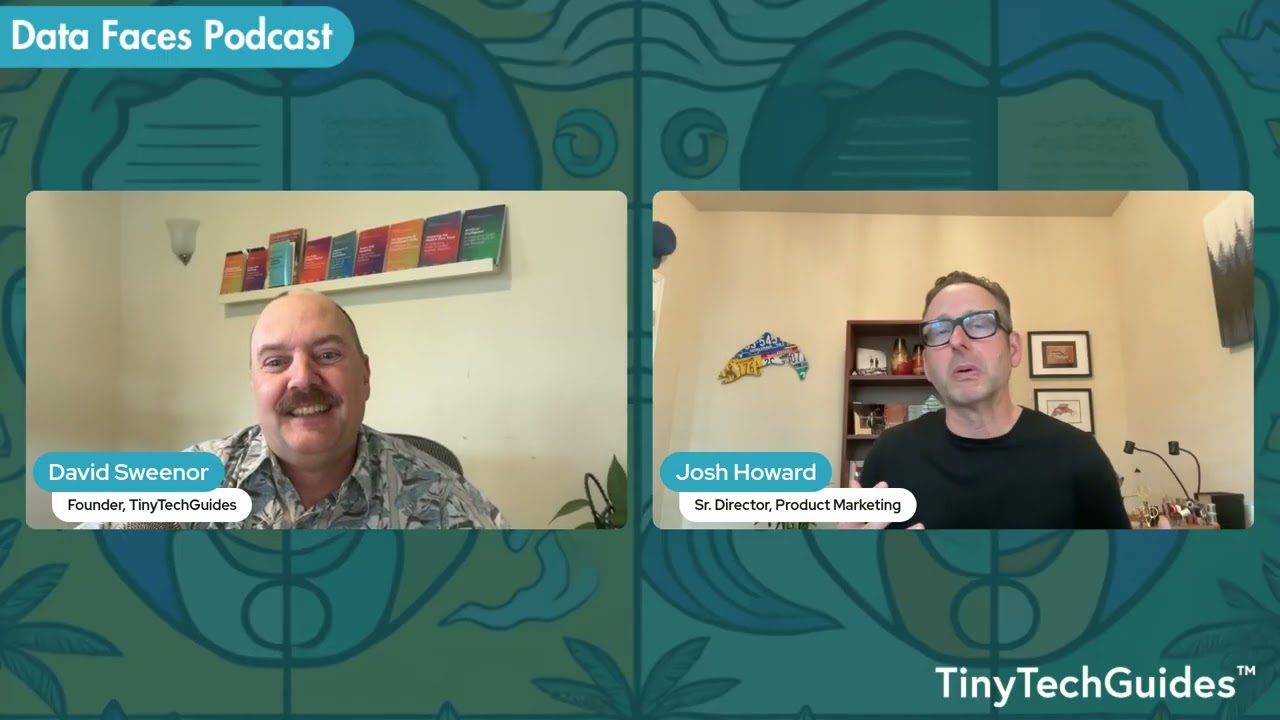
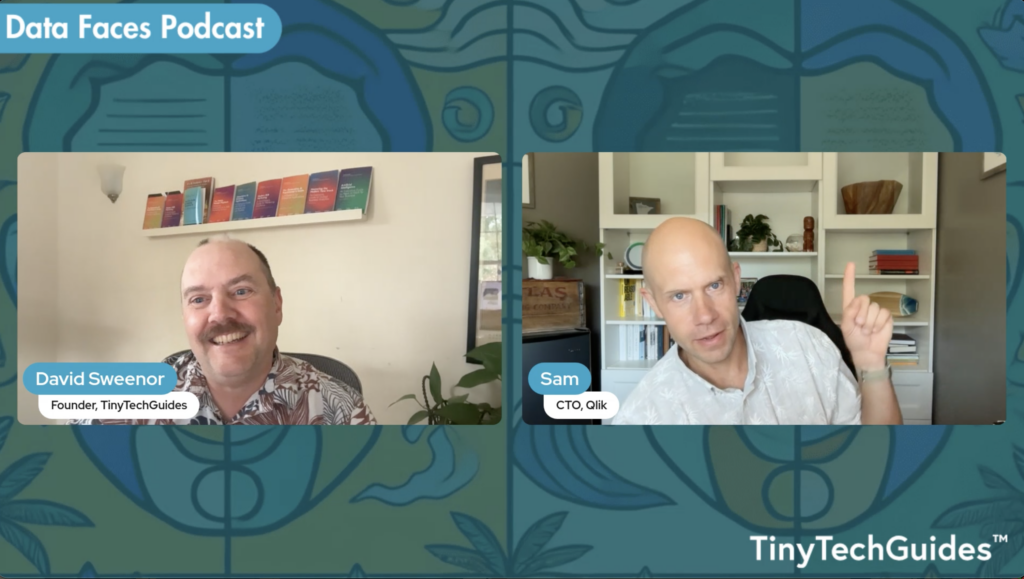
When I sat down with Josh Howard for episode 40 of the Data Faces Podcast, the topic he proposed was tongue-in-cheek on the surface, but beneath the surface lay a partial truth that most enterprises are still avoiding. Josh is the Senior Director of Product Marketing for Executive Audiences at Databricks. He and I first met at Dell more than a decade ago, then crossed paths again at Alteryx, where we were both trying to convince financial analysts that there was a better way than spreadsheets. His topic for the show was three words. Your AI is dumb. As Josh explained, the models themselves are some of the most advanced technologies that we have seen in our lifetime. However, they are only as smart as the data you give them, and most companies still haven’t figured out how to give them access to the data that matters most.
“Without context, your agents are dumb.”
— Josh Howard, Senior Director, Product Marketing for Executive Audiences, Databricks
About Josh Howard
Josh Howard is the Senior Director of Product Marketing for Executive Audiences at Databricks, where he has spent the last four years translating data and AI strategy for the C-suite. Before Databricks, we crossed paths in product marketing twice, first at Dell Technologies and then at Alteryx, where we spent our days trying to convince financial analysts that there was a better way than the spreadsheet. Outside of work, Josh lives in Colorado, ties his own fly-fishing lures, and told me on the show that if he weren’t doing product marketing, he would be a full-time fly-fishing guide on the rivers near Denver.
In our conversation on the Data Faces Podcast, Josh and I get into:
- Why “your AI is dumb” without enterprise context
- New findings from the Databricks and Economist Enterprise Making AI Deliver survey of 1,221 senior technology leaders, including the 84/43 measurement problem and why infrastructure costs more than the GPU bill
- Where agents are already changing how work gets done, and where they haven’t yet
- The cautionary tale of an agent who whacked a production database
- Josh’s contrarian take on the AGI debate
Why your AI is dumb without your data
AI has an insatiable appetite, but the models are often hankering for the wrong datasets. They were trained on the public internet, which makes them competent at history, cheating on homework, and bar exam questions. But, they have never seen your customer record, your forecast methodology, or the customer call recordings in Gong.
“These models have been trained on the internet. They’re really good at history or helping your kid do their homework. From an enterprise perspective, a lot of that work hasn’t been done to give it access to the data in your organization. You’ve got to have that context.”
— Josh Howard, Senior Director, Product Marketing for Executive Audiences, Databricks
The data that your enterprise runs on is scattered throughout your organization. It sits in the systems where your customer relationships, your financial close, and your product telemetry live. Most of it is proprietary, much of it is unstructured, and the model has never seen any of it. Until it has access to that information, no amount of fine-tuning will make the answer any better.
This is the metadata fight from twenty years ago with a new name. Enterprise architects have been screaming about governance and consistent business definitions for two decades, and almost nobody on the business side was listening. Now those same arguments are showing up in CEO town halls because gen AI outputs have made the problem visible. Gartner has been making the same point, warning that organizations without AI-ready data will see most of their AI projects stall or fail through 2027.[1] The product that Josh pointed at on the show is a conversational analytics layer trained on his organization’s internal semantics, policies, and nomenclature. A user types a question in plain English, and the system answers using the company’s own data, terminology, and rules. When your AI fails on a business question, the issue is rarely the model. It is almost always a data context problem.[2]
The real cost isn’t the GPU bill
Talk to a CFO right now about AI, and the first word out of their mouth will be cost. The conversation will go straight to GPU pricing, vendor lock-in, and whether the AI bill will break the bank next quarter. Those are the visible costs. According to the new Databricks and Economist Enterprise Making AI Deliver survey of 1,221 senior technology leaders, the damage is happening somewhere else.[3]
“Everyone is obsessing over the model cost and GPU spend, but the real tax there is actually the infrastructure underneath.”
— Josh Howard, Senior Director, Product Marketing for Executive Audiences, Databricks
The survey asked leaders to identify their biggest AI cost concerns. Fifty-nine percent named data storage, movement, and duplication. Only 25 percent named compute. What the press and the boardroom focus on draws less than half the concern of the thing nobody talks about. The real cost is dragging your data from where it lives now to wherever the model needs it, and then doing it again three more times for the next system.
The payoff for fixing this is measurable. The same survey found that 97 percent of organizations with a unified data architecture report their AI investments are paying back ahead of plan.[4][5] Almost nobody has a unified architecture today. Most enterprises run a hodgepodge of warehouses, application databases, and SaaS exports stitched together with batch jobs and prayer. The companies that have done that consolidation work are seeing returns. Everyone else is paying the tax twice.
The 84/43 problem
For most of my career, the architects, warehouse managers, and data scientists who understood the systems were screaming about governance, lineage, and consistent business definitions, and the people writing the checks weren’t listening. Then ChatGPT launched in November 2022. Almost overnight, the C-suite cared. Josh and I were both watching from inside product marketing, and the light bulb finally went off.
That attention brought real budget, executive air cover, and top-down sponsorship. Four years in, the Making AI Deliver survey shows where the bill is coming due. Eighty-four percent of senior executives say their AI returns are beating expectations, but only 43 percent require teams to measure the impact of those projects.[6] Doesn’t that seem weird? Confidence has gotten well ahead of measurement, and the boardroom will eventually notice.
We’ve seen this pattern before. CRM in the late 1990s and big data in the early 2010s both produced euphoria first, then a wave of post-mortems and write-downs once boards started asking what the investment had returned. The 84/43 split is the present-day version of the same trap. Confidence without measurement holds up right until somebody in the boardroom asks for proof. When the proof comes, most AI projects don’t survive the audit.[7]
This problem has a boring fix. Before any AI project starts, name the outcome that it should deliver, the metric that you will use to track it, and the executive who owns that metric. This isn’t rocket science; in fact, it’s the same advice that Gartner has been giving for 20 years. Then put a calendar reminder six months out so somebody opens the dashboard. That is the entire intervention. The companies on the right side of the next post-mortem are the ones doing this work today.
“There was a big paradigm shift with ChatGPT in November of 2022, where the light bulb really went off in the C-suite.”
— Josh Howard, Senior Director, Product Marketing for Executive Audiences, Databricks
The engineering exception
The strongest place where agents are already working is in software engineering. Databricks publishes its own platform data on this. Two years ago, AI agents created 0.1 percent of databases on the Neon serverless Postgres layer. By October 2025, that number was 80 percent, with test and development environments climbing to 97 percent.[8] The engineers building on top of Databricks are not writing database code by hand. They are reviewing what agents have shipped.
“Engineers aren’t banging away on the keyboard. They’re actually managing a team of agents.”
— Josh Howard, Senior Director, Product Marketing for Executive Audiences, Databricks
Engineering worked first because the feedback is unambiguous. Code either compiles or it doesn’t, and decades of CI/CD automation have given agents a runway. Even so, the agents work under supervision. Last summer, a Replit coding agent deleted a SaaStr founder’s production database during a stated code freeze, despite explicit instructions to do no harm.[9] Months of work disappeared in minutes. Human-in-the-loop is the price of admission for putting agents near production data.
The departments that most executives want to disrupt next (HR, sales, and marketing) do not look anything like engineering. The work is fuzzy, outcomes are negotiated, and unwritten rules carry as much weight as policy. Agents will get there eventually, but the path will be measured in years rather than quarters. The change management problems that Josh and I have spent careers writing about will matter more than the model capabilities.
The real race
Toward the end of our conversation, I asked Josh what will look obvious in 2027 that nobody believes today. His answer ran counter to the entire AGI news cycle. Josh argues that the next two years will not be about reaching superintelligence. For practical purposes, that race is already over. The model labs will keep pushing the capability frontier, and the headlines will keep getting louder. None of that will be where the money is made.
“The real race isn’t to superintelligence. Can you make the AI you already have actually work inside your company?”
— Josh Howard, Senior Director, Product Marketing for Executive Audiences, Databricks
The companies that will win the next five years will look boring from the outside. They will be the ones cleaning up their data, getting their semantics right, and tying every agent project back to the outcomes that leaders promised at the start. Boring work wins. AGI can wait… unless it’s already here.
Listen to the full conversation with Josh Howard on the Data Faces Podcast.
Based on insights from Josh Howard, Senior Director, Product Marketing for Executive Audiences at Databricks, featured on the Data Faces Podcast.
Frequently asked questions
What does it mean to say “your AI is dumb”?
The phrase comes from Josh Howard, Senior Director of Product Marketing at Databricks. Today’s frontier models are among the most advanced technologies ever built, and their training data comes from the public internet. They are excellent at history homework and bar exam questions, but cannot answer questions about your customer records, your forecast methodology, or your sales policies. Without access to that internal data, even the best model is dumb in the way that matters for your business.
Why is data infrastructure a bigger AI cost than GPUs?
According to the Databricks and Economist Enterprise Making AI Deliver survey of 1,221 senior technology leaders, 59 percent named data storage, movement, and duplication as their biggest AI cost concern, while only 25 percent named compute as their biggest AI cost concern. GPU spending is the visible bill. Most of the cost goes to transferring data between systems whenever a new AI application needs it. Organizations with a unified data architecture report AI investments paying back faster than those still stitching warehouses and SaaS exports together by hand.
Where are AI agents working in enterprises today?
The strongest evidence comes from software engineering. Databricks reports that AI agents now create 80 percent of new databases on its Neon serverless Postgres layer, up from 0.1 percent in 2023. Test and development environments climbed to 97 percent over the same window. The work is unambiguous, the feedback is fast, and decades of CI/CD automation have given agents runway. Other functions do not look anything like engineering, and the path for putting agents into HR, sales, and marketing will be measured in years.
How should I measure whether my AI investment is working?
Most organizations are not measuring it well. The Making AI Deliver survey found that 84 percent of senior executives believe their AI returns are beating expectations, but only 43 percent require teams to measure the impact. Confidence has gotten ahead of measurement. Fixing this is straightforward but unglamorous. Before any AI project starts, name the outcome it should deliver, the metric you will use to track it, and the executive who owns that metric. Then put a calendar reminder six months out to check the dashboard.
When will AI agents work for non-engineering functions?
Plan for a multi-year transition. AI agents already generate the majority of new database creations at companies like Databricks, but engineering has several advantages that other departments lack. The feedback is unambiguous, the outcomes are binary, and decades of CI/CD automation have given the agents runway. HR, sales, and marketing work is fuzzy, outcomes are negotiated, and culture and unwritten rules carry as much weight as policy. Change management problems will matter more than model capabilities.
Should I worry about AGI or focus on my company’s data?
Both, but only one is in your control. The frontier model labs will keep pushing toward something that looks like artificial general intelligence, and the headlines will keep getting louder. Your business does not get a return on those headlines. Your return comes from feeding agents the data, semantics, and policies that govern how your company makes decisions. The companies that will win the next five years will look boring from the outside, quietly consolidating their data and measuring outcomes while the press celebrates the latest billboard.
Podcast highlights
Timestamps estimated from the transcript and should be verified against the final cut.
[0:00] Opening and introduction
[1:17] Josh’s role leading PMM for executive audiences at Databricks
[2:21] If he weren’t doing PMM: full-time fly-fishing guide in Colorado
[3:23] “Your AI is dumb” — what the phrase actually means
[5:25] Structured vs. unstructured data and why the industry is still stuck in rows and columns
[6:20] Where Josh and Dave first met at Dell Technologies
[8:13] Metadata, context, and the 20-year-old enterprise architect fight
[9:37] The November 2022 ChatGPT moment when the light bulb went off in the C-suite
[11:07] Trying to pry Excel out of a financial analyst’s hands at Alteryx
[12:08] Human-in-the-loop and the Replit coding agent that wiped a production database
[12:53] Conversational analytics, Databricks Genie, and learning a company’s internal semantics
[19:11] Inside the Databricks and Economist Enterprise Making AI Deliver survey of 1,221 leaders
[20:54] The 84/43 measurement gap and why executive confidence is running ahead of proof
[23:21] The 59/25 cost split — data infrastructure costs more than GPUs
[28:30] Upskilling, the prompt engineer hype cycle, and why behavior change is the real bottleneck
[30:17] AI washing on the 101 corridor and Allbirds’ pivot to NewBird AI
[33:26] What will look obvious in 2027 — the real race isn’t superintelligence
[35:39] Closing thought: “Without context, your agents are dumb.”
About David Sweenor
David Sweenor is the founder and host of the Data Faces podcast, where he talks with the people who are making data, analytics, AI, and marketing work in the real world. He is also the founder of TinyTechGuides and a recognized top 25 analytics thought leader and international speaker who specializes in practical business applications of artificial intelligence and advanced analytics.
With over 25 years of hands-on experience implementing AI and analytics solutions, David has supported organizations including Alation, Alteryx, TIBCO, SAS, IBM, Dell, and Quest. His work spans marketing leadership, analytics implementation, and specialized expertise in AI, machine learning, data science, IoT, and business intelligence. David holds several patents and consistently delivers insights that bridge technical capabilities with business value.
Books
- Artificial Intelligence: An Executive Guide to Make AI Work for Your Business
- Generative AI Business Applications: An Executive Guide with Real-Life Examples and Case Studies
- The Generative AI Practitioner’s Guide: How to Apply LLM Patterns for Enterprise Applications
- The CIO’s Guide to Adopting Generative AI: Five Keys to Success
- Modern B2B Marketing: A Practitioner’s Guide to Marketing Excellence
- The PMM’s Prompt Playbook: Mastering Generative AI for B2B Marketing Success
Follow David on Twitter @DavidSweenor and connect with him on LinkedIn.
Footnotes
[1]Gartner. “Lack of AI-Ready Data Puts AI Projects at Risk.” Gartner Newsroom, February 26, 2025. https://www.gartner.com/en/newsroom/press-releases/2025-02-26-lack-of-ai-ready-data-puts-ai-projects-at-risk.
[2]Sweenor, David. “Your AI Doesn’t Have a Model Problem. It Has a Data Context Problem.” TinyTechGuides, February 24, 2026. https://tinytechguides.com/blog/your-ai-doesnt-have-a-model-problem-it-has-a-data-context-problem/.
[3]Economist Enterprise. “Making AI Deliver: A Benchmarking Framework on How Leading Companies Operationalise AI for Impact.” Sponsored by Databricks. 2026. https://www.databricks.com/resources/analyst-research/making-ai-deliver.
[4]Economist Enterprise, “Making AI Deliver.” See note 1.
[5]Sweenor, David. “Generative AI’s Force Multiplier: Your Data.” TinyTechGuides, October 14, 2023. https://tinytechguides.com/blog/generative-ais-force-multiplier-your-data/.
[6]Economist Enterprise, “Making AI Deliver.” See note 1.
[7]Sweenor, David. “How 3% of Companies Win with AI While 97% Fail.” TinyTechGuides, July 29, 2025. https://tinytechguides.com/blog/how-3-of-companies-win-with-ai-while-97-fail/.
[8]Databricks. “2026 State of AI Agents: Enterprise Insights on Building AI.” 2026. https://www.databricks.com/resources/ebook/state-of-ai-agents.
[9]Fortune. “AI-Powered Coding Tool Wiped Out a Software Company’s Database in ‘Catastrophic Failure.'” July 23, 2025. https://fortune.com/2025/07/23/ai-coding-tool-replit-wiped-database-called-it-a-catastrophic-failure/.
Related Posts
Your AI stack will be wrong in 12 months

The AI tell hiding between your sentences