

Data Faces · Episode 40 · June 2, 2026 · 36 min
Frontier models have never seen your customer records, forecasts, or policies — and without that context, your AI is dumb.
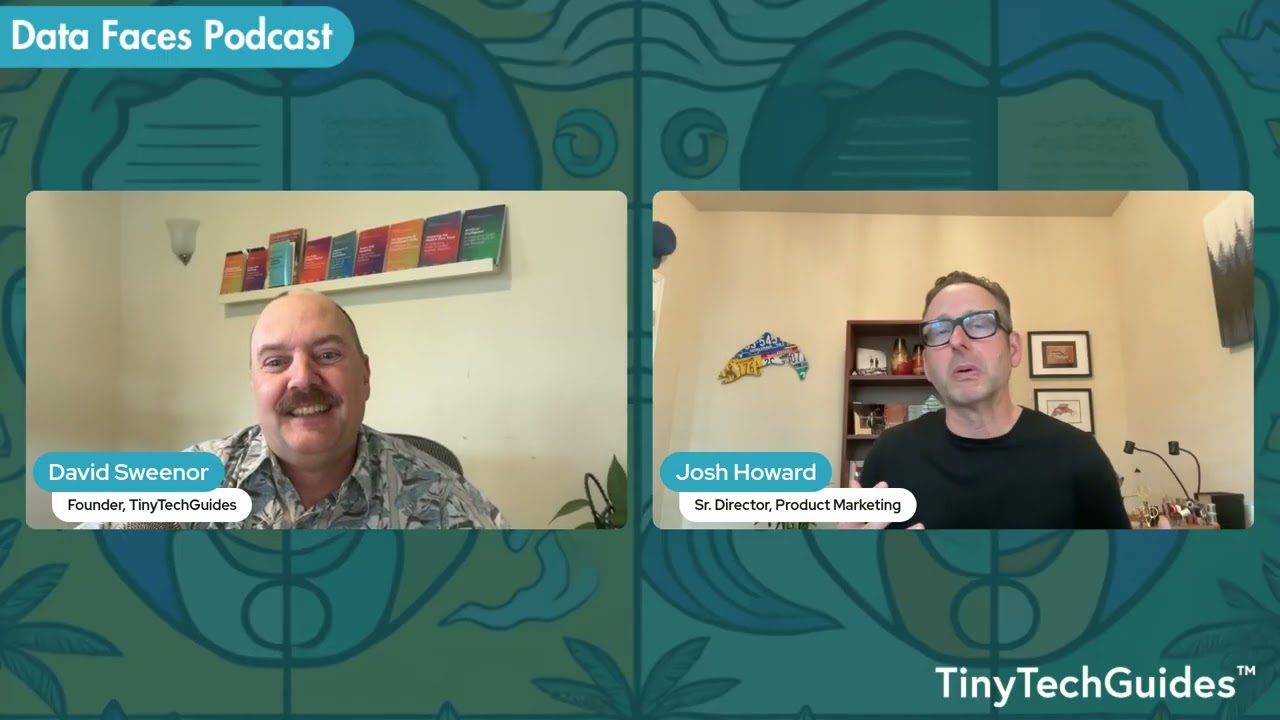
Listen: YouTube · Spotify · Apple Podcasts · Amazon Music
About Josh Howard
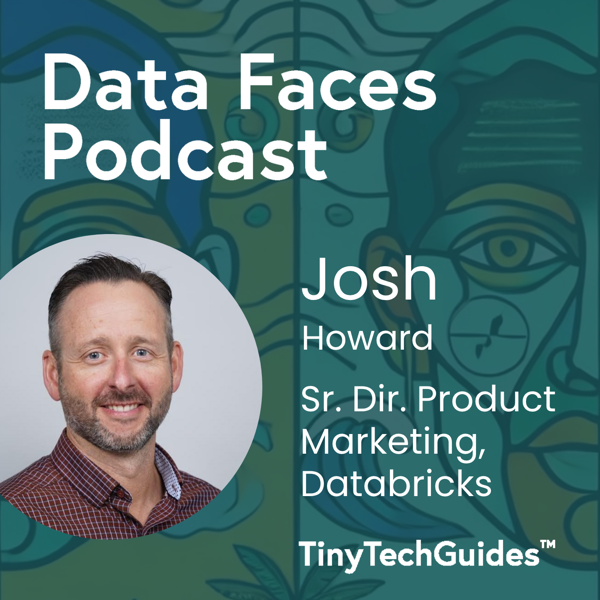
Josh Howard is the Senior Director of Product Marketing for Executive Audiences at Databricks, where he has spent four years translating data and AI strategy for the C-suite. Before Databricks he held product marketing roles at Dell Technologies and Alteryx. He lives in Colorado, ties his own fly-fishing lures, and says that if he weren’t in product marketing he’d be a full-time fly-fishing guide on the rivers near Denver.
In this episode
- Why “your AI is dumb” without enterprise context
- Findings from the Databricks / Economist “Making AI Deliver” survey of 1,221 tech leaders — including the 84/43 measurement gap
- Why AI infrastructure costs far more than the GPU bill
- Where agents are already changing how work gets done — and where they haven’t
- The cautionary tale of an agent that wiped a production database, and Josh’s contrarian take on AGI
→ Read the full article: Forget AGI. Your AI is dumb without your data.
Full transcript
David Sweenor 0:06 Hello everyone, and welcome to the data faces Podcast. I’m David Sweenor, founder of tiny tech guides, and your host for today’s show. In this show, I talk with the people who are actually making data analytics and AI work in the real world, what’s exciting, what’s messy, and what’s next? Today we have a very special episode. This is episode number 40, and we are joined with Josh Howard, who is the Senior Director of Product Marketing for executive audiences at Databricks. When I asked Josh about topics, he said, AI is dumb. So he’s got some survey data, we’re going to double click on what aI don’t meet is dumb means, and we’re going to have a great conversation. So let’s dive in, Josh. Welcome to the data faces podcast, Speaker 1 0:49 Sweenor. How are you?
David Sweenor 0:51 I am living the dream. Got my Aloha shirt on. Couldn’t be better. Speaker 1 0:55 Can I call you Sweenor, or is it like Mr. Tiny tech guides, or, you know,
David Sweenor 1:00 Mustachio, whatever you want, I’ve been called a lot worse. Speaker 1 1:04 Okay, great. All right, just wanted to make that clear. All right, good. How are you? Thanks for having me.
David Sweenor 1:10 Yeah, I’m doing well. So Josh, can you just tell us a little bit about yourself, your role, and what you’re doing over at Databricks. Speaker 1 1:17 Yeah, great. So yeah, Josh Howard, Senior Director of Product Marketing here at Databricks, and I look after our executive audiences. And so it’s really like, how do we, you know, take, you know, all the things that Databricks is doing, and you know how to really position that for C for the C level, care abouts and and how to translate data and AI into things that they care about. And so, yeah, I’ve been here for about four years. And yeah, it’s, it’s, it’s been awesome, you know, the company’s been, you know, growing like wildfire. And I just love to see how organizations are transforming with AI and agents, yeah, and so it’s, it’s, it’s been a ton of fun.
David Sweenor 2:07 Fantastic. Well, it’s great to have you here, and I want to ask a question. Part of the show is named data faces, so we like to get behind the people in their professional careers. So if you weren’t doing what you’re doing now, what would you be doing? Speaker 1 2:21 Oh, that’s a good question. You know, honestly, I’d probably be a fly fishing guide, you know, I’m an avid fly fisherman, you know, and that just seems like a lot of fun, right? Being on the river every day. You can see here I’ve got, you know, fish and, you know, fly tying the material over here. So I tie my own flies, and so that’s a real passion for me. Yeah, I love being out on the river, and Colorado is a great place to do that. So I guess if I wasn’t, you know, in the data and AI industry, I would probably be just, you know, a trout bum. Yeah, I think that’s, I think that’s my answer.
David Sweenor 2:59 You know, I love that. And perhaps there’s still there’s still time. Maybe when you retire, you can become a professional guide and tour people around. I need a lesson, Josh, I should be fly fishing, but, Speaker 1 3:12 well, come to Colorado, we’ll take you out.
David Sweenor 3:15 Okay, perfect, perfect. Okay, so I mentioned this in the intro, but you said a your AI is dumb, is the topic? Speaker 1 3:23 Yeah,
David Sweenor 3:23 and there’s this raging debate out there about artificial general intelligence. Is it sentient? We saw ananthropic earlier released mythos, or they didn’t release it because it was just too powerful, and they’re scared so. And you’re saying the other thing, it’s dumb. So what do you mean by that? Speaker 1 3:43 Yeah, yeah. So it’s a little tongue in cheek. But, you know, look, I mean, I think these models are, you know, the smartest they’ve ever been. I think we are, you know, probably, you know, have super intelligence. And you know that, you know, we do have AGI today. And so, you know what I mean is the model itself is not dumb. You know, chat, GBT, Claude, Jim and I, you know, these are all really impressive technologies. And you know, probably some of the most you know, advanced technologies that you know, that we’ve seen in our lifetime, and so, but what I mean by that is either dumb, because they’re only as smart as the data that you give it, and so these models have been trained on, like, you know, the internet, and so they’re really good at, you know, history, or, you know, helping, you know, your kid do their homework. But you know, from an enterprise perspective, a lot of that work hasn’t been done to give it access to the data in your organization. And that’s the most valuable part, right? You got to have that context. And you know, even then, a lot of those systems are are super fragmented. But for these agents to work, and for. For AI to really kind of transform your organization, you’ve got to give it context and make sure that it’s been, you know, trained on your own internal data, because once you do that, that’s going to really supercharge it and, you know, give you that competitive advantage. So that’s kind of what I mean by AI is dumb, is it just doesn’t have the context of of your enterprise data.
David Sweenor 5:25 And we say, enterprise data, I want to, I want to ask this question, because a lot of the data based vendors that are out there we talk, we’re still talking about rows and columns, and I think you’re alluding to trading, and that’s like unstructured data. So it’s it’s PDFs, Word, Docs, whatever, whatever form it lies. And do you think the industry as a whole is really paying enough attention to that? Or we’re just stuck in this rows and columns because it’s easier, and we’ve been doing that for 20 or 30 years? Speaker 1 6:02 Yeah, you know, if you go back, I mean, we’ve been talking about, you know, structured versus unstructured data for probably close to 20 years now, right? Then we work together at Dell Technologies as well,
David Sweenor 6:17 right? We
David Sweenor 6:17 did. We were at Dell. That’s when we first met, Speaker 1 6:20 that’s right. And then it was all tricks. But I mean, even back then, we were talking about, you know, no SQL databases, and then it was Hadoop and so organizations you know, have been trying to figure out how to leverage more of their unstructured data for a long time now, so and so I think, you know these systems now, they’re, you’re able to do that. And you know, organizations need access to, you know, you know their IoT data, their mobile data, the social media data, because that’s going to help them, in different departments, do really amazing things with with AI and agents, and so you just think about from a marketing perspective, you need all that data from, you know, from your campaigns, they’re, they’re, you know, pulling in mobile data for how users are moving around, you know, their stores and so, and they’re able to serve up, you know, unique ads and meet The customer where they’re at and provide new customer experiences. And so if, if you give organizations that context, that’s what’s going to be the real unlock, like, you know, Claude, you know, it’s not going to give you that information, because that’s, that’s your internal company data, or, you know being stored in, you know your internal systems. And so if you take these really smart models and you apply those, those systems and data that you have access to, whether that be enterprise data from, like CRM systems and ERP systems, but also, you know external data, or you know some of these unstructured data sources that we were talking about, and you put an agent on top of that, that’s the role unlock. And so I think that’s going to be a huge paradigm shift that we’re going to see, you know, here in the future.
David Sweenor 8:13 Yeah, there’s certainly no, no amount, no small amount of chatter on the internet about contacts and semantics and vocab. I call it metadata. So I guess I’m old school, but it’s a product marketing, you know, PMM, the PMM. So we’ve, we’ve worked together at a couple different companies, and when we were at Alteryx, we were marketing sort of data and AI to to people who were really stuck in spreadsheet land. So I don’t think they appreciated the vision, and they’re probably still stuck in spreadsheet land. So you know, in your vantage point, and you’re from your seat as a Senior Marketing Director at Databricks, what’s the biggest gap you see between, you know, what, what we sell, and what is actually working in the wild? Speaker 1 8:56 Yeah, um, you know. So I think, excuse me if you go back then, like, you know, even before, you know, Alteryx, and in some of these other places you know that we worked at, you know, data wasn’t cool at all, right? You know, I remember working with, like, enterprise architects, and you know, they were screaming at their organizations about the importance of data governance, and nobody was listening. Nobody was buying data governance. And, you know, at Alteryx, we talked about analytic maturity models and how to move from descriptive
Thomas Been 9:36 analytics Speaker 1 9:37 to, you know, predictive analytics. But you know, it was always a challenge. You know, with the C suite, they just didn’t care. And I think there was a big paradigm shift with, you know, with chat GBT in November of 2022 where the light bulb really went off in the C suite. And. Right, and then they got it right. They understood. Then, you know what you know, these powerful analytic tools could do. And just before, then they could do it. And so I think that you know, has been, you know, a big change that has made our job a lot easier. And so we don’t have to convince people that data and analytics is important anymore. They really get it. But the problem is, you know, it’s that original problem, you know, technology is, you know, is the easy part. It’s the change management. It’s the people in the processes that have to change in order to kind of realize the value and and that, you know, and that hasn’t changed. And so I would say that’s probably, you know, one of the biggest pieces you know, that I’ve seen, you know that we, you know, continue to, continue to struggle with,
David Sweenor 10:51 yeah, yeah, I sort of agree with you. I’ve seen it, you know, throughout my career. It’s the technologies there some, you know, they have their works and things like that. But it’s, it’s organizational inertia, I guess, holds people back. Speaker 1 11:07 Yeah, absolutely at all tricks. You know, they had really great technology, but it was like, you know, trying to pry Excel out of a financial analyst hands. Yeah, that was tough. And so I think you know people, you know they like their things, they like their technologies, and you know, they don’t like when things get, you know, taken away and and so, but I think if you can really show the value, and you know, the outcomes of what they can achieve, you know, that’s the rule in law. You
David Sweenor 11:37 know what’s interesting. So Excel is probably the number one bi or analytics tool in the world, and there’s been a number of companies that have a get rid of Excel. I don’t think it’s going anywhere. I don’t think it ever will go anywhere, but I am curious, on the whole analytics industry as a whole, what do you think’s going to happen with some of these companies, because these llms can do pretty good analytics on their own. Speaker 1 12:08 Yeah, yeah, that’s, you know, that’s fair. You know, when you know a when we first started talking about agents, you know, probably back in 24 maybe before maybe, I’m sure there was others that were talking about it before then, but they get really started to, you know, to hit a bit of a groundswell. We talked about human in the loop and, and I think that’s still true. You’ve got to have a human in the loop. I don’t know if you saw that headline. Forget which company was, but the agent just deleted the entire production database
David Sweenor 12:49 I saw. I did see that one, Speaker 1 12:51 yeah, yeah, that’s, that’s crazy.
Thomas Been 12:53 And Speaker 1 12:53 so you still have to have people, you know, in the loop. And even, like, you know, engineer, it instructed, you know, the agent, not to do anything harmful, but it still did, and that had some serious consequences on that you know, that organization, you know, they’re not getting that data back, but so you still have to have, you know, a human in the loop. But you know, I think these technologies, they are really good at analytics, and, you know, I think it’s going to change how people do analytics. And so, you know, instead of looking at a dashboard, you know, you’re going to talk to your data, you’re going to, you know, you know, you’re going to, you know, ask it a certain question, and it’s just going to give you the answer. And so, because a lot of people, I think that’s what they actually want to do with with their data, no one really cares about you know, how beautiful a visualization is. Maybe it’s the person that built it, but the consumers, they just want the answers. And that’s the power of, you know, these llms is they can give you those answers immediately. And if you have those LLM sitting on top of your own data, then, you know, again, that’s where you can, you know, really supercharge your analysis. You know, yesterday, you know, we have a tool called Genie, which is, is basically a conversational analytics under the hood, it’s a, you know, you know, it’s an agent, but, you know, just has a contextual interface, and I can ask it questions. But what’s cool about it is I can ask it very specific things about our business and nomenclature. It understands our, you know, internal semantics and policies, and it’s able to, you know, just give me the answer, whereas it, you know, an LLM off the shelf wouldn’t be able to do that, you know. And certainly a dashboard can’t do that. So I think that’s the direction that, you know, organizations. They’re going to start moving towards is you’re just going to, you know, talk to it, and it’s just going to spit out an answer. And I think that’s really powerful.
David Sweenor 15:09 It’s sort of, I agree with you. And, you know, there’s people are literally talking to it. You see these technologies like super flow and what have you. So you’re like, you’re like, walking around, you have a bunch of people mumbling to themselves, essentially, and talking to these, these robots. It’s, it is a strange new world,
David Sweenor 15:29 for sure, for sure, for sure. But
David Sweenor 15:33 I did want to ask you about this human in the loop concept. And I know there’s different kinds of decisions that, you know, it’s absolutely required, you know, maybe healthcare, lending, things like that. But as companies want to do more, and they’re scaling, AI, is it possible to have a human in the loop? Or, like, how? I mean, has anybody figured this out? Because, you know, we’re making decisions super fast, Speaker 1 16:05 yeah.
David Sweenor 16:06 And I don’t want to push yes for everyone, and even if I did, it’s like, when I use Claude, this is, you know, write some Python code. It’s like, do you want to continue? I don’t know what this Python code is. I’m like, yes, yes, yes. I don’t know why it asked me, Do you think the organizations are going to maybe fall into that same trap, or is it going to be like llms watching llms, or, I don’t know if you know what’s, what’s, what’s what’s out there. Have you thought about this? Speaker 1 16:32 So, yeah, I mean, I think we’re still early days. You know, you know, if you look at kind of what’s happened over the last, I would say, even just last six to 12 months, agents have transformed engineering, right? You know, even internally. You know, I think Databricks had a quote that, you know, 80% of our code is now, you know, generated by agents. And, you know, Microsoft and Google, you know, they’ve all said something, you know, something similar, anthropic and so that’s that’s been a huge shift with, you know, these agents in the last six to 12 months, is engineers aren’t, you know, banging away on the keyboard. They’re actually managing a team of agents,
David Sweenor 17:23 right? Speaker 1 17:23 But I think, you know, software engineering, that’s sort of the easy part, right? It’s everything’s very binary. You know, there was already a lot of automation built in. There was, you know, it’s sort of black and white. And so I think, you know, with, you know, agentic, that was really the first place to to automate. And you know, now you’ve got these engineers just managing agents. But again, like we just talked about earlier, these agents are still in can do bad things like deleting a database. And so that’s the
David Sweenor 17:56 they don’t always listen, even though you tell them
David Sweenor 17:59 exactly every time, Speaker 1 18:01 yeah, and so that’s the reason why you’ve got to have, you know, strong governance layer, you know, kind of built into these systems. So, you know, that was engineering. I think it’s going to be a lot harder for organizations to start, you know, you know, doing the same thing with, you know, other departments. I mean, look, I think every executive is seeing the transformation that’s happening in engineering. Like, dude, I want to do that in HR. I want to do that in sales, marketing, etc, etc, but I think it’s going to be a lot harder, because those are more human, you know, processes that need more of that context and need better understanding of, you know, your culture and policies and things like that. So I think it’s going to, you know, you know, take, you know, probably several years for that to happen. And so, you know, I don’t think the agents are going to replace everyone
David Sweenor 19:00 just yet, I totally agree with you. So you shared some some survey data with me. You worked on a survey with the economist. I believe Speaker 1 19:10 yes,
David Sweenor 19:11 1200 senior executives global survey. Tell us a little bit about the survey, and what did you find? Anything surprising? Speaker 1 19:20 Yeah, yeah. So, you know, you know, first off, you know, you know, sitting down with the economist, you know, we both wanted to, you know, tackle, you know, some of the issues that we were seeing in the industry with with bad research, right? You know, there were some really popular papers, and I’m not going to mention names or universities. I know
David Sweenor 19:47 who you’re talking about. Speaker 1 19:48 Yeah, yeah, exactly. And it’s like, you know, they surveyed 50 people, and that became the gospel. And, like, every news organization picked it up, and it was like. Oh my god. You know, 95% of all AI projects fail, and just, it was just it just wasn’t great. And so teaming up with the economists, we really wanted to get a snapshot of where the industry was really at, and we wanted to be really robust. So we surveyed 1200 senior executives from large enterprises across 19 different countries. And then we interviewed, you know, 25 CIOs from around the world to get that qualitative feedback so, and it was really just to get an idea of, you know, kind of where, you know, AI and agents were and how marketing is progressing.
David Sweenor 20:46 So what were any, what sort of key stats or insights Did you? Did you glean from from the survey? Speaker 1 20:54 Yeah, there was some really interesting ones. Look, I mean, we have there’s go download the report. We just launched it last week, but it’s like 50 plus pages. So there’s a lot of data in there, but it’s really interesting. I think, you know, both us and the economist team kind of really nerded out. We probably have a little bit too much in there, but it was, it was fun. But, you know, one thing I thought was really interesting was there was a stat in there from the survey that 84% say their AI returns are beating expectations, which is great, but only 43% actually require their teams to measure the impact of of AI projects. So so you’ve got, on one hand, you’ve got these executives that are really confident that things are working, but a lot of them still don’t have systems in place to really verify that. And so, you know, but it’s, it’s great that they’re getting a good vibe, that they’re, you know, they’re being successful and you know. And honestly, I think that’s one thing that organizations, you know, when they embark on these projects is, and where I see a lot of these AI projects fail is they don’t have, you know, senior leadership involved from the get go. You know, they don’t have, you know, specific outcomes they’re trying to achieve, and they don’t have specific ways to measure it. And I think those are, like, quick ways to, you know, fail at AI. I think those are really important things that you need to do on the onset in order to be successful. And, you know, so I think we do need organizations to be really thinking about what they’re doing and, you know, and I get it, I think there’s a lot of pressure from these boards to just show, you know, progress with AI and but they need to take it a step further.
David Sweenor 22:49 Okay, I’m hearing 84% that’s that’s actually so 84% of people feel good, but you know, less than half 40% or 43% they’re not measuring it. So that’s that’s interesting. I’m hearing a lot of people talk about costs, and we’re concerned about costs. Or you hear it, you know, on the personal productivity side, I ran out of tokens today in quad, so, like, I can’t do any more work. Did you have any insights or stats around the cost aspect of, of of AI, Speaker 1 23:21 yeah, there was, you know, there was, you know, a couple things. There’s, there’s different ways, you know, different vectors too, you know, I think, you know, in some cases, you know, they weren’t concerned about costs, and they were more concerned about accuracy. And so I think that was, you know, some interesting data. Because I always, you know, just sort of, you know, when you’re talking with, you know, a CIO or CTO, you know, they’re usually worried about cost, and that comes up a lot. But you know, in fact, it was, it was really the the data quality and the accuracy of, you know, the, you know, the outcomes that they were most concerned with. But, you know, so I thought that was interesting. But on the, you know, on the flip side, there were some interesting things that we kind of dug into, the actual cost side of things is, you know, 59% say data, storage movement and duplication was, you know, one of their biggest concerns. And only 25% said compute. So that was a bit of surprise, you know, for me is, you know, because everyone, you know, as you mentioned, everyone’s obsessing over the, you know, the model cost in the GPU spend, but that the real tax, there is actually the infrastructure underneath, right? If that is, that is messy, then you know, you know that’s going to increase your cost. But I think there is a payoff for those. Organizations. And so there was another stat, which was 97% of companies with a unified data architecture say their AI investments are actually paying back faster than planned. And so you’ve, I think that really just kind of points to is you’ve got to have your data right before you embark on these big AI projects, or, you know, you’re not going to get the results, and, you know, you’re not going to see the savings that you that you want, need. So I think that, I think those were a few things that I thought were really interesting from the data.
David Sweenor 25:34 Okay, that’s super interesting. The I’m going to switch gears a little bit. It did some internet sleuthing. And you did something that we all have to do. It as as product marketers, you wrote sort of a predictions piece on priorities for data and AI leaders and 2025 I think it was called, Speaker 1 26:01 yeah,
David Sweenor 26:01 so looking back on that, which, what’s, what’s aged well, and which would you just sort of maybe go update the blog and sort of delete those, those entries, and because you can do that on digital, though, Speaker 1 26:14 and that’s, uh, yeah, thanks for digging that up.
David Sweenor 26:19 I try, you know, Speaker 1 26:21 yeah, you’re going back to, you know, 2024, we probably, you know, pulled that together. And, you know, the prediction season, which is what, October, November, where every, every, you know, product manager and product marketer is writing a prediction piece on what’s going to come next, which is, you know, is actually really a fool’s errand. If you think about it, you’re rarely right in, you know, maybe, you know, it’s like, you know, asking the weather man, you know, how they did in their forecast. Or, you know, maybe Gartner, we should, we should go back and look at some of their
David Sweenor 26:58 predictions. I’m sure. Yeah, there. I think there’s whole books about this. Like,
Thomas Been 27:01 stay away
David Sweenor 27:02 from predictions, but people make careers out of it. They just, they just bloviate on a TV and talk about, you know, nothing. Speaker 1 27:10 Yeah, right, but yeah, I’ll take the challenge. So look, I mean, I think there’s some things that really, you know, kind of held up, you know. One is, you know, and we just talked about this is that the you know, your AI is only good as the data underneath, and having that, you know, proprietary data. And I think that’s, you know, absolutely more true today than than we originally wrote it, I don’t think we really understood the impact of the importance of having that, you know, contextual data, you know. And the second was, you know, around infrastructure and making sure that you know, you had your infrastructure in place in order to, you know, succeed with AI and agents and so, I think those are, you know, probably, you know, a couple things that really, that really stood out, as far as, like, what missed, you know, back then we were, you know, prompt Engineering was, you know, the biggest it’s
Thomas Been 28:21 like, yeah,
David Sweenor 28:22 everybody want, everybody changed their LinkedIn titles. Speaker 1 28:24 I’m
David Sweenor 28:25 a prompt engineer now. And, like, how dated is that now? Speaker 1 28:30 Yeah, exactly, you know. Like, you know, my mom, you know, saw something on, you know, you know, the news, and was calling me if I was going to become a prompt engineer, you know. But I think, you know, where we missed was, you know, you know, is really around the upskilling piece, you know. I think that’s, you know, we haven’t, you can’t just, you know, put a training, you know, program in place and really in really solve that. So I think that’s a piece that, you know, that we missed. We thought that was going to be a lot easier than it was. It’s really a behavior change, and it’s, it’s that job descriptions haven’t been rewritten, incentives haven’t changed the organization, and people are still doing things the old way, even though they have, like, all these great tools
David Sweenor 29:28 in Speaker 1 29:28 front of them. So I think the the spirit of, you know, you know of the prediction was, was right, but you know, we got the, you know, actually, how that was going to work. I think we got that wrong.
David Sweenor 29:44 Okay, I was at the, I know, I know your event, Databricks event is mid June, I believe. But I just want to ask you maybe a quick question on being a PMM and AI washing. Everything you know, every product marketer in our space has to walk this fine line they want. You have to have aI somewhere in there. But people just sort of gloss over it because every vendor is saying the same damn thing. How do you think about this? Josh, Speaker 1 30:17 oh man. How do you stand out and see of sameness. You know, it’s funny. So when you go to, you know, the data and AI summit in San Francisco next month, it’s going to be June 15 to the 18th. You know you’re going from, if you’re from out of town, right? I live in Denver, so I’ll be traveling in but I was recently in San Francisco, and, you know, I was Ubering, you know, down into the city. And literally, every single billboard along the 101, is, is about agents. Every company is an agentic company. Every company is an AI company,
David Sweenor 30:57 right? Speaker 1 30:57 Which is, which is, you know, which is pretty funny. And then, like, did you hear about all birds the shoe company? They’re changing their business model from being a shoe company to being an AI company, and they’re getting into
David Sweenor 31:12 some clever marketing right there. Speaker 1 31:15 Well, it’s funny. They’re there. Their stock shot up right after that. So maybe
David Sweenor 31:18 there is someone, someone made some money on that. Speaker 1 31:21 Yeah, yeah, exactly. So what’s funny is, like everyone’s, you know, you know, going through this, you know, repositioning. And I understand why, because if you look at what’s happened, you know, I would say maybe six months ago, like the public markets were starting to get nervous with agents. And they were seeing all these, you know, you know, some of these new products come out, and people seeing a lot of the automation, and the SaaS markets tanked, and so, and I understand why. Like, as we talked about earlier, like, you know, we’ve sort of automated software engineering, and that cost is going to zero. So what are those companies are now thinking about, like, how do I, like, I can, I don’t need that SaaS vendor. I can just go and build this. You know, myself, I think we’re
David Sweenor 32:13 gonna have a rude awakening, Josh. I think everybody’s like, I’m gonna build it. And then all that. Like, it was like, when open source was out, Speaker 1 32:20 yeah,
David Sweenor 32:20 open source. I’m like, free, like a puppy, Speaker 1 32:23 yeah, yeah, yeah, exactly, yeah. So there’s, I think you’re right, you know. And so there’s, yeah, there’s, we’re in a bubble. There’s tremendous hype. But you know, a lot of these companies, you know, still don’t have their data rights, and these companies shouldn’t be promising that to these organizations. So, you know, if you are, you know, buying into, you know, some of these billboards, you don’t want to skip that conversation make sure that you’re, you know, setting up a proof of concept and really understanding, you know, the the data, the governance aspects, because those are going to be really important for for these organizations.
David Sweenor 33:07 Okay? And maybe the final question, since we talked about prediction, let’s do another prediction. When I get you back on the show in 18 months from now, what’s the one thing that will look obvious in 2027 that nobody believes right now. Speaker 1 33:26 Look, I, you know, you kind of started the pod with, you know, super intelligence and his AGI, you know, already here. I, you know, I think it is, you know, these models, you know, are, are super intelligent. And you know, the model providers can continue to debate on in, you know, try to, you know, reach further super intelligence. But you know, they already can pass the bar exam. They already write better code than most engineers. You know, they, you know, they can reason through these complex problems, you know. So at some point all this is just, you know, the superintelligence thing is going to be a distraction. So the real race isn’t, you know, to super intelligence. I think it’s, it’s a lot more boring than that, but much more important is, you know, can you make the AI, you already have actually work inside your company? And that’s the problem, I think, you know, most people aren’t talking about, and it’s certainly not what is being portrayed on the billboards, on the 101, it’s like, how to actually make this stuff work. And so I think the next, you know, really, five years, or you know, are going to blow into the companies that really solve that context problem. And it’s not going to be the ones that have, you know, the biggest models or the most agents. It’s the ones who have really figured out how to give AI real understanding to. Their business, you know, their data, their customers, their operation, and that’s going to be their competitive advantage. And most companies are nowhere near solving that today, so I think that’s going to be the obvious thing for for next year, and just, you know, and not to get distracted by, you know, the, you know, the latest shiny thing in the industry.
David Sweenor 35:23 Okay, so I guess we opened this show with the premise that AI is dumb, and now you say we have a AGI super intelligent. That’s a hot take. Josh, so dumb or not dumb, what’s what’s the answer? Speaker 1 35:39 Yeah. So right now, the without context, your agents are dumb, so I’ll leave it at that.
David Sweenor 35:48 All right. Well, there we go. Josh Howard, Senior Director of Product Marketing at Databricks, thanks for joining the databases podcast. It’s been great having you here, Speaker 1 35:55 and thanks, David, really appreciate
David Sweenor 35:57 it. Cheers.
Thomas Been 35:57 You. You.