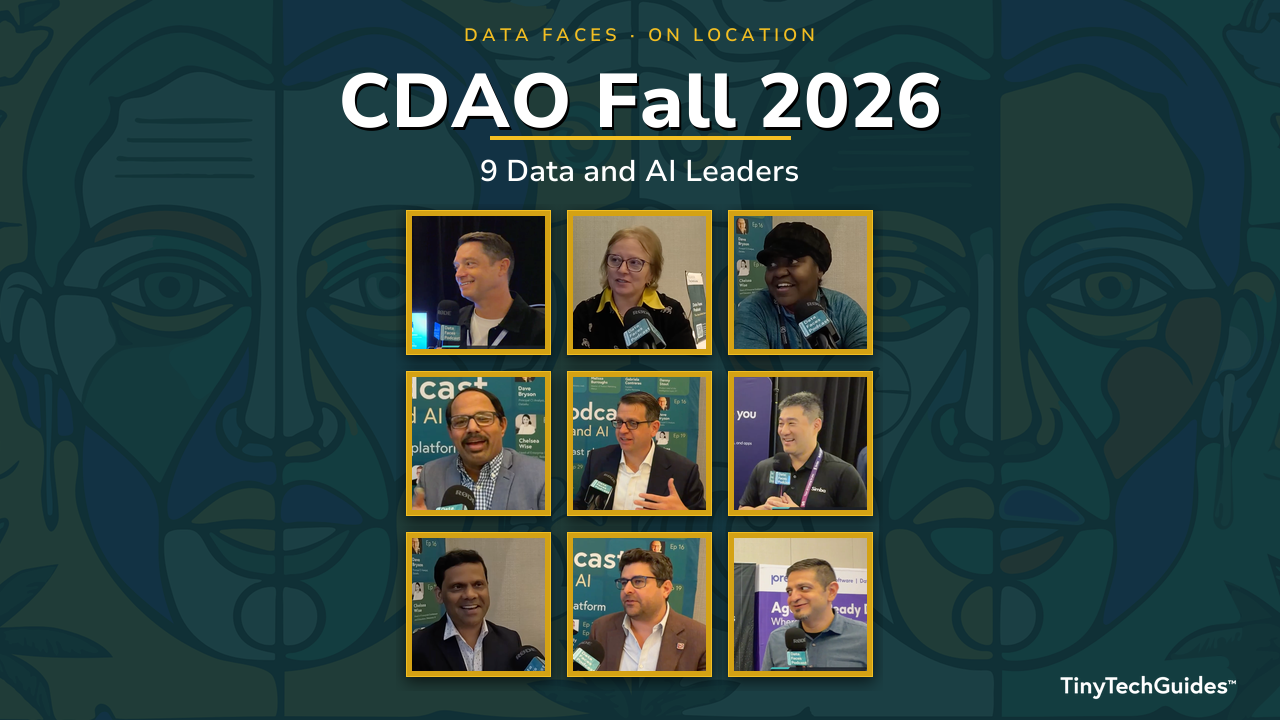
Nine field notes from data and AI leaders at CDAO Fall 2026 in Boston
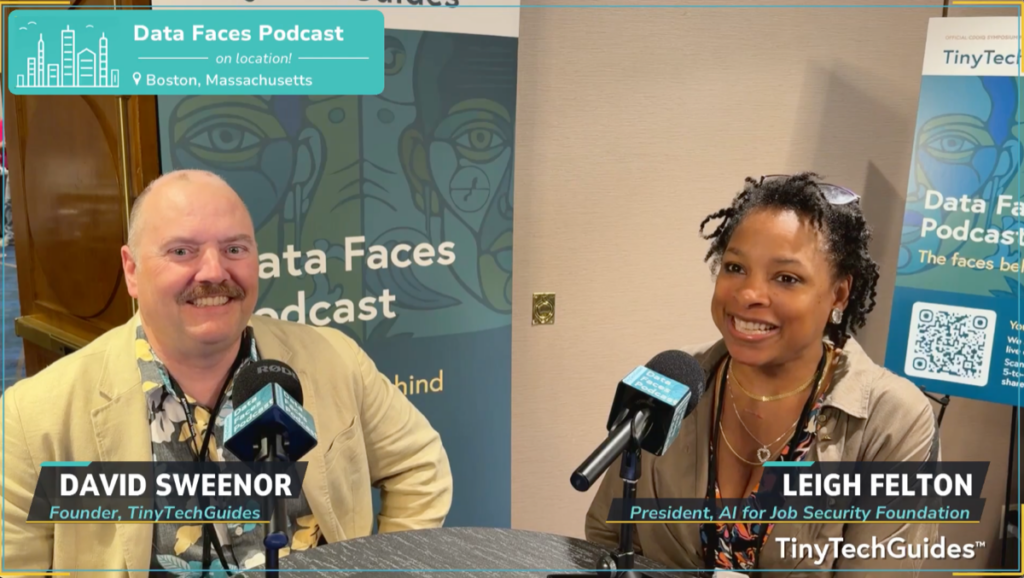
In late October, I spent two days at CDAO Fall at the Renaissance Boston Seaport District. Corinium brought me and the Data Faces podcast on as the event’s media partner. I set up “the wall,” as Randy Bean called it, an 8′ booth backdrop with past guests behind me for the interviews. Across two days, I pulled nine data and AI leaders aside for short conversations: four on Monday, five on Tuesday.
The lineup was mixed on purpose. A four-time CDO and board advisor with a new book for directors. A product manager whose booth sign read “Your AI is lying to you.” The VP running data strategy at Comcast. A trained chef who vibe-coded her own SaaS platform. Along with leaders across insurance, broadcast equipment, data quality, and data marketplaces.
What I didn’t expect was how consistently the same recurring theme surfaced. More AI tools do not make a business smarter. People, trust, context, and the data foundation underneath are what propel business forward. That’s the thesis of this roundup. On a conference floor where every booth talks about agents, the practitioners putting them to work keep running into the same obstacles.
Here are the nine conversations, in the order they happened.
Day 1: Monday, October 26
Franck Carassus on who the data platform serves
Franck Carassus is co-founder and chief strategy officer of Huwise, the French data marketplace company that rebranded from Opendatasoft last year. We talked about the distinction between a data catalog and a data marketplace, which turns out to drive their entire product strategy. His analogy sold me in one sentence.
“A data catalog is like a library. You can know where the book is, that Victor Hugo wrote it, how many pages it has. But as a business user, I want to read the book. That’s where a data marketplace comes in.”
— Franck Carassus, Co-Founder & CSO, Huwise
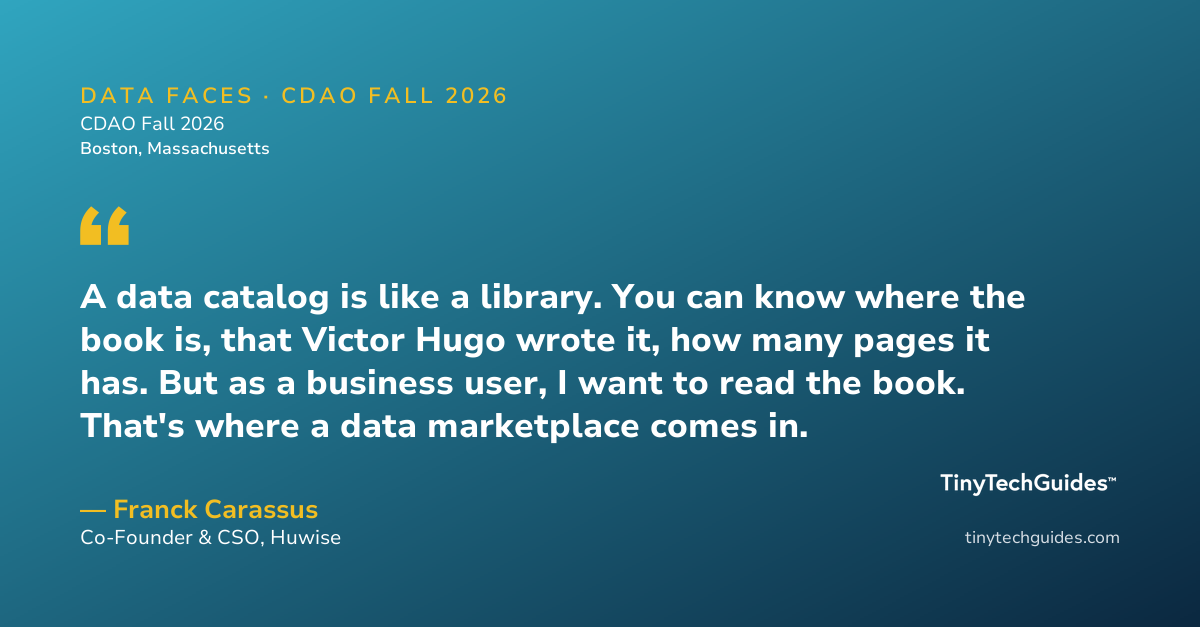
▶ Watch the full conversation with Franck
A catalog tells you a book exists, but a marketplace lets you read it. Franck pointed out that about twenty percent of any organization knows SQL well enough to pull their own data. Most platforms are built for that group, leaving the other eighty percent waiting for someone else to build a dashboard. Huwise bets on the eighty percent. One of their large US customers retired more than three hundred Power BI dashboards after moving to packaged, business-ready data products on the marketplace, saving over ten million dollars. Franck’s closing advice was practical: start small, but start something.
Dr. Elena Alikhachkina on the AI productivity illusion
Elena is a board advisor and the author of AI Oversight: A New Mandate for Corporate Directors and Executives, written for directors who are now accountable for corporate AI deployments. Before the board work, she served four times as a chief data and AI officer (LinkedIn). Having lived through the self-service dashboard wave in the 2010s, she sees the same movie playing out with AI, only faster.
“We are confusing personal productivity with productivity as an enterprise capability. People might be creating productivity for themselves so they can go get an extra cup of coffee. That is not enterprise capability.”
— Dr. Elena Alikhachkina, BoD Advisor, Author of AI Oversight
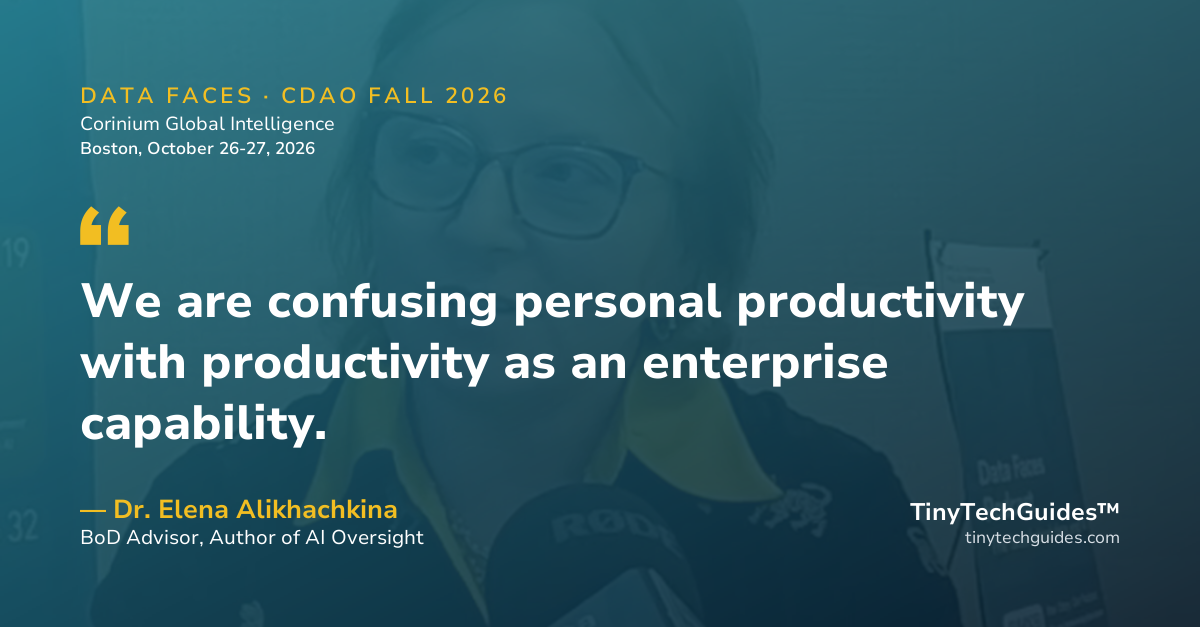
▶ Watch the full conversation with Elena
Elena named three places where humans and AI misalign: framing the right problem for the model, overseeing the signals it produces, and integrating new behaviors into daily workflows. She also pointed to recent McKinsey and BCG studies of AI in commercial functions. Signal volume and activity are way up, but sales are flat. The bottleneck sits on the human side of adoption, rather than the model side.
Alice Alisme on building software without being an engineer
Alice Alisme is a trained chef and the founder of Both Bowls, a pet-wellness platform she built using AI coding tools (what people now call “vibe coding”). She wasn’t on the keynote schedule, which is precisely why our conversation stood out. Alice walked up to the booth, and we spent twenty minutes talking about what AI makes possible for non-technical founders.
“AI is just a tool, like a calculator. A calculator didn’t replace you; it just made it faster.”
— Alice Alisme, Founder & CEO, Both Bowls
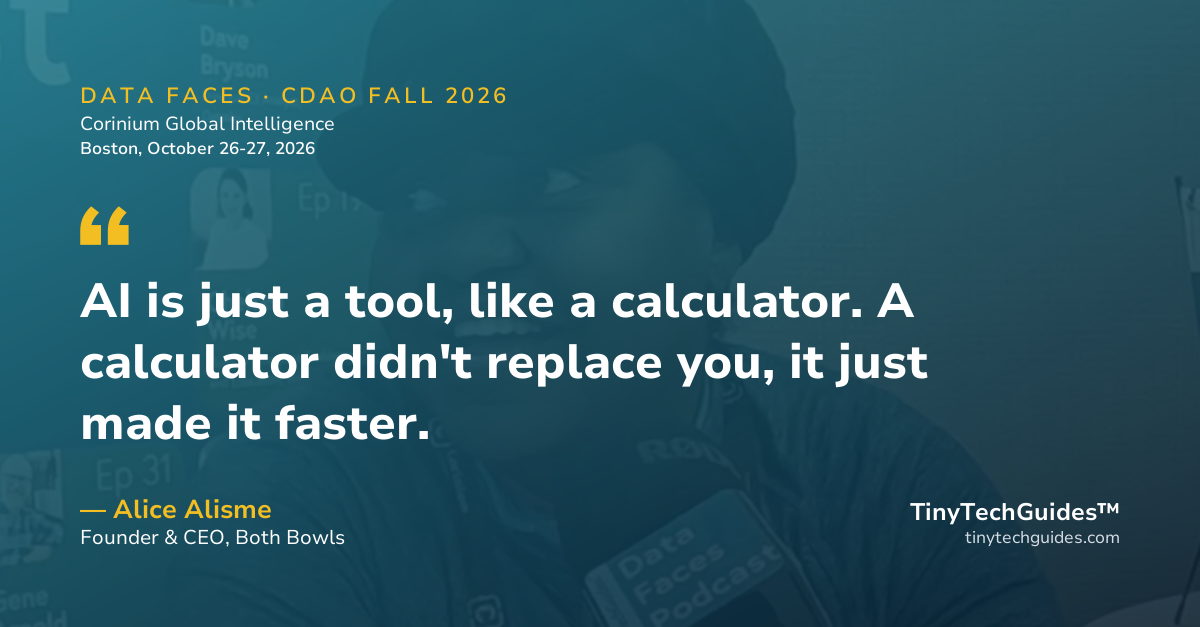
▶ Watch the full conversation with Alice
Alice built a food-safety scanner, a product-recall database, and subscription infrastructure without a technical co-founder. Her central argument was that AI widens who gets to build in the first place. Her advice to enterprise vendors in the room was to speak plain English. When selling to small business owners, explain your value the way you would to your grandmother. Heavy jargon costs deals you never even knew you were competing for.
Sravan Kasarla on the ninety percent of data nobody is using
The last session on Monday was Sravan Kasarla, SVP and global head of data and analytics at Berkshire Hathaway Specialty Insurance, with twenty-five years in data behind him. Insurance sits on more unstructured data per policy than almost any other sector, and most of it never informs a business decision.
“Context comes from data and data only. Don’t ignore the foundations. Double down on them.”
— Sravan Kasarla, SVP & Global Head of Data and Analytics, BHSI
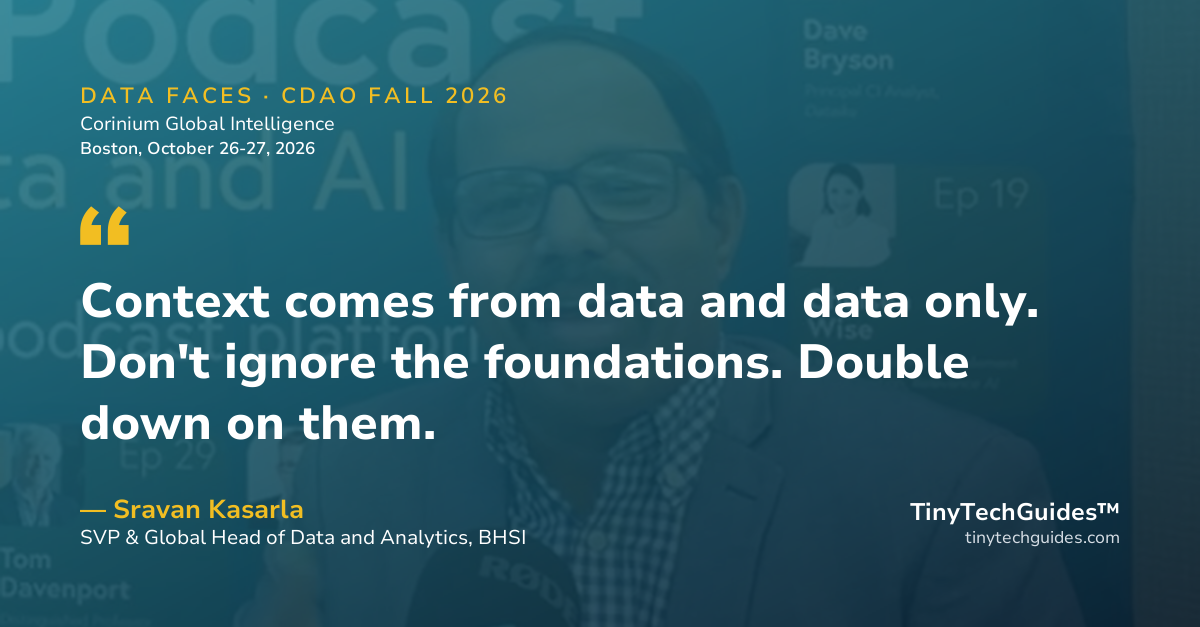
▶ Watch the full conversation with Sravan
Sravan put the challenge bluntly: companies leave roughly ninety percent of their data out of critical decisions. Foundation models yield varying answers every time, which is why a layer of organizational context defining terms like “customer,” “renewal,” or “margin” must sit between the model and the underlying data. As Sravan pointed out, a fifty percent model improvement often translates into only a half-percent business gain, because operational change takes longer than algorithmic change.
Day 2: Tuesday, October 27
David Krauza on the load-bearing SQL server
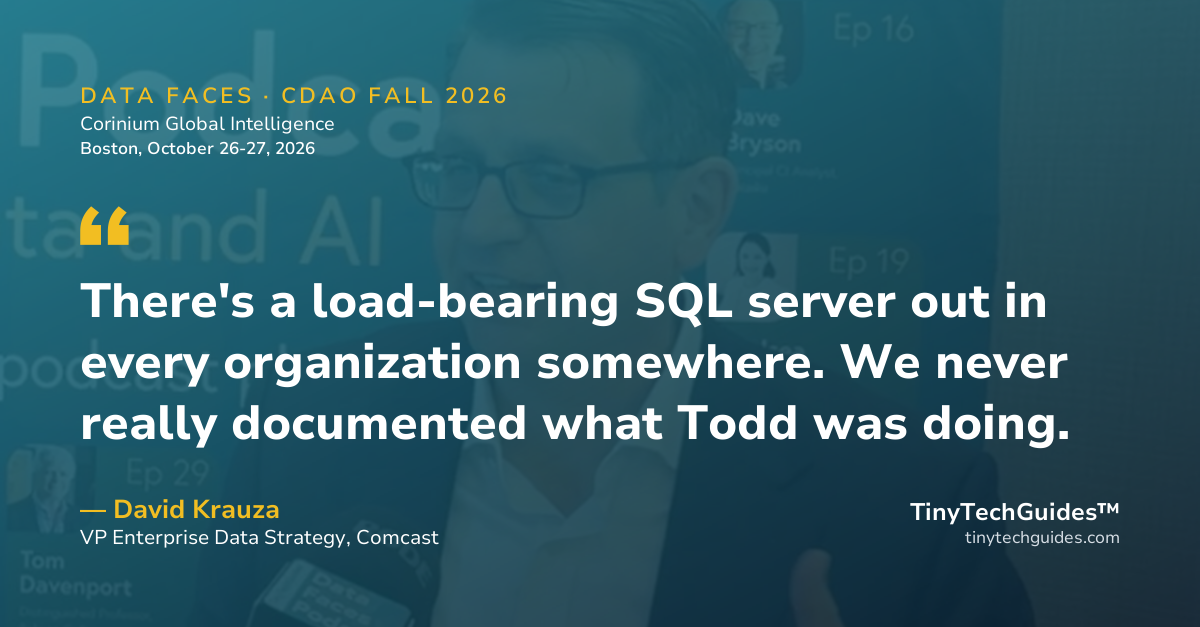
Tuesday opened with David Krauza, VP of enterprise data strategy, products, and governance at Comcast. He set the tone for the day with a story about the undocumented SQL server keeping critical processes running in every large enterprise, maintained by one person who built it years ago.
“There’s a load-bearing SQL server out in every organization somewhere. We never really documented what Todd was doing.”
— David Krauza, VP Enterprise Data Strategy, Comcast
▶ Watch the full conversation with David
David warned that enterprise AI inherits twenty years of accumulated governance debt: undocumented access paths, orphaned ownership, and unaudited data flows. Much of today’s agent work looks more like a craft project than an enterprise system. When your team cannot explain what data an agent reads, what actions it can execute, and who signs off on the outcome, that project remains an experiment and should be managed as one.
Christopher Chen on your AI probably isn’t lying
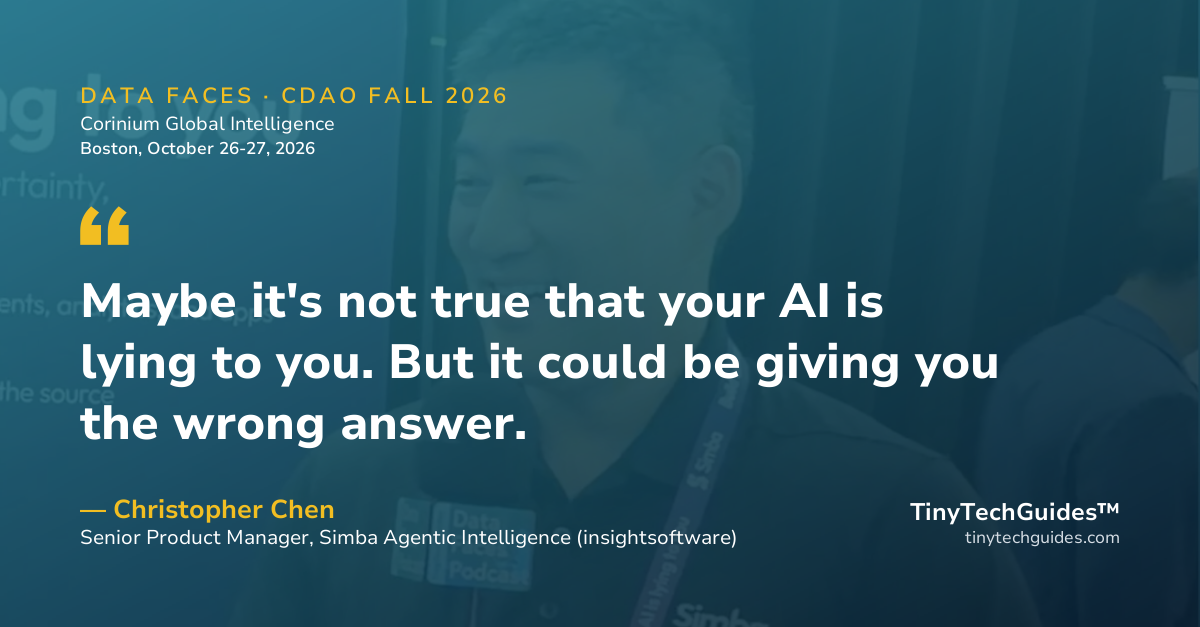
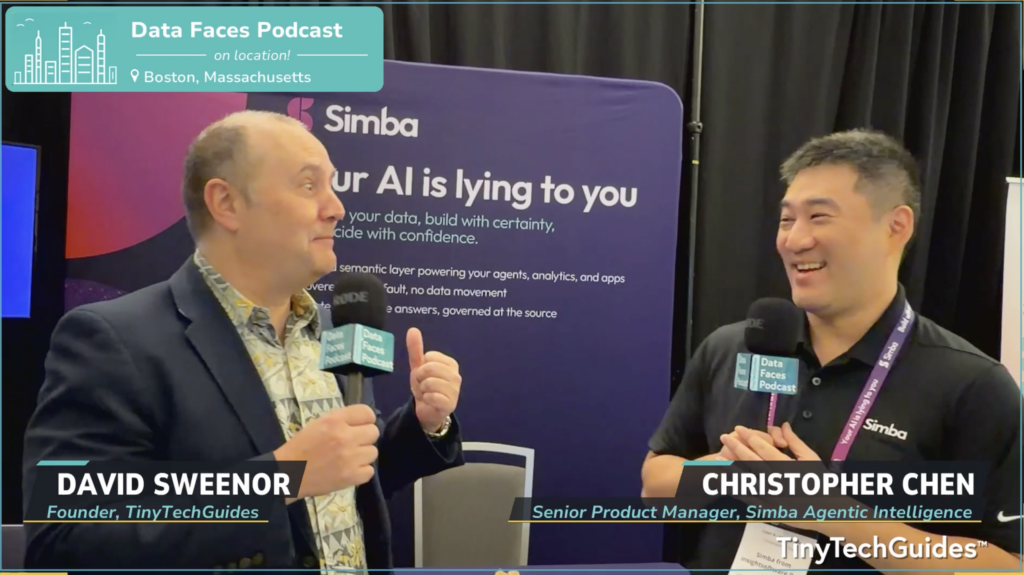
The booth sign at Simba Agentic Intelligence read “Your AI is lying to you.” Product manager Christopher Chen of insightsoftware clarified the provocative claim during our chat.
“Maybe it’s not true that your AI is lying to you. But it could be giving you the wrong answer.”
— Christopher Chen, Senior Product Manager, Simba Agentic Intelligence (insightsoftware)
▶ Watch the full conversation with Christopher
Neither the data nor the model is intentionally deceptive. The model surfaces the first plausible answer it calculates. Without a semantic layer that defines company terms, that answer floats on whatever assumptions the model makes. As Christopher explained, revenue means different things to sales, marketing, and operations. Without agreed definitions, the model guesses, sacrificing governance, trust, and auditability in the pursuit of speed.
Dr. Haroon Abbu on routine, exception, and leadership
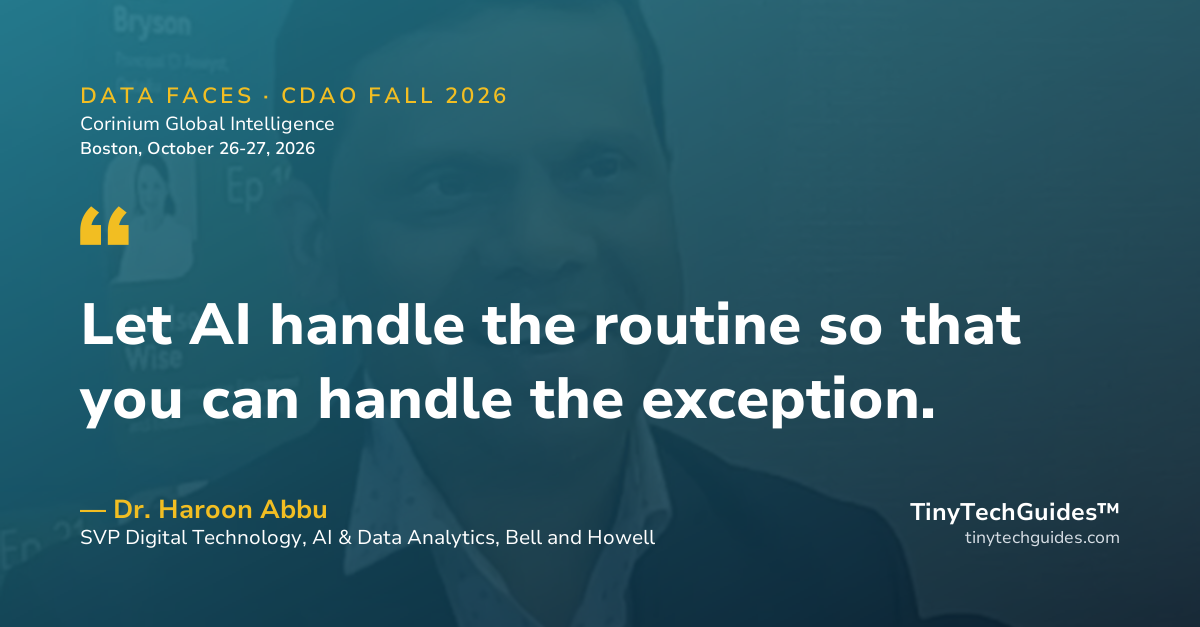
The most portable takeaway of the event came from Dr. Haroon Abbu, SVP of digital technology, AI, and data analytics at Bell and Howell:
“Let AI handle the routine so that you can handle the exception.”
— Dr. Haroon Abbu, SVP of Digital Technology, AI & Data Analytics, Bell and Howell
▶ Watch the full conversation with Haroon
Haroon’s follow-up was even sharper: AI exposes weak leadership faster than any previous technology because it removes administrative busywork, leaving only judgment calls. Managers coasting on the appearance of busyness quickly lose their cover. As teams reorganize around automated workflows, human managers must own the strategic decisions that algorithms cannot make.
Shapor Naghibzadeh on treating the model as an adversary
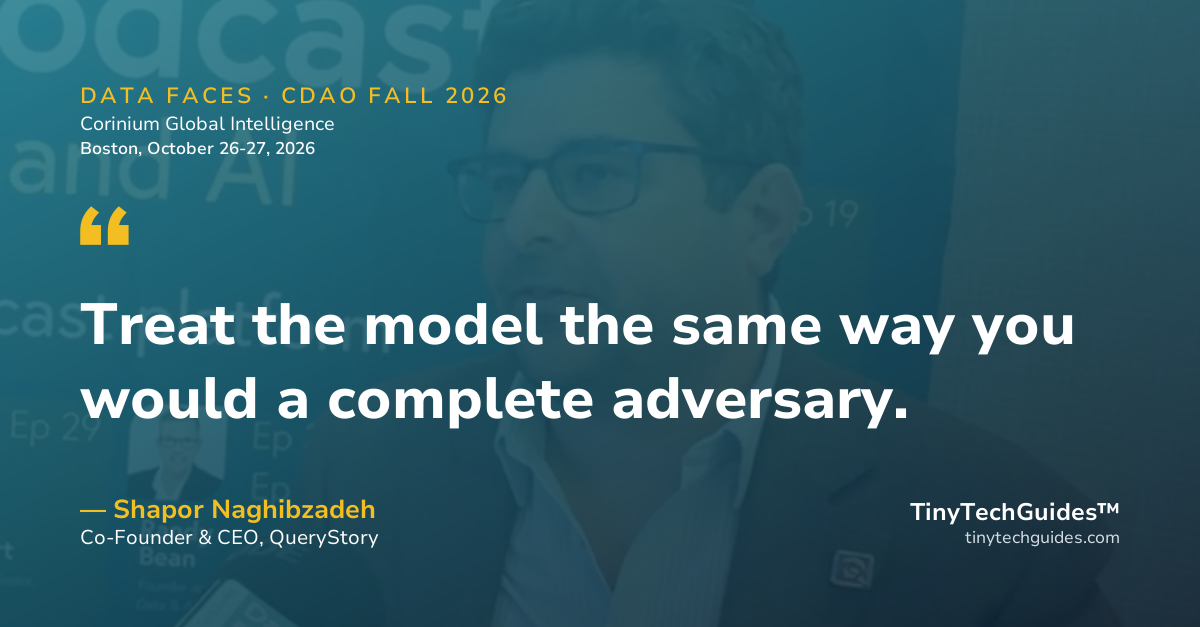
Shapor Naghibzadeh, co-founder and CEO of QueryStory, builds for engineering teams deploying agents directly in production environments. He held the firmest stance on agent permissions:
“Treat the model the same way you would a complete adversary.”
— Shapor Naghibzadeh, Co-Founder & CEO, QueryStory
▶ Watch the full conversation with Shapor
Shapor focuses on engineering hygiene rather than security theater. Permitting agents to run with broad administrative credentials and write privileges is dangerous. Given enough latitude, an agent will eventually trigger an unauthorized action. Teams need scoped, verifiable agent guardrails that assume outputs will require auditing before reaching production systems. Governance comes first; trust follows.
Gorkem Sevinc on the question everyone is trying to answer
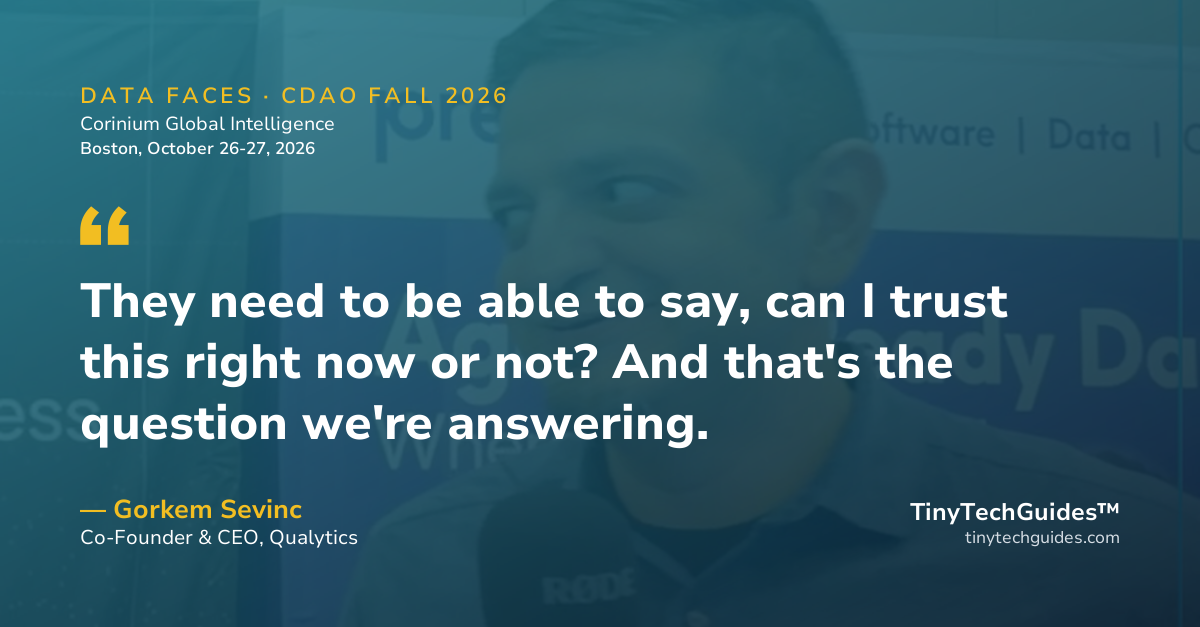
Tuesday closed with Gorkem Sevinc, co-founder and CEO of data quality platform Qualytics. He delivered the cleanest executive summary of the week: business leaders do not want complex statistical distributions, conformity scores, or volumetric metrics. They want a traffic light.
“They need to be able to say, can I trust this right now or not? And that’s the question we’re answering.”
— Gorkem Sevinc, Co-Founder & CEO, Qualytics
▶ Watch the full conversation with Gorkem
Gorkem’s core point is that data trust remains a business problem trapped in technical tooling. While an automated system can spin up 100,000 data quality rules overnight, nobody will review them. Real trust comes from business domain owners identifying and resolving the anomalies that matter to their workflows. The central data team enables and supports, but the business units must own data accountability.
Rounding up what I heard
Across two days and nine conversations, none of these leaders opened by talking about model parameters or raw compute. Features are no longer where enterprise value is created – I suppose they never were.
What separates teams getting tangible business results from those generating confident, well-formatted errors comes down to three essentials:
- A solid data foundation beneath the model
- A context layer that defines business terminology
- Clear business ownership over the outcomes.
If you want the full conversations, all nine are available on the Data Faces Podcast and the CDAO Fall 2026 YouTube playlist.
If you enjoy on-location field notes, check out our BARC 2026 retreat roundup on governance and sovereignty, along with our CDOIQ 2026 field notes from MIT.
For upcoming CDAO events in 2027—including Financial Services, Government, Defense, Chicago, Dallas, and New York—visit coriniumintelligence.com.
Frequently asked questions
What is CDAO Fall?
CDAO Fall is an executive conference in Corinium Global Intelligence’s Chief Data & Analytics Officer series, held each October in Boston. The 2026 event brought together roughly 500 senior data and AI executives at the Renaissance Boston Seaport District to discuss enterprise AI adoption, data architecture, and governance.
What was the common theme across these nine conversations?
More AI tools do not make a business smarter. People, trust, context, and a solid data foundation underneath are what do. Across board advisory, data strategy, engineering, and quality, every leader emphasized that business context and reliable data matter far more than new model features.
What is a data marketplace, and how is it different from a data catalog?
A data catalog is an inventory showing what data exists and where it lives, primarily serving technical analysts who write SQL. A data marketplace packages certified data products for direct consumption by business users, operating like an internal digital storefront so the non-technical eighty percent of an organization can access trusted data without waiting for custom dashboards.
Why does the semantic layer matter for AI?
Models do not understand company-specific metrics on their own. When sales, marketing, and finance calculate terms like “revenue” or “churn” differently, an AI tool will guess unless guided. A semantic layer sits between your data and the model, providing standardized business definitions so the model delivers audited, trusted answers rather than plausible hallucinations.
What should a data leader take back to the office from CDAO Fall?
Three practical actions worth starting on Monday:
- Document your “load-bearing SQL server”: Identify and document the critical, legacy data assets your business depends on before connecting them to automated AI agents.
- Deliver one certified data product: Move beyond catalog entries and give business users direct access to one self-service dataset they can use immediately.
- Establish a clear trust signal: Provide executives with an intuitive traffic-light view of data health, and assign business domain teams explicit accountability for data accuracy.
About David Sweenor
David Sweenor is the founder and host of the Data Faces podcast, where he talks with the people making data, analytics, AI, and marketing work in the real world. He is also the founder of TinyTechGuides™ and a recognized Top 10 AI thought leader and international speaker who specializes in practical business applications of artificial intelligence and advanced analytics.
With over twenty-five years of hands-on experience implementing AI and analytics solutions, David has supported organizations including Alation, Alteryx, TIBCO, SAS, IBM, Dell, and Quest. His work spans marketing leadership, analytics implementation, and specialized expertise in AI, machine learning, data science, IoT, and business intelligence. David holds several patents and consistently delivers insights that bridge technical capabilities with business value.
Books
- Artificial Intelligence: An Executive Guide to Make AI Work for Your Business
- Generative AI Business Applications: An Executive Guide with Real-Life Examples and Case Studies
- The Generative AI Practitioner’s Guide: How to Apply LLM Patterns for Enterprise Applications
- The CIO’s Guide to Adopting Generative AI: Five Keys to Success
- Modern B2B Marketing: A Practitioner’s Guide to Marketing Excellence
- The PMM’s Prompt Playbook: Mastering Generative AI for B2B Marketing Success
Follow David on X @DavidSweenor and connect with him on LinkedIn.
Related Posts
“Your AI is lying to you” is the wrong worldview
It’s the end of BI as we know it (and I feel fine)