

Data Faces · Episode 51 · September 22, 2026 · 39 min
Executive recruiter Jim Jinright on judgment capital and moving up the stack.

Listen: YouTube · Spotify · Apple Podcasts · Amazon Music
About Jim Jinright
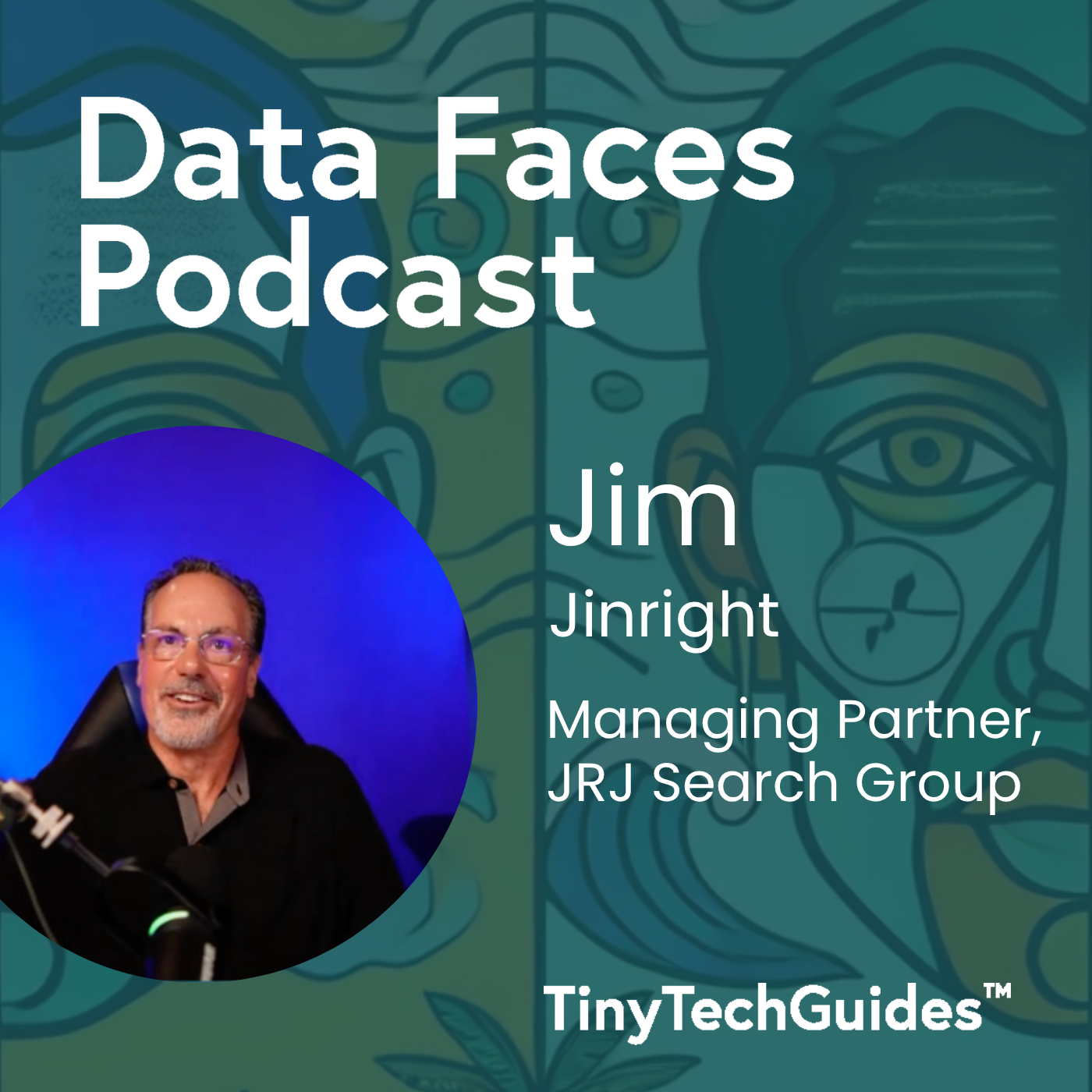
Jim Jinright is the Managing Partner of JRJ Search Group, an executive search firm based in Dallas Fort Worth that also runs national searches. He has worked in search for about twelve years, placing CIOs, CTOs, and chief data officers and then building the teams underneath them, mostly for mid-market companies and smaller businesses. His own depth is in application development and everything around it, and he covers the whole of IT. Before any of that he wanted to be a pilot, and then briefly a rock star, until the uncle who ran A&M Records in Canada heard the demo tape and gently suggested he keep it a hobby.
In this episode
- Why the slowdown traces to pandemic overhiring, 2022 interest rates, and cost cutting, with AI arriving last and taking the blame
- What happened to the junior work once the small problems started going to a model instead of a new hire
- What a recruiter actually does when a client posting draws more than 500 applications within an hour
- Whether ghost jobs are real, and what a candidate should and should not read into silence
- Why Jim calls the AI screening interview a turn-off, and what moving up the stack means for an early-career engineer
→ Read the full article: The perfect storm behind the tech job market
Full transcript
David Sweenor 0:06 Hello, everyone, and welcome to the Data Faces Podcast. I’m David Sweenor, the founder of TinyTechGuides and your host for today’s show. In this show, I talk with the people who are actually making data, analytics, AI, and marketing work in the real world. What’s exciting, what’s messy, and what’s coming next? Today, my guest is Jim Jinright. He is managing partner at JRJ, search group and executive search firm out of Texas. He places CIOs, CTOs, and chief data officers, and then builds out teams underneath them. So today we’re going to talk about, I’m super excited about this, the question that’s on everyone’s mind, AI and jobs. What’s real? What’s going on? What’s myth? And for early career individuals, how do you stay valuable when AI is doing all the work that used to go to people like you? So Jim, welcome to the Data Faces podcast. It’s great to have you here.
Jim Jinright 0:56 Yeah, David, great to be here. I’m excited.
David Sweenor 0:59 Me too. And so can you just let the audience know a little bit about yourself and your company and what you do? I think search is, I don’t think people quite might know how it works.
Jim Jinright 1:11 Sure. Yeah, absolutely. So I’m in the search industry and my company’s JRJ Search Group, and I’ve been doing it for about 12 years. So I mainly work with business leaders to solve talent challenges. uh in their companies mainly mid-market companies small businesses you know if there’s a gap on the team uh you know typically uh human capital is very critical you know it’s important to get the right people so yeah that’s what i do i help companies solve those problems I’m mainly in Dallas-Fort Worth, but I also do national searches. So I can cover all of IT, but historically, I’ve got a lot of experience in application development and everything around that.
David Sweenor 2:02 Okay, well, fantastic. And one of the themes of this show is getting to know people, the faces behind data. So my first question for you is, what did you want to be when you grew up?
Jim Jinright 2:16 Yeah, great question. So, yeah, when I was young, my dad was in the Air Force, so I always wanted to be, I guess, a pilot. And, you know, I had the Jane’s Aircraft book and, you know, used to watch the airplanes land. We used to live on Air Force bases. And, you know, but I wear eyeglasses, right? So that probably wasn’t going to happen. And then… later on i had a passion for music and played uh different instruments and uh you know it’s kind of funny i had a dream of being a rock star like a lot of kids sure and i had an inside track my my uncle joe was actually president of A&M Records up in Canada. He produced Super Tramp and all these groups. Awesome. Yeah, one day I played on my demo tape and he’s like, you know, Jimmy, I’m glad you just do that for fun. And I’m proud of you. And that was the end of my music career.
David Sweenor 3:19 There you go. The brutal truth. Oh, my God.
Jim Jinright 3:22 That’s right. I still play guitar for fun. Oh, that’s good.
David Sweenor 3:25 We’ll have to. I should have. If I had known that, I would have dusted mine off and brought it in here. So maybe next time.
Jim Jinright 3:31 Nice.
David Sweenor 3:33 So jumping into the topic today, Jim, you may have heard, seen some headlines about AI. In our pre-call, you mentioned this is more of like a perfect storm of things. You talked about pandemics and interest rates. And so people tend to blame things on AI. So can you just let our audience know from your vantage point, because I think you have probably a great vantage point from where you sit across the searches, where does AI rank and what’s going on in the industry? And should we be worried? Sure.
Jim Jinright 4:10 Yeah, I think, you know, there could be some layoffs because of AI, but I don’t think in reality that’s what’s going on. And if anything, in the future, there could be more jobs because of AI, right? But I don’t think we’re at that point. So what I call the perfect storm is I think there’s a lot of overhiring during the pandemic. And then around 2022, you know, the interest rates started to rise. So the cost of, you know, capital got expensive. There was kind of a pullback with startups with… uh mid-market expansion you know at the same time uh there’s a lot of cost cutting going on i think labor arbitrage and uh and then ai right so there was this notion hey maybe we don’t need 50 engineers we can just do it with 10 or none right so i i think that’s starting to correct a little bit but yeah that’s what i call the perfect storm and uh So I wouldn’t attribute all the layoffs due to AI per se. And I do think it’s starting to pick up a little bit. I’m starting to get more calls now for talent. And, you know, I think a lot of people call this the no hire, no fire economy. And now we’re moving into the low hire, no fire economy.
David Sweenor 5:45 I’ve not heard that term before. That’s quite interesting. Since generative AI specifically came to the forefront in November 2022 or whatever it was, have you seen a shift in perceptions organizations and how they think about AI? What’s that evolution been like for the companies and the type of talent you’re trying to find?
Jim Jinright 6:16 Sure. So, you know, it’s one of these things where I think some of the talent that is most affected by AI is maybe the junior people because, you know, AI, it’s really powerful. It’s got a lot of potential, but it doesn’t have context, right? And so there’s a couple things going on. And, you know, with senior level people, I actually think they’re probably more in demand as companies really want to hire people that have judgment, people that, you know, understand, hey, you know, AI is giving me all these facts, but which facts matter? You know, is it doing the right things? Whereas the junior people, you know, typically they work on business problems that are maybe smaller. You know, if I hire some junior recruiters, I’m not going to turn them over to my biggest clients and biggest problems. Right. But over time, I could train them to do that. So I think AI is doing a lot of that work. And some of the junior people. have been affected. But yeah, I think right now companies want people that have judgment and they know how to, you know, they know what good looks like. Right. And and I think that’s not an easy find. So it’s not just, oh, I know how to work with chat GPT. What I’m what I’m seeing, at least on the engineering front. is that it takes real engineers to build these ai systems absolutely and you know if somebody hasn’t been there done that in terms of building agents you know building ai systems uh you know then uh they’re probably just talking a big game so i think that’s a requirement now is you know who can own the outcome and who could produce an roi
David Sweenor 8:23 Okay. That’s quite interesting. And I have that same perception as well. And I think I read some studies a while back in that experienced people are going to become even more valuable in early career people. Or maybe have a little more of a challenge. But I do want to ask you about the hiring process. So now with AI, everybody has a beautiful resume. It has all the right words. Their LinkedIn profiles are amazing. How does someone stand out, number one? And on your side of the fence, how do you find the right people? Because it’s all a facade and it looks perfect. So how do you go about this?
Jim Jinright 9:04 Yeah, well, it’s like… Yeah, the AI is sorting. The AI is interviewing people. You know, the candidates use AI to apply, not just one time, but multiple times. So, yeah, there’s a lot of noise. And, you know, I think… Take myself, right? Like, sure, AI can help accelerate the process for me to maybe identify 500 profiles, right? It could, you know, help me sort that. I mean, it can pick up on things. Maybe the human eye may not be able to pick up on. But the real question is, how do we get down to like five people, right? And then understanding the one person that you want to hire. you know, you really have to have conversations, right? I think, I’ll give you an example. I’ve got a client not mentioning names, but they posted a position and they had over 500 applicants like within an hour, right? And they just really couldn’t go through it all, right? So that’s where somebody like myself, I literally would probably have to talk with 30, 40, 50 people.
David Sweenor 10:22 uh to be able to figure out you know who the best candidate is so yeah so i think conversations between humans uh is still very important okay and then is is linkedin the primary tool that most of your clients are using and where you’re sourcing most people from or are there other sites people should be considering
Jim Jinright 10:44 yeah i think or whatever i i don’t know linkedin’s the largest database that i’m aware of you know in the world when it comes to talent right so yeah i think it’s it’s really good to identify talent with linkedin but you know at the end of the day I think leveraging your network, building relationships, you know, being a part of masterminds or just, you know, industry groups is really important to raise your visibility to kind of break through the noise and get that human connection.
David Sweenor 11:19 Yeah, I think that’s so important. I’ve had a lot of people ask me. I’ve mentored some early career professionals and I’m still doing that. And they’ve asked me, quite a few of them have asked me about these, I don’t know if they’re phantom jobs or ghost jobs that are on LinkedIn. And I don’t know if companies are posting these things to make them, to beat themselves up, the perception of them. But… is that a real thing? Are people posting sort of fake, fake jobs out there?
Jim Jinright 11:52 You know, I’m not on the inside and I’m not the one posting. Well, have you seen these, have you seen these things?
David Sweenor 11:58 It’s like the same job in 15 cities or I have heard.
Jim Jinright 12:03 Yeah, I have seen it. And I’ve heard about that from a certain executives that I know, you know, we’ve talked about it that, uh, Some of these companies, I think, are trying to build their talent pipelines by advertising jobs maybe that don’t exist. And I think that’s a horrible thing for any human being to have to go through, you know, especially when your back’s up against the wall and you just want to make a living. Yeah, that’s unfortunate. But, you know, and I really don’t see the benefit to that either. You know, it’s just like… They’re throwing a big net over everybody in the world, right? But yeah, I’ve heard that. But here’s the thing, you know, back to the perfect storm. I think sometimes people beat themselves up. over when it’s time to get a job, if they’re not getting the response that they want. It’s not always you. I think it’s just the moment. Again, we’re kind of in this no hire, no fire economy. Now it seems to be picking up a little bit that there’s a realization that we actually need people to make decisions and to build things. So with that said, yeah, I think You just have to persevere and, you know, you have to have human connections. I think that’s the best way to get a job. You know, it was back in the old days, and I still think today it matters.
David Sweenor 13:35 Yeah, I totally agree with you. I mean, like that easy apply, you can just quickly do this. I remember when I was searching, I’ve been through a few rifts, you can tell by my lack of hair, but like early on, I was like, oh, I really needed a job. Yeah. you’re, you’re, you’re applying and you’re keeping a record of all these things. You’re looking at your spreadsheet and like, wow, applied for a hundred jobs over the last six months or whatever it is. And it’s quite discouraging to you. And I know you like rationally you get it. Well, maybe it’s not the right role, right time, right. Whatever we personally, you need a job, you got to feed your family. And so I think people struggle, um, struggle with that. But later on when I’ve been riffed, later on in my career i’m like i just don’t care anymore because uh you know it’s it’s just part of the world because i when i grew up at ibm site was at 13 000 people when i left there was 3 000 so my world view is they’re not going to keep me around longer than tomorrow yeah for the first time people that may be going through a riff or something they they really they really get bent out of shape and it’s just it’s just emotional
Jim Jinright 14:38 it is emotional and uh you know i i think you have to stay sane right like yeah uh i remember when my dad retired from the military uh you know my mom was complaining because it took like a year for him to find a job and you know she’s like why is your dad looking you know for the the perfect job you know why doesn’t he just go down to sears and sell washers and dryers Why are you looking for the perfect job? Right. And I think there’s a lot of truth to that. Right. Like so for your own mental health, you know, if you need to drive Uber or or deliver groceries or. know maybe volunteer at a charity or or just give back you know just stay busy um and and keep yourself sane through the process right and then then i think as you look for jobs you really need to find jobs that make sense right like if we’re in a economy that’s uh not hiring a lot of people you really need to have a relevant background, right? Were you in the same industry? You know, have you done the work before versus trying to jump careers, right? Yeah, for sure. So yeah, keeping a positive attitude, I think is important.
David Sweenor 16:03 Yeah, I agree with that. So another, maybe an insider perspective from you. We talked about early career. I want to come back to those folks. Maybe we can give them some recommendations on how to stand out. But on the other side of the spectrum are… later career folks. And I’ve had a number of, of people tell me, and I think I’ve experienced this, you know, myself in that you go talk to some startup, like, Hey, have you worked for some high growth, whatever, some company that’s only been around for five years and they only hire 20 year olds. And you’re like, well, no. And then you’re, you’re put off there. So is this, um, Is age discrimination, do you see it? Do you hear about it? And, you know, what could someone do about it? I mean, not from a legal perspective, but like, you know, how do you sell yourself?
Jim Jinright 16:56 Yeah, so… know under the law right equal opportunity under the law yeah well can’t discriminate right but uh yeah i mean some some companies may want to hire more junior people i guess that’s the way to put it but like i said the reality right now it’s a lot of those junior people aren’t finding jobs so it is shifting back to the seniors but but i do know what you’re saying, like, you know, like I’m you know, I’ve been around. Right. So I the same thing could happen to me. So I think some of the advice around that is, you know, why show somebody a snapshot of 20, 30 years experience when you could just show them the last 10 years. Right. That’s that’s probably a good thing to do. But I also think that. If if you have the experience and you have the judgment and you have the track record, those people are in demand, you know, and, you know, so. So I guess there’s no easy answer. I mean, if somebody wanted to break the law and discriminate, I guess they could. Yeah. But, you know, for me, it’s just leading with the value. And and I think the smart companies understand that, you know, hiring people across the spectrum is is a good thing. Right. Sure.
David Sweenor 18:24 Sure. That diversity and all aspects of the of the word diversity is absolutely super important for companies in terms of what what People hiring, hirers are looking for these days. I’m sure AI literacy is probably pretty important for the industry we work in, at least. What does that mean? And are there specific skills? I know you talked about judgment. And so that’s how I can take my past experiences and become a… ai to for a superpower but like what other sort of beyond that experience like what kind of ai skills or what kind maybe not at what kind of skills are people that they looking for in general sure
Jim Jinright 19:13 Yeah, I mean, you know, AI, it’s a big topic right now. So, you know, if you’re an executive, you know, I wouldn’t have my head in the sand, obviously, right? So I think the elephant in the room is AI. It’s, you know, transformative. So the more you know about it and the more literate you are on it, that’s a good thing. But I also think all those skills like… strong communication, people that take extreme ownership, people that have emotional intelligence, common sense, you know, context, if you will. You know, that’s very valuable. Right. And I, you know, I think to myself. You know, if I’m talking with somebody, I can tell pretty quickly if they’re just transactional. All they care about is the paycheck and they just want to do the bare minimum versus somebody that’s really passionate about problem solving or, you know, doing the right thing. Right. People that care. You know, I want to hire the people that. know if there’s a snowstorm coming they might spend the night at the store to open it up the next day right that’s right that’s proactive right and that’s kind of a rare skill uh take yourself right like you’re an entrepreneur now uh You would be a really great hire for a company because, I mean, you take ownership. Right. So that’s I think that’s what companies look for. Granted, you know, not everybody’s going to be an entrepreneur. And that’s a lesson I had to learn way back when takes different types of people. But but I think especially in a leadership role, you need people like that. And even. Even for junior roles, you know, some of those candidates stand out that, you know, they know how to communicate. They can bring the details in terms of what they built, problems they’ve solved. You know, you can really tell the people that… that stand out versus the people that that don’t. Right. Yeah, emotional intelligence is a big one.
David Sweenor 21:31 Yeah, it’s really interesting. So some of these skills you’re talking about is this sort of this passion, this drive, you use this word with this curiosity and ownership. And these are. I’ll say like soft skills, right? And you go look at LinkedIn and it’s like a lot of jobs are like, hey, you got to have 15 years doing A, B, and C, whatever the requirements for the job are. And putting words like collaboration on your resume, I’m collaborative. Okay. But it sounds like some of these things like… How does someone like demonstrate that or can that only happen through this this interaction, this conversation that that that you’re mentioning through the through the process? Because certainly people could say I have emotional intelligence or I don’t. But I don’t think it carries a lot written down, if you know what I mean.
Jim Jinright 22:23 Sure. Yeah. And especially since everybody’s resume looks so perfect now with AI, right? Right. Yeah. So it comes back to the conversations. And I think that people need to… Man, I lost my thought there for a second. Go ahead, pull me back in.
David Sweenor 22:46 Yeah, no, just talk about the emotional intelligence and the fact that- Oh yeah, how do you demonstrate that? And is it only through the conversation? Because it’s not like, oh, I have emotional intelligence as a skill on my LinkedIn. I don’t know, maybe I do or don’t. I don’t know, maybe if I was an HR, I’d have stuff like that, but I’m not.
Jim Jinright 23:04 Yeah, I think when companies hire- And when we talk about hiring managers, you know, if you think about a hiring manager, there’s somebody that needs help, right? Like behind every job posting is really a human being that’s crying out to the world saying, I need help right now. I know it doesn’t feel that way. And because… companies may list a position and there’s 500 applicants and everybody’s saying i’ve got everything you’re looking for right and and lord forbid some people aren’t truthful with that or right you know maybe they say they’ve landed the the aircraft on the uh or the jet plane on the aircraft carrier uh but Did they really, right? So that’s what’s got to get flushed out. And I think in a conversation, you’ve got to bring the details, right? So that’s how you differentiate yourself is just being able to bring the receipts with what you’ve done. You know, problem solved, value created, and just… Through communication, I think having examples of problems that you’ve owned, outcomes that you’ve owned, that’s how you’re going to differentiate yourself from everybody else that just can’t really back it up. I’ve worked for Kubernetes, but okay, what was the business problem that you were trying to solve, right?
David Sweenor 24:43 Mm-hmm. Yeah, I think that’s actually really important. I also always recommend to be yourself, whatever your personality style, your style, your work and your communication style is. Don’t obscure that because if you get in the wrong role, it’s just bad news for everybody. Oh, yeah. It never works out. So be you, I think is something I would say. I want to ask you about fractional or gig work. On the ascendancy, is it going to become the new normal? Or, you know, kind of where are we putting this these days?
Jim Jinright 25:18 Yeah, I think I don’t have a crystal ball, but… Yeah, I mean, I think a lot of companies like it, right? If they could bring in an expert, you know, for just to handle a problem short term. You know, mainly I’ve done direct hire. I know a lot of people prefer direct hire. Sure. But if you can’t find it, you know, and you’re open to that. Yeah, I do think… I do see a lot of demand for that right now, especially as companies try to figure out the investments that they want to make. And maybe they’re not clear, right? Going back to that perfect storm. You know, we’ve got a war going on and… you know, all these different factors. Right. And that’s hard for companies to plan. So, yeah, I think it’s a great opportunity to not only bring in revenue, but to share your expertise, expand your network. You know, I think that’s something somebody should be open to if you don’t have a direct hire role. Yeah. So I’m seeing a lot of that the last couple of years.
David Sweenor 26:31 Yeah, absolutely. And then another thing I had, you know, it’s come through quite clear to me that this humanness, this connection, this conversation, this networking is so important when you’re looking for a job. Yeah. What’s your thought on this whole AI interview process? I’ve seen, like, my son had to go through one. Like, I don’t know if it’s only for more different types of jobs than I would ever apply for, but it just seems so impersonal to me. What’s your read on AI interview type things?
Jim Jinright 27:11 Yeah, I… I don’t think I’m a big fan of it, to be honest with you. Yeah, it’s weird. They can’t take 30 minutes out of their day to do a screener with you. I’m like, come on, man. Yeah, and then, you know, the thing is, you know, if you’re trying to recruit a rock star, that’s not going to be the approach to get that talent, especially if somebody already has a job. you know, and you’re trying to put them into a funnel with interviewing with AI, it just, it almost seems distress.
David Sweenor 27:47 Turn off. Yeah.
Jim Jinright 27:49 Yeah. It’s a turnoff. Right. So yeah, I don’t, I don’t like it. And I guess if you’re forced into it, that’s what you have to do. But, um, I’m not aware of any of my clients that do that. Right. So to me, we want to have conversations with people. You know, part of it is having a really good candidate experience. Right.
David Sweenor 28:12 Absolutely.
Jim Jinright 28:13 The candidates evaluating you, your company. Right. So if you’re telling them, hey, go talk to a bot. you know, that that tells me a lot about your company and your culture. You know, there may be some jobs where it makes sense. You know, I guess if it’s a commodity job and, you know, you’ve got to hire a bunch of people at the lower end. But no, I think for executives, for professional work, that’s kind of a slap in the face.
David Sweenor 28:44 Yeah, totally agree with you. And then I had maybe a question on the sort of, I guess, You know, maybe 10 years ago, the timing might not be right, but there’s two things. People would see, you know, these, I don’t know if they would call them job hoppers, like every year, every couple of years, they would, they would. change roles and maybe every year is a bit extreme, but every, every two or three years, I think that was frowned upon. Is that still frowned upon or it seems like it’s sort of the new normal, I think in my mind, but I’d love to get your advantage, but how do people number one, perceive that? Yeah. going to different companies, you know, within their realm of expertise? And that’s my first question.
Jim Jinright 29:30 Yeah, it depends, right? You need to have a story with that. It’s, you know, I have some clients, you know, they want people to have seven years here, 10 years there. That doesn’t really exist.
David Sweenor 29:51 10 years, I mean, it’s like,
Jim Jinright 29:53 Yeah. No way. I mean, I talked to a guy the other day who’s like 27 years with the same company. And I was like, man, did they give you a reward? I mean, that’s like awesome, you know. But yeah, it’s really rare. I mean, most… Most jobs now are two years here, three years there. Maybe you get five, seven years, you know, here and there. So, yeah, I think, you know, for some people, if they’ve done contract work. whatever reason and they can explain it uh you know that that may work right so if i see a candidate and they have a combination of maybe some contract work but they also have some stability you know maybe they spent a few years here or there uh you know especially if they’re recent activity within the near term has been pretty stable. I think that’s probably a good candidate. But if you have a chronic contractor, nothing wrong with that. You know, it, it could be a little bit of a leap of logic, I think, to think that person may be happy in a direct hire role. Right. So I know a lot of hiring managers will be skeptical of that. And myself, I would be skeptical of that as well.
David Sweenor 31:20 Yeah, totally agree with you. And it’s so interesting about these, these rules and job. I remember a few years ago I was looking and I talked to my friend who’s a very, big company and all my listeners would know the name of this company. And I said, well, you know, I put you in, you’re my referable. And I know a couple other people there. I haven’t heard anything. And they’re like, well, look, we have a policy that says you can’t be at so many companies over three or five years. I don’t remember the timeframe. I’m like, but.
Jim Jinright 31:49 It was all acquisition. I was acquired and acquired.
David Sweenor 31:52 And through no fault of my own, I was steadily employed, but it looked like I was hopping.
Jim Jinright 31:57 I wasn’t. It was like, that’s just a bad, it was a weird policy. That’s an excellent point because I think what you need to do is you need to document that. Like myself, if I’m talking with a candidate and I’m going to- But I couldn’t even get a conversation with the right HR people.
David Sweenor 32:16 It’s just sort of an insider.
Jim Jinright 32:18 Oh, yeah.
David Sweenor 32:19 I just thought that was, that was interesting. I’m like, Oh, I don’t know. I was just acquired. I was divested and acquired. Yeah.
Jim Jinright 32:25 I think, uh, you know, for people, let’s say you have a resume, uh, I wanted to give you a potential solution on that. You should maybe put the start and end dates and, oh, this was a contract or company was acquired, right? Because then you’re removing the guesswork.
David Sweenor 32:46 Oh, it was on there. It was on there. It was on there and they still wouldn’t go with it. Totally agree. Well, that’s fine too.
Jim Jinright 32:54 That might not be the right candidate and that’s perfectly fine.
David Sweenor 32:57 Okay. But Jim, we’re getting close to the end of time. So let’s come back to our early career folks that they’re looking, or maybe people that have, have been impacted by, by RIF kind of what’s your, your top advice and how to stand out. We talked about networking, but how, like what, what should they do, you know, over the, over the next week or two to, to try to, you know, accelerate their, their search and their, and up their, their desirability.
Jim Jinright 33:24 Yeah. Referring to like junior people?
David Sweenor 33:28 Yeah, it could be junior. Yeah, let’s focus on more early career professionals, maybe any mid-career that, you know, if they’re impacted by resource action or what have you.
Jim Jinright 33:39 Sure. So I think… You know, everybody’s moving up this stack, right? So I really feel bad for some of these software engineers that, you know, have gone to school, they got their computer science degree, maybe even a master’s, and they don’t have a job, right? I mean, when I first started recruiting, it was like for every one… You know, for every college grad, there was like 10 open positions. Right. And now now it’s the inverse. And so so I think because so much of the coding. is starting to become a commodity right like the the ai can code yeah you need to move up the stack right so if i was a junior person you know i would want to move into the judgment uh sphere where uh you know instead of just focusing on the code whether it’s react or kotlin i would want to be the person that knows how to build the software factory right because that’s where it’s going so you know what is you know, what are the proper guardrails, right? What do you build? What shouldn’t you build? You know, and then how do you manage an AI system, right? So I would dedicate myself to that. So obviously having strong technical skills is still very valuable. And then I think with what goes along with that is the strong communication, you know, and also being proactive. If you’re sitting on the sidelines and you don’t have a job and you’re just applying and it’s not moving the needle, I would really take it a step further. Instead of reaching out to potential people to ask them for a job, I would identify leaders in your industry that you could connect with. And I would ask them, you know, I would just tell them, hey, I researched your background. It’s really impressive. You know, I’m trying to get into this space and would love your advice on what user groups to be a part of, what masterminds. You know, any anything I could plug into to further my career. You know, most people, it’s human nature. They they want to talk about themselves. You know, they they don’t mind helping people kind of appeals to their ego. So that’s the game I would play. Right. Because some of these people. can actually open doors for you long term but i think their advice on what you need to do for your career is probably much more impactful and and that’s what i would do is uh as a junior person okay well perfect and and maybe uh the final question i have back to the faces behind data this this came from a guest uh suggestion what are you
David Sweenor 36:57 either currently reading or your favorite sort of TV show series that you’re, you’re, you’re binging on.
Jim Jinright 37:04 Oh man. You’re going to be able to profile me, right? Like, uh, I like, uh, wife and I, we watch land, man. You’re in Texas. Aren’t you living? Aren’t you living in land man zone? Yeah. Yeah, we like that. I’m big on on YouTube. You know, I just I like I like adventure, you know, people that I’ve been watching this guy. He’s got a 22 foot boat and he goes from like Florida to the Bahamas and, you know, all the drama involved with that. And, you know, in terms of stuff that I read. mainly i’m just a information junkie right so i’m i’m living and breathing on uh you know people i follow uh like yourself and you know other people in the ai space just really trying to keep up with technology is kind of what i do for fun uh that’s mainly what i read all right how about you Oh, well, I watch a lot of cooking shows, Jim.
David Sweenor 38:11 I would just bore everybody to death. That’s cool. OK, well, so, Jim, where can people find out more about you or if they have any questions? You know, what’s the best way to get a hold of you or for people hiring? Where can I find your company and all that stuff?
Jim Jinright 38:30 Sure. Yeah. My company has a website, jrjtx.com, but probably the best place to connect would be on LinkedIn. And I’m sure you’ll have a link here in the podcast. So just look, Jim, Jen, right up on LinkedIn. I’m happy to connect and happy to be a resource.
David Sweenor 38:52 All right, Jim, Jen Wright, JRJ Search Group, thank you for joining the Data Faces podcast. It’s been an amazing discussion. Appreciate you joining.
Jim Jinright 38:59 Awesome. Thank you, David.
David Sweenor 39:01 Cheers.