

Data Faces · Episode 55 · October 20, 2026 · 40 min
Alteryx’s Gerry Van Zandt on AI-drafted RFIs, pay to play, and buyer trust.
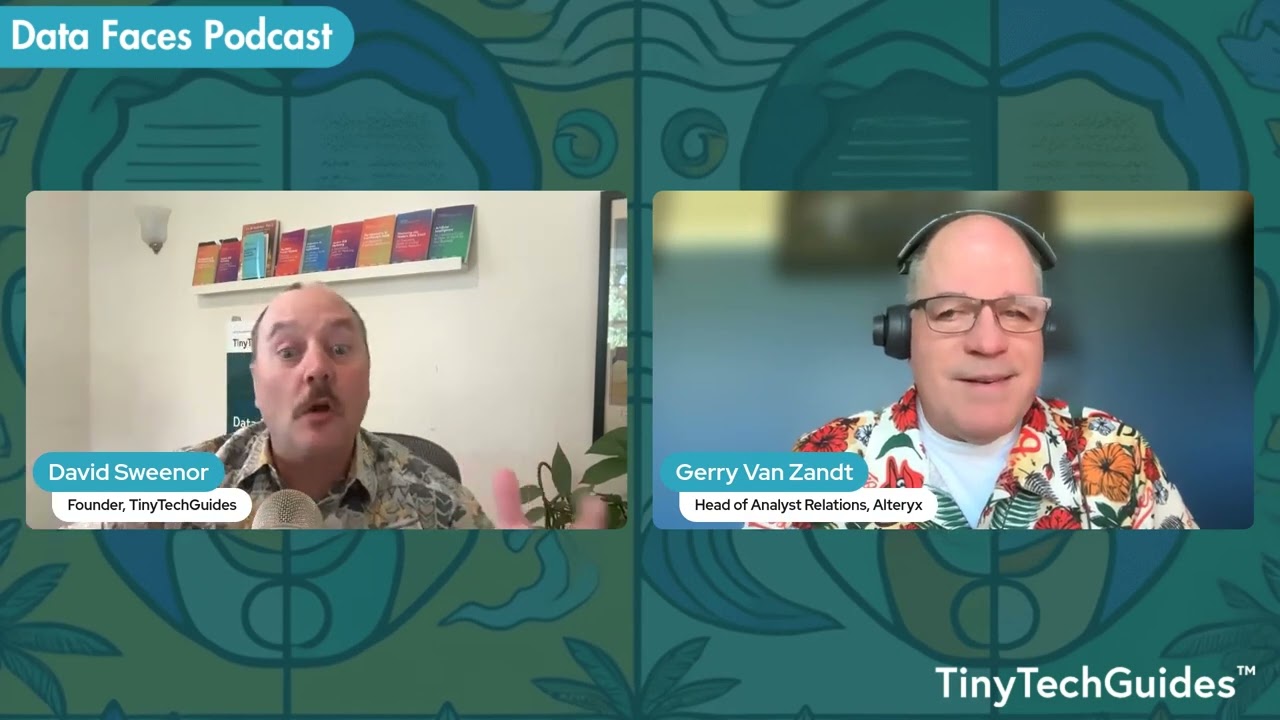
Listen: YouTube · Spotify · Apple Podcasts · Amazon Music
About Gerry Van Zandt
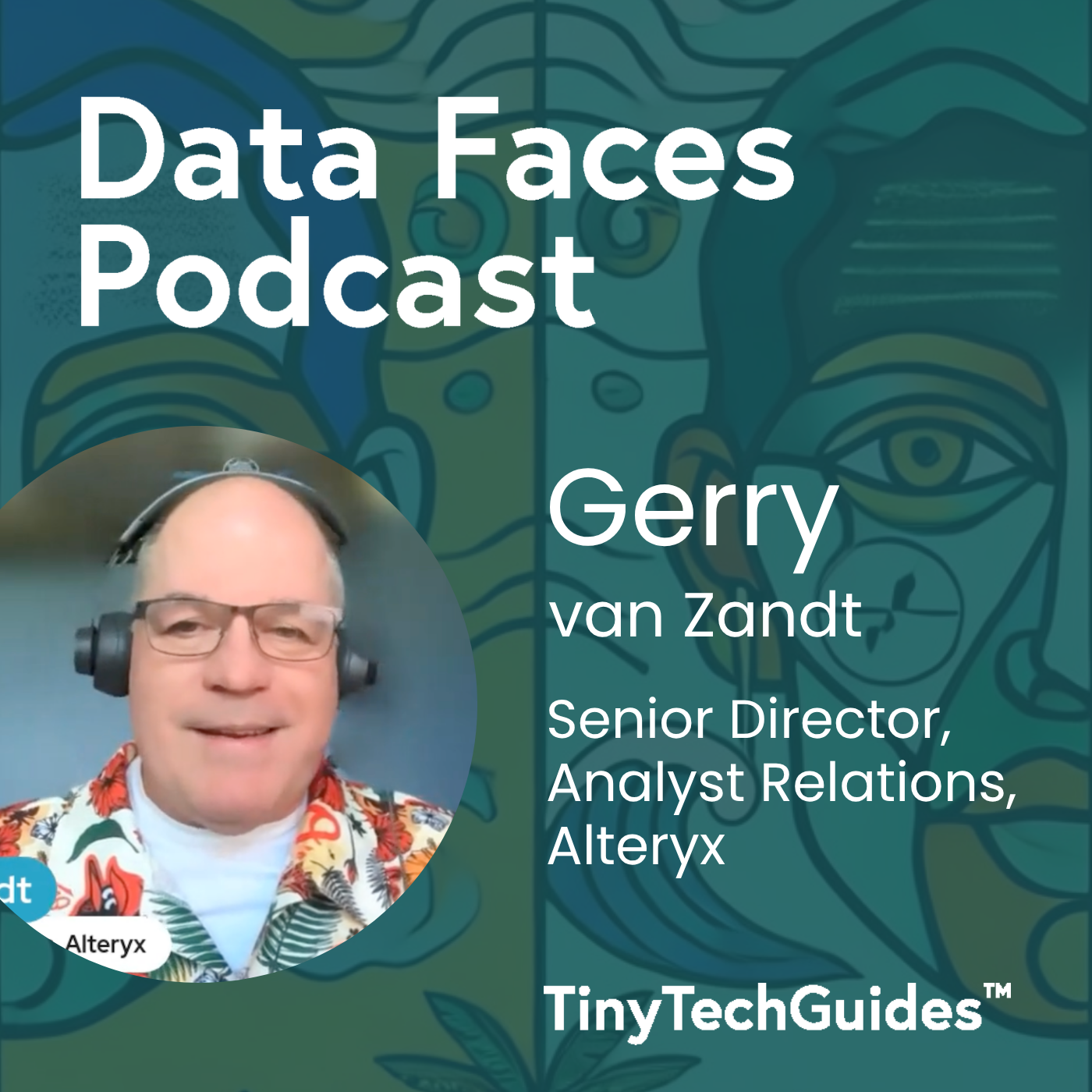
Gerry Van Zandt is senior director of analyst relations at Alteryx, where he has run AR for five and a half years. Before that, he spent about nine years in AR at Intel, seven and a half at HP, and six at Oracle, and he has served on the board of the Institute of Industry Analyst Relations (IIAR). He and David worked together at Alteryx, and he has briefed more Gartner analysts than almost anyone David knows.
In this episode
- What influences a technology buyer in 2026, and how much that list has grown in a decade
- How AI cuts the time and people needed to answer an analyst questionnaire
- Whether Gartner and the other big firms are pay-to-play
- How a startup with no paid relationship landed in a Gartner Cool Vendors report
- What companies still get wrong about analyst relations
→ Read the full article: Are industry analysts still relevant when AI builds the shortlist?
Full transcript
David Sweenor 0:05 Hello, everyone, and welcome to the Data Faces Podcast. I’m David Sweenor, founder of TinyTechGuides, and your host for today’s show. In this show, I talk with the people who are making data, analytics, AI, and marketing work in the real world. What’s exciting? What’s messy? And what’s coming next? Today, my guest is Gerry Van Zandt. He’s the senior director of AR at Alteryx. He spent close to 30 years in analyst relations. He’s done AR at Intel, Oracle… HP, and now Alteryx. And I think he’s briefed more Gartner analysts than almost anyone I know. So that makes him the person, the right person for today’s discussion. The topic is, are analysts still relevant in the age of AI? So let’s dive in. Gerry, welcome to the Data Faces Podcast.
Gerry Van Zandt 0:53 Thank you for having me. It’s a pleasure to be here on this show. End of summer, beginning of fall, mid-Atlantic day. And looking forward to digging in, David.
David Sweenor 1:03 Yes. And I appreciate you wearing the Aloha shirt. It fits in with the show’s brand. So you are on brand. Two gold stars for that one.
Gerry Van Zandt 1:12 And I will say that this is a Baltimore Orioles game giveaway shirt. You can see the little Oriole. Oh, yeah. There we go. And the Orioles logo. So there’s more on the arm here. So, yes. I’m covering my bases between, I’m not a native Marylander, but I’ve lived here for going on nine years. So I’m adopted, but yeah, doing my David duty and my Baltimore duty here.
David Sweenor 1:39 All right. Well, perfect. So Gerry, tell us a little bit about yourself and what you’re up to over at, over at Alteryx.
Gerry Van Zandt 1:46 Yeah, so I’ve been at Alteryx five and a half years this month, actually. Hard to believe it’s gone fast. I tend to stay with firms. I was at Oracle for six years, HP seven and a half years, Intel about nine years earlier in my earlier phases of my career. So not unusual that I’ve been at Alteryx this long, but it’s been in an AR role. The company, it’s been a very interesting five and a half years. I would say it’s 10 or 12 years compressed into five in terms of the speed and evolution that Alteryx has had. Without getting into the history of the company, two and a half years ago, we were taken private from being a public company. We’ve been in essentially a transition. over the past couple of years under new leadership. We are pivoting into more of becoming less of a data prep and analytics automation type of platform and more of a platform that centers on what I would call the business logic layer. This is where data from the disparate sources within an enterprise comes together in a very governed, transparent, manner that is utilized by people who are very close to the business, not the data scientist audience, but really business rules, business logic, how the business operates, basically. So it’s been an interesting pivot. We’re still in the middle of it and a huge product evolution as well. Last year, we introduced the Oracle, the Alteryx One platform, which is Previously, we kind of had positioned our product as an on-premises and a cloud module. And nowadays, it’s one big platform combined. It’s hybrid. So we still have both types of delivery models. But we now have a front end that is very powerful, very flexible, and is a really good front end to our platform. So very exciting things happening on the product side.
David Sweenor 4:07 And we had the good fortune of working together when I was over at Alteryx and you’re still there. So that’s good to see. Gerry, the motivation, one of the motivations for the show, it’s named Data Faces. So I like to get behind the people in the professional career. So my first question for you is, what did you want to be? When you grew up.
Gerry Van Zandt 4:30 Yeah. You know, my dream as a child and in my early, you know, preteen years, I wanted to go to the U.S. Air Force Academy and be an Air Force pilot. I really wanted to fly. That was that was my driving thing. And when I was six years old, I actually had. a birth defect that was, and essentially it was nothing serious, but it was poisoning part of one of my kidneys. And so when I was six, I had surgery and significant surgery and the doctors removed the bottom third of my right kidney. So when I was 13 years old, my doctor told me flat out, he’s like, you’re an imperfect specimen. The military will not take you, you know.
David Sweenor 5:17 Okay.
Gerry Van Zandt 5:18 And so that pretty much dashed my dreams.
David Sweenor 5:20 Right.
Gerry Van Zandt 5:21 And around that time, maybe a little bit before I started getting really into computers, technology, my parents bought, you know, when I was in ninth grade, my first home computer. And, you know, from there, I knew from there on, I was going to be in a technology related career. I just didn’t know which direction. So. All right.
David Sweenor 5:41 Well, very good. Well, thank you for sharing that. Now you’re flying through the analyst relations clouds right now. So before we jump into AI and its impact on analyst relations, can we just maybe do like a two minute primer level set? Because I think analyst relations is misunderstood. So what is AR and why does it matter for people?
Gerry Van Zandt 6:07 So yeah, the discipline of analyst relations is essentially, as I have always viewed it, is a two-way, the analyst relations role is a two-way facilitation of information and insight and advice and wisdom from the analyst audience into a company and making sure that that insight gets to the people within the company that really need it and can use it and can help develop better business decisions. And also it’s an outbound function, making sure that analysts, experts out there are fully aware and understanding of a company’s strategy and in particular, maybe mid to long-term directions and aspirations of what that company wants to be. And using that combination of information, I think analysts… are very good at assessing market signals, competitive signals, competitive positioning, competitive messaging, and really assessing markets in terms of both the technology and then also you know, the individual vendor participants and how they rate, you know, and how they, how they compete.
David Sweenor 7:23 Okay. This is really interesting to me. So I think everybody’s aware there’s this thing out in the world called AI and, and broader, there’s a lot of different technologies and in places people can go for, for information. So. My first question for you is, what do you think actually influences a technology buyer in 2026? And how much of your answer is different if I asked you this five years ago?
Gerry Van Zandt 7:54 I would say it would be radically different. And the reason I say that is because in the past, I think technology executives, particularly for large technology platform level decisions, strategic decisions, you know, would use a handful of inputs, market inputs. So, you know, analysts, analysts, analyst reports, magic quadrants, Forrester waves would be key inputs. But they’d also, you know, perhaps, you know, talk with industry experts, peers, industry peers, you know, or former colleagues. you know, experts, you know, practitioners, etc. So, you know, maybe press articles, things like that, maybe blogs. Yeah. And so I think there was a fairly limited number of inputs for those major decisions. And what’s really changed is over the last 10 years, this has really exploded because now you have podcasters, you have you have, you know, former analysts who are now consultants or market consultants. You know, you still have the big analyst firms. You have AI now. In recent years, you have AI queries where you can ask AI to shortlist or at least augment your thinking in a particular way. There’s a plethora of sources. I think each of these sources can, not always, but can correspond to a particular phase in a buying cycle. For example, you know, there’s the initial, the awareness cycle, you might look at press, press articles or blog posts or LinkedIn authors, you know, experts on LinkedIn versus, you know, when you’re narrowing down that list, that’s when you might be using analysts more, you know, to shortlist and to really hone, hone that decision down. So I think, yeah, it’s important to know, you know, number one, the plethora of sources, but also when and where to use them.
David Sweenor 9:57 So, you know, you mentioned that, you know, the analysts, you know, historically, and maybe it’s true today, maybe it’s not, I’d love to get your opinion, but, you know, they were the experts in a given… technology. And some of the analyst firms, including Gartner, probably the biggest one out there that everybody’s familiar with, and maybe Forrester and IDC to a degree, a lot of these lifelong analysts sort of aging out, they’re retiring, they’re going on to new things. And so do you still see that level of… expertise that, you know, some of these people have been there 20, 30 years. So is that changing? You think the whole model of I’m going to be an analyst, I’m going to be there for 20 years or whatever it is.
Gerry Van Zandt 10:43 You know, that’s one of the things that’s changed over the years, you know, particularly with the larger well-known firms is that For example, at Gartner, you would have somebody who had been a practitioner for 20 years and then they become an analyst and then they retire. And I think over the last 10 or 15 years, what you’ve seen a change and people more or less right out of school or maybe somebody with three to five years experience. you know, becomes an analyst and they don’t have that wealth of experience. And I think that can be an issue in some cases. What I would really say with the analyst firms, particularly the big ones, the Gartners and the Forresters, is there’s a certain level of trust that is associated with their brands. And that has not gone away. Analyst firms still possess a very high level of institutional trust. And I think independent experts or former analysts who go on to do their own thing They may not have that trust that, say, the Gartner brand does. There’s just a certain cachet with that that is, you know, has been evergreen for decades.
David Sweenor 12:00 Yeah, yeah. Okay. So that’s really interesting. So, you know, with AI now, if you ask AI a question… You know, it’s going to it’s leading, you know, you’re going to get an answer right before you go have to go to a website. You mentioned all these inputs that are out there. And so I guess what as a vendor. Like. Do I need a Gartner? If I can have a deep research query, go, you know, look at a billion, million websites and, you know, an hour and come back with, here’s all the pros and cons specific to you. Now, I know these analyst firms are putting AI over their corpus of research themselves and things like that.
Gerry Van Zandt 12:42 Yeah, we should talk about that. Yeah, let’s talk about that. Like, what’s going on here? So, you know, the way I’ll just put it in a very simple way. AI can tell you what the market appears to believe, but an experienced analyst can tell you whether you should believe that or not. And I think it’s that human experience that we were just talking about. It’s that human touch. You know, AI is great for going out and getting information, presenting, synthesizing, but you don’t know if that’s real. And a lot of it depends on the prompt. A lot of it depends, you know, it’s garbage in, garbage out. So if you give a garbage prompt, you’re going to get a bunch of crap back. And I think an analyst has the insight and the context and the longevity in the market and the knowledge of the market to really… doubly interpret that. So I actually think in this age of AI that analysts are more important than ever because content is so easy now to develop, to get, and you just don’t know on the surface if it’s quality, if it’s vetted, if it’s good or not. You have to assume that it needs human oversight. It needs human augmented to interpret it.
David Sweenor 14:06 Well, you know, it’s interesting I see. So I’ve, you know, we’ve both done a number of whether it’s Forrester Wave or Gartner Magic Quadrants or IDC Marketscapes or a number of other evaluated reports. And some of these RFPs, they’re quite lots of questions. I’ll just I’ll leave it at that, you know, hundreds of detailed rows. And so now what I see, you know, with my clients now is we have they’re using AI to help draft. The deck content helped draft the RFPs. And, you know, I don’t know who in the past humanly could ever read those RFPs. So I’m assuming on the other side, the analyst firms are ingesting these with AI. Is AI just talking to AI or just trying to get a read on that? You know, it’s a little weird.
Gerry Van Zandt 14:54 Yeah. You know, actually, some of the analyst firms are even now pre-filling out using AI to pre-fill.
David Sweenor 15:00 Well, that would have been a time saver for me.
Gerry Van Zandt 15:03 Giving them to the vendors. And, you know, as you know, it’s always easier to react to something than it is to create it from a blank, you know, a blank square in an RFI. It’s always, no, that’s wrong. I’m going to cross that out, you know? Yeah. You know, I’ll just say I’m a heavy user of AI. I have been for the last 18 months on RFIs, on analyst RFIs, you know, even the even the big ones, the deep ones. And this cuts. I’ll just give you a couple of quick stats. It probably cuts 70 percent of the time needed. And it probably cuts from having 15 or 20 experts review a given RFI. I can probably do it with five or six people. So it cuts the man hours. both to fill it out, but also for other people in the company to engage and review. It just dramatically cuts that time down. So that has been a huge time saver. My process is I don’t just feed a PDF or a Word doc into ChatGPT and out pops the other side of filled out RFI. I actually do it question by question, section by section.
David Sweenor 16:10 Yeah, sure.
Gerry Van Zandt 16:12 And I curate the data. I curate what comes back. And I will know, and I have seen this where, you know, it’ll, for example, we had a brand name for our early AI capabilities a few years ago at Alteryx called AiDIN, which you probably remember. And, you know, that still pops up in some internal LLMs. And, you know, that’s just two, three years out of date. So you still get back crap. And that’s why this requires a human oversight. To my earlier point, you really need to vet this information and go through it. So it’s both. It’s a tool, but it’s not the only tool. The human mind is still the biggest tool here. Right.
David Sweenor 17:02 And I know one of the tenets of a good AR program is this This continual, I guess, I’ll say influencing, right? It’s not like a lot of vendors, you know, if they don’t have their act together, they show up and here’s the magic quadrant stuff. And why are you not in a leader’s quadrant? Well, because, you know, you haven’t talked to these people. So how much of this is a… It’s like a relationship game, a people relationship thing versus a company and product capability thing. What’s your take on that? Because I know if you tick somebody off, they’re unlikely to put you in a good position in these reports.
Gerry Van Zandt 17:44 Yeah. So a couple of points there. I would say, number one, relationships are probably the one constant thing. that I’ve seen in this business over the last 30 plus years. If you have the ability to develop strong, trusted, long-term relationships with analysts, it helps you get things done and it helps them get things done, right? Like I said, it’s that two-way street. You know, you get your emails answered. You know, you get your requests made. I’ve always said good relationships are the currency with which effective analyst relations is achieved. Right. Yeah. so so that’s really the baseline uh that has not changed and i don’t ever see that changing i mean and it is that way with any in business in general right relation business gets done on relationships and analyst relations is just very much you know that way so okay okay
David Sweenor 18:48 I have to ask this question because it’s been asked of me a number of times. And I must mention mentioning to people before we’re recording this, hey, I’m interviewing an AR expert. You know, he’s awesome. And the number one question people want to know, is it pay to play? So what’s the answer, Gerry? Because I hear this a lot.
Gerry Van Zandt 19:10 I’ve heard it for 30 years.
David Sweenor 19:13 Let’s dispel the rumor or affirm it. What’s your read on this?
Gerry Van Zandt 19:17 The answer is with major firms, even minor firms, unequivocally no. I do not believe that any major, you know, magic quadrant wave market scape evaluation. is based on the amount of money that is spent with the firm or not spent. I do not believe that at all. That being said, money spent with an analyst firm does get you access to the… to the analyst, better access to the analyst because you’re paying for essentially time and time means inquiries, briefings, et cetera, seeing them at conferences, et cetera. So it helps grease the skids, but in terms of a rigid evaluation of capabilities, I do not believe that 98% of analysts have pay-per-play. There are some… There are some situations where I think you could begin to make a case. But again, I think it’s a very small percentage and definitely not any of the marquee firms.
David Sweenor 20:24 Okay. Well, you’ve heard it here. We have a scoop. It is not pay to play. So we got, we got, and I agree with you, Gerry, because it’s not like the analysts are getting money. It’s, you know, the sale, there’s a sales process. There’s a, like a research process and then there’s an event process and these things, you know, you’d think they talk, they don’t talk, they don’t talk. Yeah.
Gerry Van Zandt 20:41 And I have been in many conversations where, you know, sales related topics come up because there’s a sales rep on the line, you know, with the analyst and a sales topic will come up and the analyst will say, Generally, immediately back, I’ll say, yeah, that’s not my area. I got to defer to so-and-so on the line here or talk to your rep. You know, that’s not my area. So they’re very quick, too. I have had very strong, very positive, you know, feedback and experiences and never really experienced that. So, yeah. One thing I wanted to get back to you about AI and analysts, too, is… And with regard to even these vendor interactions that we’re talking about, analysts often have access to NDA information, non-public information that no AI scraper, no LLM is going to have access to because they’re just out either being trained on internal information or typically external information. So that analyst NDA information and knowledge, I think, helps add to the context of forming their opinion of what a vendor strategy is and where they’re going. And I just wanted to highlight that because that’s another benefit of analyst relationships with vendors is that you can brief them on what’s coming, which no AI can really do that.
David Sweenor 22:08 Sure, sure. I think when everybody thinks about analyst relations, they’re thinking about the big three firms that are out there. But there’s this whole ecosystem of, I’ll say, tier two or tier three firms. They’re smaller in size. They might be boutique in nature, but very sharp people, in my experience, across all of them. So what’s your thought on… you know, from a strategy perspective, you know, if you’re a startup or something, you know, mid, you know, you don’t have the resources that an Oracle was had. Where do you, where do you put your, what basket do you put your eggs in? You focus on more of the tier two. Cause like Gartner is so fricking expensive. Pardon my French. It’s really expensive for a lot of these firms. And you do get the ROI out of it versus, you know, maybe spending that same across, you know, five or six firms. I don’t know.
Gerry Van Zandt 23:00 Yeah. So I think it really depends on your business strategy. you know, what are you selling? Who are you selling it to? How are you selling it? You know, and what behavior do you want to drive in the marketplace? So, you know, and so for a startup, that’s going to be a very different set of answers than it would be, you know, like you said, for an Oracle.
David Sweenor 23:23 Right.
Gerry Van Zandt 23:24 But just because you’re a startup does not in any way, shape or form mean that you don’t have access to Gartner. And in fact, earlier in my career, when I had worked AR on the agency side, I had very successfully engaged with Gartner with no paid relationship at all.
David Sweenor 23:40 So you don’t have to have a subscription. You can submit a request for a briefing.
Gerry Van Zandt 23:45 You can brief any Gartner, Forrester, IDC. They are happy to take you, especially if you’re doing something interesting. And Gartner, for example, has a line of research that they call cool vendors, which they tend to publish in any given market once a year. And it’s usually a collection of four to six firms who are doing very innovative, very early stage startups who are doing something very innovative in the market. And this is where I had engaged with them. And I’m going back 20 years now. But I got a vendor that I was working with. into a cool vendors report and there was no paid relationship, you know, and I, I didn’t even really know the analyst. I mean, I just, it was my job to figure out who the best analyst was, which I did. And then, you know, we engaged and yeah, so that, and that resulted that report for that vendor resulted in, you know, a significant amount of interest. In fact, I understood from the CEO of the company that as soon as that report came out, literally within two days, Michael Dell personally called the CEO of my client and wanted to learn more about what they were doing. So, you know, they can make a difference.
David Sweenor 25:09 Yeah, for sure. You know, another question I want to ask you is about this notion of, you mentioned in our pre-call here about the source of influence and the point of influence. And so we have AI as a factor. We have sort of tier two, tier three analyst firms. We have ex-analysts that are out there that have their own consultancies. So there’s a lot for companies to think about. What’s your sort of… guidance there? I guess, you know, in the end, how do you, from a vendor, how do you weigh sort of a Gartner analyst with a methodology against sort of independents with 50,000 followers and an opinion on whatever? Like, What is that balance, and where’s that power line?
Gerry Van Zandt 26:00 Well, I think they all have their place, like I said, in the buying and decision-making universe. An analyst might publish a view that influences a journalist, a practitioner, an independent analyst, or ultimately a customer. Those smaller firms, not the Gartners, but maybe the independent experts or the expert bloggers who have some recognition in the market, those secondary types of discussions should and can become… additional signals that can really shape how a purchase decision is made by a company. So I think the authoritative figures, whether they’re an analyst, an expert, a blogger, a renowned blogger, I think they can really indeed have a multiplier effect in the market.
David Sweenor 26:52 Okay. All right. And then, so Gerry, what you’ve probably seen it all in your career. What if firms get wrong about analyst relations? So many, there’s probably so much.
Gerry Van Zandt 27:07 Yeah. I mean, I have read so many columns and blog posts from, from industry analysts over the years about, you know, what they hate about AR people or, you know, what they hate about, you know, just AR in general. So I think, and I think this has gradually changed over the years. And I think 20 years ago, AR, many AR people and teams and companies expected their AR people to be kind of gatekeepers, kind of like PR people in some ways. So to meter, you know, and control the interaction. So, you know, analyst must contact AR person, AR person goes to executive agreement, you know, engagement, right? I don’t think that’s the workable model anymore because we’re in a much more connected world and, you know, people are more accessible in general. So, you know, again, I think the role of the AR person now is really to help prepare and shape messages and prepare executives and to help facilitate productive engagements as opposed to trying to control them. So to your original question about what analysts hate about AR people, I would say I used to hear a lot more complaints about the control factor. I don’t hear that nearly so much anymore. I would say one of the most common things I hear today is just AR people don’t know the business. They don’t know the products. They can’t really serve as a spokesperson. And that’s one area where, especially at Alteryx, I really focused myself on growing myself and becoming a more a stronger representative of the company and what we do to analysts as opposed to always deferring to a subject matter expert or an executive. I’m right there elbow to elbow, if not just flat out by myself representing the company. And I think that’s important. And I think analysts appreciate when they’re dealing with somebody, at least on a day-to-day basis, who knows what they’re talking about and then can bring in the expert when needed. Right, right.
David Sweenor 29:16 Okay. That makes a lot of sense to me. So I guess another question I had is how is, you mentioned a little bit earlier that you use AI and a lot of things you do and we need to, you got to make sure you validate the outputs and things like that. And so how else, you know, other ways that AI is just changing the nature of your job?
Gerry Van Zandt 29:38 Yeah. So, you know, AI is great for taking, you know, the last year of an analyst research. and synthesizing the key themes from that research. What are the key theses that the analyst is positing? What are their beliefs? What are they saying about other vendors? What are they saying about the market in terms of where they think the market is going? That’s all really important stuff. AI is really good at synthesizing that. I think other things is just preparing you know, preparing executives. I don’t have to sit down for an hour and write a prep. Oh yeah.
David Sweenor 30:17 Those little bio books, you know?
Gerry Van Zandt 30:19 Yeah. Yeah. Those are a thing of the past. I mean, you, I can literally in, you know, five minutes create a briefing doc for one of my executive leaders, you know, to say, Hey, here’s the focus. Here’s the thrust. Here’s the analyst mentality. Here’s a mindset. Here are some potential, you know, choke points or issues that might come up. Here’s a couple of questions that I could, we could anticipate. He would ask, here’s the three key things we need to get across in this briefing. So, you know, one pager, digestible. The other thing I love, and I just did this this morning, I had a couple of reports that came out and they were on the ROI and spending, enterprise spending relating to AI. And we just had a launch, a product launch last week. And the theme was… AI for ROI. So this whole ROI and value is a big focus right now for Alteryx. And so these were relevant reports. So I literally was just able to put these into Gemini and just do one paragraph summary of each report and send it out to my internal constituents and say, hey, based on last week’s launch, here’s a couple of relevant analyst reports talking about this. there’s some interesting stats and graphs in here, take a look. And again, it’s like a three minute thing. It would have taken me an hour, hour and a half to go through that. So it’s really been a time saver, really good for that.
David Sweenor 31:51 Okay. I’ve had some feedback on the show. So this is a question, another data faces question, Gerry. What unrelated to AR, What are you currently either reading from like a book perspective or TV show that you’re binge watching that people might find interesting?
Gerry Van Zandt 32:21 I am not much of a TV person, believe it or not. And reading, I read a lot of different things, but I don’t have anything I can really say. I will say I’ve been doing a lot of genealogical research and there are a lot of reading going back, you know, supporting that. Sure. So that has been fascinating.
David Sweenor 32:49 Like tracing your family tree.
Gerry Van Zandt 32:52 Yeah. And so my family tree is very well traced already, you know, and some branches even back to the early 1500s. Okay. But just for example, I have a great uncle, one of my dad’s uncles from Erie, Pennsylvania, where my dad is from. And he was in World War II. And I had some artifacts and some things that my dad had given me. My dad was nine years old when his uncle came home from the war. So my dad got all kinds of really cool… german stuff helmets and swords and patches and anyway so uh just recently over the last couple weeks i was able to trace exactly where he was and what he did um you know in two and a half years he was over in europe oh wow during world war ii literally week to week where they went and they started off in north africa they went over to italy invaded italy and then landed in Saint-Tropez, France, south of France, went all the way up France, the western side of France, to the Alsace region, which is the border region with Germany, crossed the Rhine, and then they ended the war down just south of, a few miles south of Munich. So that is a really circuitous route that they took. He was in an eight-inch howitzer battalion. So they fought some very famous battle. Eight inches was the biggest artillery that the U.S. Army had. And so there was a heavy guns, so to speak. And yeah, there weren’t very many of those organizations in the Army at that time. So it was a very interesting, you know, so that’s that’s what I’ve been doing is.
David Sweenor 34:35 OK, well, very cool. Well, thank you for sharing that. So I guess maybe my final question back to AI and analyst relations, you know, I’ve seen a lot of the. I think the financials of some of these companies aren’t looking so hot. And so I guess I’m hearing from you, AR is still relevant. So kind of what are the key things that people… Looking at all these different inputs, outputs, the influence on the buying cycle, kind of what’s your what’s your recommendation from an AR perspective to to, you know, CMOs or CEOs of of how to think about AR and where to place your investments?
Gerry Van Zandt 35:21 Yeah, I mean, AR is is more relevant. than ever. And analysts are more relevant than ever in this world of AI. So, you know, the premise that the meme that was out there, especially last year and early this year, you saw it as, hey, AI is just going to displace analysts. Gartner’s dead. You know, they’re going to go down the tubes because I can just do a prompt. Nobody is going to make an organizational, you know, major platform buying decision, you know, based on, you know, an AI query and an AI shortlist. They’re going to know they need a throat to choke Gartner Forrester IDC you know they provide a lot of a lot of that data you know that helps with those decisions so I think I think again the the universe is shifting and and that you know AR cannot just pay attention anymore to Gartner Forrester and IDC and maybe a few other firms they really have to pay a more attend broader attention to a plethora of related influencers, influencer types. And that is going to become more important over time. I do not see Gartner going away at all. And in fact, I am on record last October. I actually provided, I posted about Gartner’s earnings because of these memes that were going around about Gartner’s dead. And Gartner’s continuing to grow. They’re, you know, they’re not shrinking at all. So, you know, even in this age of AI, there are other firms, Forrester, they have not been doing well, but much of their situation predates AI. It is not caused by AI.
David Sweenor 37:07 Bad business decisions or things like that. Yeah.
Gerry Van Zandt 37:11 Yeah. But Forrester’s responded by creating some very innovative research models, seat models, pricing and packaging. And a new one I just learned about yesterday from Forrester. So they’re doing some really interesting stuff. IDC, the same thing. IDC has completely new leadership. Actually, their CEO is an ex-Gartner guy. And so an IDC is changing their delivery model. And so what you’re seeing with the research firms is… a bifurcation or a trifurcation into several different business models. So you have IDC and Forrester, for example, and they’re moving, they’re using AI. They’re basically inserting their research into AI work streams. So they’re integrating their research with Claude, with Gemini, with ChatGPT, with Slack, you know, those kind of… So basically, however… workers, you know, business people are consuming information, they’re, they’re getting I can get it and get it fed to me in the tool I want to use.
David Sweenor 38:18 Correct.
Gerry Van Zandt 38:19 Exactly. It meets the person where they are. Gartner is given strong signals very recently, even that they’re going to continue to have a walled garden approach. So you need to go to their portal, you know, and they’ll get you what you need. And they have an AI tool called Ask Gartner and it was, I’ll be honest, it was pretty crummy at first. It’s gotten a lot better. I’d say it’s actually pretty good now. And so they’re continuing to make improvements. And then there’s other firms, you know, who are, who are just continuing to basically, you know, add chat bots and, and, you know, query, AI query tools, nothing that very advanced, I would say 1.5 generation kind of capabilities.
David Sweenor 38:59 Right, right, right.
Gerry Van Zandt 39:00 And I see, you know, a lot of the smaller firms, they don’t have the resources to do much more than that. So I think that’s, you know, you’re not going to see a lot of innovation there. They’re just going to kind of basically keep their head above water. But I think the big firms, they are really investing and have been investing in AI. And I think, you know, you’ll continue to see some evolution. But it’s interesting Gartner’s approach with the walled garden versus Forrester and IDC, which are much more open in terms of getting their research You know, to meet users where they are. So it’s going to be interesting to see how that plays out.
David Sweenor 39:37 Well, I mean, you see in other industries, too, whether it’s newspapers or whatever. Hey, some are like you have to come to us. You know, we’re going to distribute through Apple or what have you. So, yeah, I think people are figuring it out.
Gerry Van Zandt 39:46 But anyway, you know, originally a lot of the newspapers, you know, when they went online. or magazines, you know, it was free, right? And then all of a sudden, there was the paywall, you know, and then it’s like, and then of course, their subscriber, you know, their readership went down because it wasn’t free anymore. Not that Gartner, IDC, or Forrester’s free, but yeah, it’s just, it’s going to be an interesting, but I just really want to reinforce, analysts are not going away. They absolutely, you know, are going to continue to be super important.
David Sweenor 40:19 Okay. Well, with that, Gerry Van Zandt, head of analyst relations at Alteryx. Thank you for joining the Data Faces Podcast. You’ve been a great guest. Thank you. Cheers.