

Data Faces Podcast — On Location · BARC Data and Analytics Retreat 2026
John Colthart, chief product officer at Una AI, on why planning tools overfocus on cost control, why revenue deserves more attention, and why Excel still has a place.
Listen: YouTube · Spotify · Apple Podcasts · Amazon Music
About John Colthart
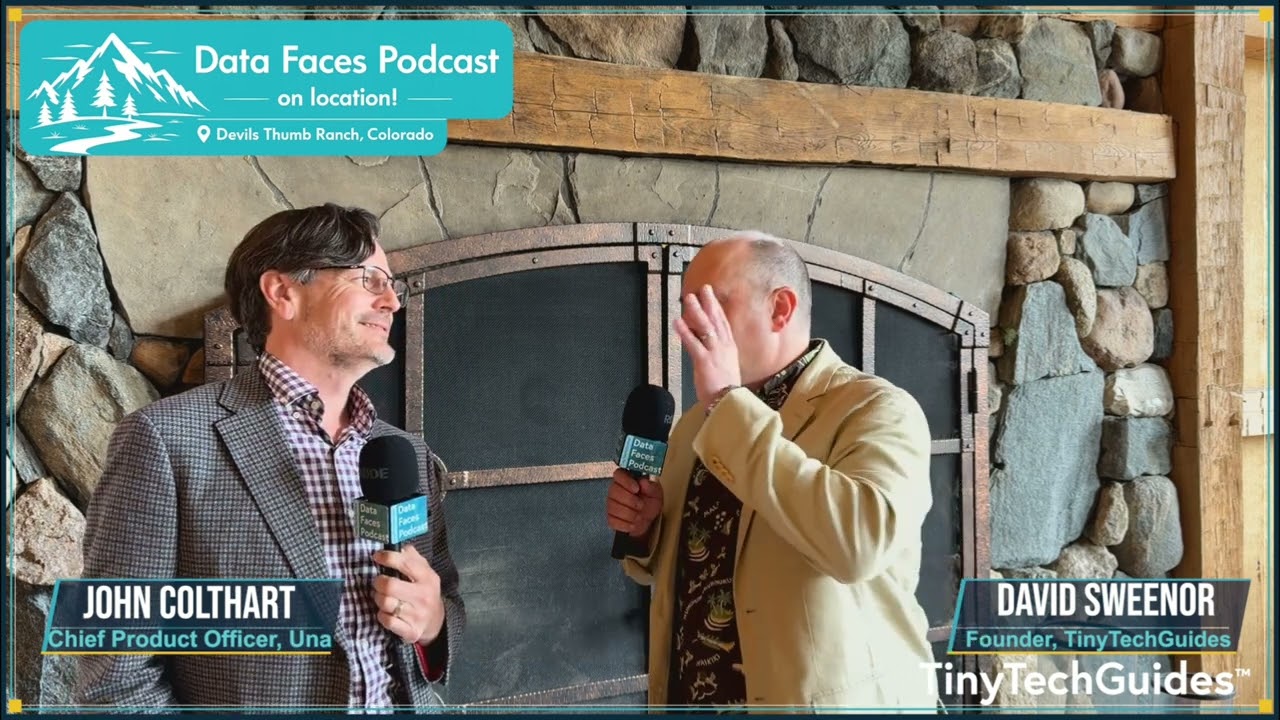
John Colthart is the chief product officer at Una AI, a financial planning and analysis vendor focused on AI, portals, and Excel-based planning workflows. Across a 25-year career, he has worked in consulting, education, sales, marketing, development, and now product, giving him a broad view of how finance teams actually plan and make decisions.
In this interview
- Why revenue can become the lost data element in financial planning
- Why planning products should support Excel, portal, and AI workflows
- How an AI-first stance changes product design in the office of finance
- Why diverse rooms with open debate produce better insight than polished one-way presentations
→ Read the companion article: Governance now decides whether AI delivers value
→ Browse all on-location interviews: Data Faces Podcast — On Location
Full transcript
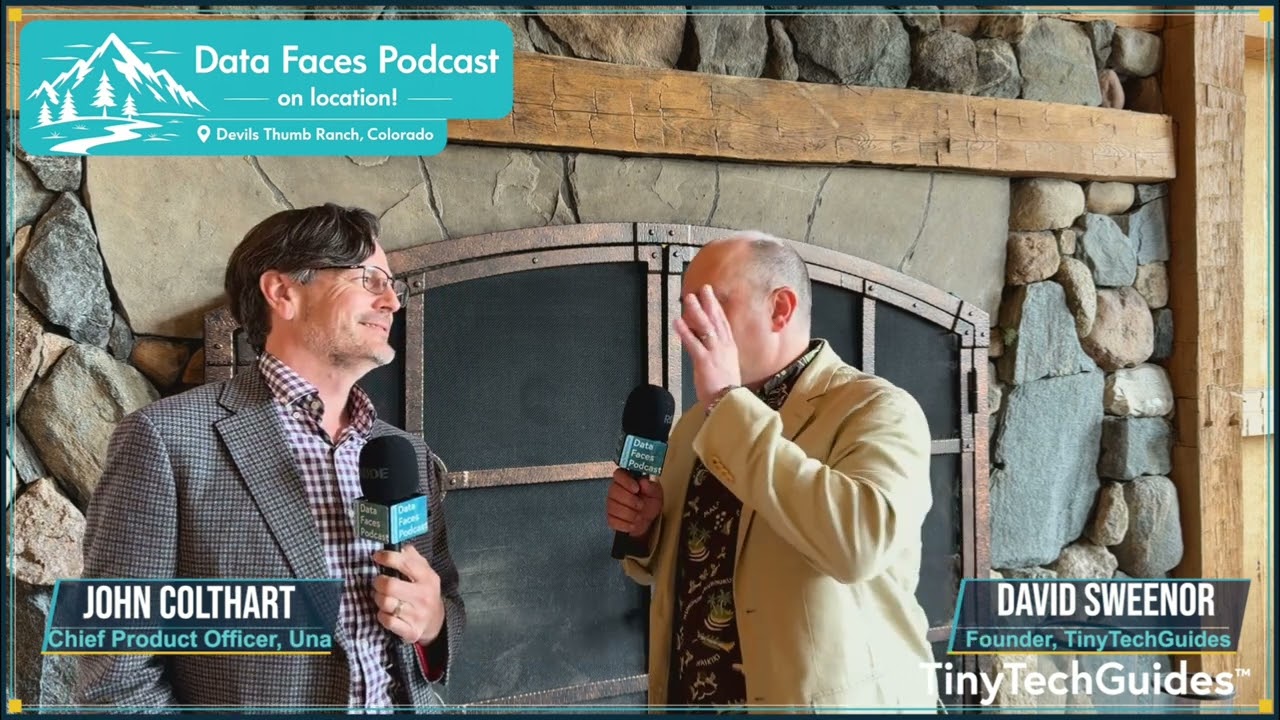
David Sweenor 0:02 Hello, welcome to the Data Faces podcast on location. I’m here with John Colthart, the chief product officer at Una AI.
John Colthart 0:11 Yeah, can you imagine a product guy being here with a bunch of other architects and CEOs and other wonderful people? That’s right. It’s kind of interesting.
David Sweenor 0:20 We’re coming to you live from beautiful Colorado. We are at the Devil’s Thumb Ranch, the 2026 Data and Analytics Retreat.
John Colthart 0:26 Is this your first time here? It’s my first time here. It’s my first time in this part of Colorado, which is nice. So kudos on the location. Got me somewhere new. But first time here with BARC. And I’ve been following some of Carsten’s work for years and years, and obviously Shawn’s work more recently. So it’s really nice to actually see the team. Yeah. See them in person. See humans again.
David Sweenor 0:44 Exactly. So part of this show is called Data Faces. So I’d like to get behind the people before the professional career.
John Colthart 0:51 What was your first job before your LinkedIn profile existed? My very first job was I worked at Home Hardware, which is a hardware store owned by The franchisees. Okay. And the very, very first job I had in that was awful. It was basically a stock guy. Like on Thursday nights, the big truck would roll in with all the product. And by Saturday morning, it had to all be out wherever it needed to be. Oh, boy. So we basically had Thursday night. We couldn’t do some of it during the day on Friday because the store was open. And then Friday night until whatever wee hour just to make that happen.
David Sweenor 1:23 Okay, so you’ve moved on a bit from that job. A little bit.
John Colthart 1:26 So tell us about your role and what you’re doing at your current company. So I’ve gone through little journeys over time, and I think within AI, what it gave me the opportunity to do is come in with yet another new thing. So in my career, I’ve been a consultant. I’ve been an educator, you know, doing continued education enablement. I’ve been head of sales. I’ve been head of marketing. I’ve been head of sales and marketing. I’ve been head of development. I’ve been head of everything but product. And so this was a really interesting opportunity for me to come in and sort of stretch a new part of my brain, which is… Of all these things I’ve seen over 25 years, you know, once I finally finished school and well past that, your home hardware days was to actually like do something new where I could leverage all the skills that I had, but really focus on the strategic vision and outlook for the business, which in our case is, you know, we’re a relatively new FP&A vendor. So financial planning and analytics vendor. which obviously consumes a lot of data, obviously has analytics in its title, so there’s a lot of consumption of information. And it’s all about the context. And what we found was, as we went through the deferred iterations, the team that got together, the biggest failing, in our opinion, more so my opinion probably sometimes, is none of it was really revenue connected. Everyone was focused on, well, how do we control spending? How do we manage the plan? And I’m like, but shouldn’t we be focused on how are you growing as a business? And the first phase of that is revenue. And revenue is like this lost element of data that people really don’t look at, which is really interesting and fascinating.
David Sweenor 2:59 So I did work for a company that did a little work in FP&A. your company specializes in this. Yeah. How do we get rid of Excel? Or do we even want to? Is that just a red herring there?
John Colthart 3:16 I think, so if you look at the industry and you look at the bifurcation of tools before Una, it was a one or the other. So my very first platform we built was you used Excel only so that you could promote stuff to the web. and do a web portal then you had people after we got exited we had a great exit to ibm and and helped them build their next generation of office finance and when the teams all disbanded and kind of did their own thing then a solutions came to be sure and Vena Solutions was very much a just embrace excel so you have this duopoly right now where you’re either an Excel player or you’re a portal player. And so Una made a very conscious decision to start from an AI stance, so didn’t care about the platform you used, then created a portal that allowed users to be more distributed with higher levels of performance because Excel files can get big and clunky. Absolutely. But you always need that high-end modeler, you need that high-end, something very unique and boutique, so you need Excel. So we actually span all three spectrums. You can go AI to AI, you can go portal or you can go Excel. So to answer your question for me, 73% of businesses still use Excel in some form of their planning. I say, let’s let them. But also let’s educate them on where they might get advantages, either from an AI stance or putting it in a portal. And it all depends on a little bit of like, are you disconnected? Are you connected? Are you distributed in model set? How many professionals are you talking about? What level of sensitivity? Like there’s lots of questions that go into which is better. But at the end of the day, why shouldn’t we just be focused on where people want to work
David Sweenor 4:53 I love that. I think that’s a smart play. For our listeners and viewers, we are on day number two. We sat through the morning session. We saw a presentation on unstructured data. We saw some stuff on data sovereignty. We saw some stuff on FP&A. What’s the key takeaways or is there anything that shocked you that was like, oh my gosh?
John Colthart 5:14 Well, so I want to I want to I’ll try to separate two pieces out of this. So I think the first thing I’d separate out is is actually not the content, but more the people in the process.
David Sweenor 5:22 Right.
John Colthart 5:23 So I think this is really important. You know, we’ve got really interesting group, not just from the BARC team. Right. And other other people they’ve brought in to speak to us. But actually, when you look at the people that are here, the different types of businesses. it gives you such an interesting, rich context arena to throw around ideas and the process by which when things are being presented, we can have those conversations just really openly like, hey, I don’t really get this or this didn’t make sense. And then you might have someone that’s not even connected to the story or your business jump in and say, well, have you thought about this? And that’s huge, right? That level of diversity of opinion and thought, that part’s really cool. Then if you’d just look at the actual structure of what we’re learning and what we’re able to start seeing in some of this early research that hasn’t yet hit the streets, it’s actually also giving me a whole bunch of new sort of ahas. And I think the big thing is that we’re so early in the space of at least my world, right, financial planning and analytics, where people don’t really know what AI is going to mean to them. So I think to know that people are thinking about other things in addition to AI, you know, data privacy and security and sovereignty, looking at how they could, you know, bolster and plug into all their data environments in a better way, like what Kevin and Merv presented to us. These are really interesting, Rich. pieces of data that you wouldn’t normally get just from scrolling your LinkedIn and scrolling your various levels of inbound email traffic that you’re getting from all these organizations. It’s really been great to sort of see this also just diversity of the type of data that we can then use to kind of go after this.
David Sweenor 7:00 Yeah, it gets us out of the bubble. We’re all in our little world, and they’re like, oh, they’re doing that over there?
John Colthart 7:05 I’m sitting beside data players. I’m sitting beside data management players and ETL storage players. I’m sitting beside other analytics players who aren’t in my space, but they service other business users, which has a direct impact to how finance users would interact with those users. So it’s just like it’s a really cool mix of people, and it’s a really great opportunity for us to hear you know, near real time of this study just got finished. Here’s the results. And it’s like, wow, like you can really put it in digestible chunks, which I think I, I throw it out there to anyone who hasn’t been yet. If you get the opportunity, you get asked, like you should definitely put it on your short list.
David Sweenor 7:42 Absolutely. Okay. Well, thank you for joining the Data Faces podcast. Where can people find you in more information about your company?
John Colthart 7:48 Oh, simple. Una.ai. Una.ai. All right. Well, thank you, sir. Perfect. Thanks. Have a great day.
David Sweenor 7:55 Thanks.