

Data Faces Podcast — On Location · BARC Data and Analytics Retreat 2026
Ivan Vakhmyanin, co-founder of Visiology, on rebuilding business intelligence for an AI-first world while keeping the governed data engine and traceability users need to trust the result.

Listen: YouTube · Spotify · Apple Podcasts · Amazon Music
About Ivan Vakhmyanin
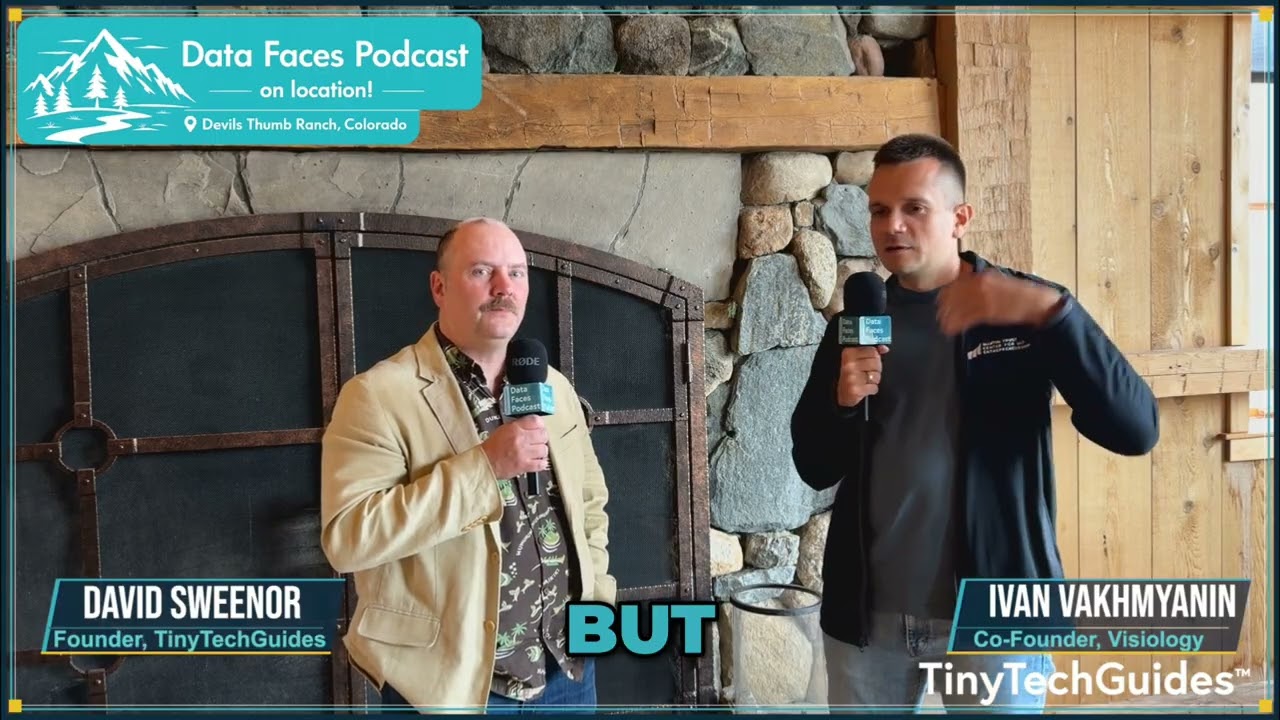
Ivan Vakhmyanin is the co-founder of Visiology, a business intelligence software company that is rebuilding its product as an AI-first analytics system. His background combines software engineering, an MBA, and management experience, which shapes his view that AI analytics needs both a familiar user experience and a governed, traceable data engine underneath.
In this interview
- Why BI vendors face a choice between bolting on AI assistants and rebuilding for AI-first workflows
- Why disrupting your own product can be safer than waiting for a competitor to do it
- How a ChatGPT-style interface can sit on top of tested data engines and methodology
- Why step-by-step traceability matters when people use AI analytics to run the business
→ Read the companion article: Governance now decides whether AI delivers value
→ Browse all on-location interviews: Data Faces Podcast — On Location
Full transcript
David Sweenor 0:05 All right. Hello and welcome to the Data Faces podcast on location coming to you live from the Devil’s Thumb Ranch in Colorado. We are at the 2026 BARC Data and Analytics Retreat. And I’m joined by Ivan Vakhmyanin, he is co-founder of Visiology.
Ivan Vakhmyanin 0:23 Exactly.
David Sweenor 0:24 Thanks for joining me here. Yeah, thank you for the intro. Can you tell us a little bit just about yourself, your role and what Visiology does?
Ivan Vakhmyanin 0:31 Yeah, I’m a co-founder. So we started company like 10 years ago and we are a software company like deep in the business intelligence space. And currently we are about to launch the completely new version of our product, which is an AI first business intelligence system. And it’s about this, what we see is a fundamental change in how the business intelligence actually works.
David Sweenor 1:00 Okay. So before we get there, part of this show is called Data Faces. So I like to get behind the people and their professions. So what did you want to be when you grew up, when you were a young lad?
Ivan Vakhmyanin 1:16 Well, when I started my higher education, my dream was to be a low-level programmer, software developer, driver developer. Well, I had some experience with software engineering, which actually helps a lot when you work with data. with developing software. But then I got, on top of that, I got the MBA degree and some management experience and that created a nice match for data and analytics.
David Sweenor 1:48 Okay, great. So Visiology, you mentioned you’re sort of redefining kind of maybe how AI and BI work together. Can you tell us a little bit more about that, and what do you mean by that?
Ivan Vakhmyanin 1:58 Well, it wouldn’t be something new if I say that AI is changing everything right now. And we believe that the same happens with business intelligence, and we see actually two roads for companies like ours. Okay. So one route is you take your existing software and you add these AI assistants like co-pilots, like ETL assistant, dashboard assistant, advanced analytic assistant. And the second road is to think, okay, so how would the business intelligence product would look like if you build it from scratch right now with all the AI capabilities? And this is on one hand, it’s scary because you are kind of disrupting yourself because if you do this thing well, then your previous product may become obsolete. Sure. And on the other hand, if you don’t disrupt yourself, then someone else can disrupt you. So I guess we don’t have any options. That’s right.
David Sweenor 3:07 And so there’s this, you know, one of the presentations we saw earlier was that, you know, one of the premises was, you know, we’re not competing on features anymore. And, you know, we want sort of these open architectures. So is that how you’re approaching this and thinking about this? Because, you know, everybody can, with a prompt, We can have the feature out tomorrow if we wanted to. So is that kind of this synergy between the agents or AI systems in your product?
Ivan Vakhmyanin 3:35 Yeah, absolutely. So currently our customers, they already have some sort of expectation how the product should look like. And this expectation is very similar to the ChatGPT experience. So you have this chat prompt, you, okay, I want this, this, this, and you get some result, hopefully right one in some minutes. That’s what people expect. On the other hand, it cannot work like this. I will not go too deep into technical and methodological details right now, but it simply doesn’t work with data analytics right now, at least right now. So you need this methodology, you need these best practices, you need the proper data engine, et cetera. And so what we are doing, we are keeping all the backend stuff, but we are redefining the user experience to make it look like as a ChatGPT interface. So the user interacts as a now familiar way, but on the backend, you have still the baked-in methodology. You still have this data engine. You still have like… well tested in production tools. But for the end user, how we see it, it should look like exactly the same. The end user should not… They should not have to be technical to verify some SQL queries like Python code Or like I don’t know some What exact algorithms were used to transform right?
David Sweenor 5:30 Yeah, I mean it sounds like we’ve talked a lot about governance and guardrails and things at this this event and it sounds like you have a lot of that and
Ivan Vakhmyanin 5:41 baked in you know you have to have the calculator you got you want it to be repeatable and sort of you don’t want to making up stuff because people are running their businesses on it right is that absolutely right and this is one of the reasons why you cannot make it like one short process like you send the prompt and you get the like report it’s not working like this because If you don’t see what’s in between, you cannot trust the results. And that’s the reason why we built our product as a fully traceable step-by-step iterations, how the system came up with this answer. And the user should be able to verify each step to have trust in the result.
David Sweenor 6:32 Okay, well that’s amazing. So where can people find out more about Visiology and you if they’re interested?
Ivan Vakhmyanin 6:40 You can search for Visiology on Google or go to Visiology.com or go to my LinkedIn profile. And actually, I’m very open to inquiries, discussion, feedback, positive, negative. So always open for discussions.
David Sweenor 6:58 All right, amazing. So, Ivan Vakhmyanin, we’re coming to you live from the BARC Data Analytics Retreat 2026. Thanks for joining the Data Faces Podcast. Cheers. Cheers.
Ivan Vakhmyanin 7:08 Thanks.