

Data Faces · Episode 39 · May 19, 2026 · 38 min
Metadata spent 20 years as the least interesting part of the stack. For AI agents, it becomes the foundation.
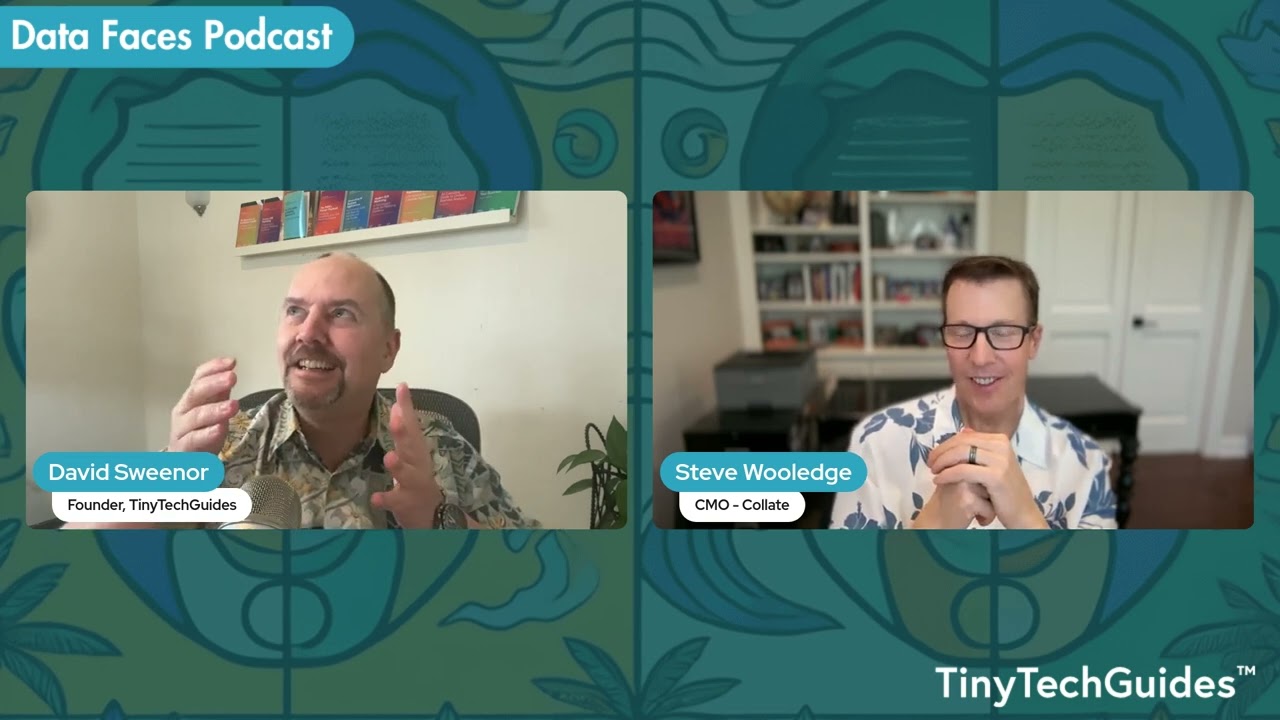
Listen: YouTube · Spotify · Apple Podcasts · Amazon Music
About Steve Wooledge
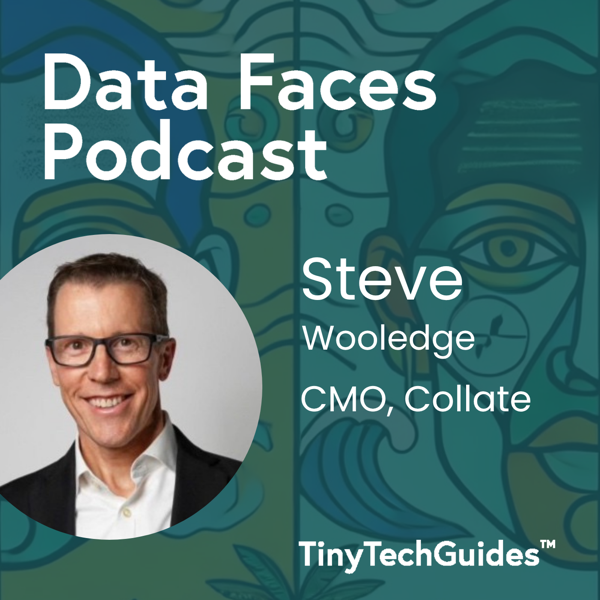
Steve Wooledge is the Chief Marketing Officer at Collate, the company behind the OpenMetadata project. His career spans 25+ years in enterprise marketing leadership — including Teradata, SAP, and Business Objects — plus building global partner programs at Alteryx and leading product marketing at Alation. A recognized expert in technical product marketing and category creation, he’s also a dedicated guitar player with a passion for melodic hard rock and blues.
In this episode
- Building a “Switzerland” strategy for metadata across multi-vendor ecosystems
- The shift from Data Intelligence to Semantic Intelligence for AI agents
- Why metadata went from an ignored inventory to the foundation of the agentic stack
- The “Taste Squared” formula for keeping marketing quality in an automated world
- Steve’s path from chemical engineering to category-building product marketing
→ Read the full article: Why AI agents require a Switzerland approach to metadata
Full transcript
David Sweenor 0:05 Hello everyone, and welcome to the data faces Podcast. I’m David Sweenor, founder of TinyTechGuides, and your host for today’s show. In this show, I talk with people are actually making data analytics AI and marketing work in the real world. What’s exciting, what’s messy, and what’s coming next. So today I’m joined by a fellow colleague and friend who spent 20 years building categories, scaling partner programs and marketing some of the most technical products in the data stack. Now he’s CEO of Collate, the company behind open metadata has a front row seat to how AI is changing both metadata market and the marketing function itself. So let’s jump in. Steve Wooledge, welcome to the data faces podcast.
Steve Wooledge 0:45 Thanks for having me and David, longtime fan, happy to be on
David Sweenor 0:48 all right, I love, I love the outfit you are growing trend. I think the third or fourth person to wear the Hawaiian Hawaiian shirt. So people are getting the theme now. So I appreciate this.
Steve Wooledge 0:57 Have to be on brand right. Pay attention on that stuff,
David Sweenor 1:01 a good. Cmo, so for those who may not know, you, tell us a little about yourself and what you’re doing over at collate.
Steve Wooledge 1:08 Sounds good. Yeah, I’m the currently Chief Marketing Officer at co eight. We’ll talk a little bit more about the company, but I’ve been in the data analytics AI space for, dare I say, about 25 years. I actually started out in enterprise sales way back when, got into product marketing and worked at a number of different companies along the way. So lots of lessons learned, good and bad, but love working in the data space, just a unique area. It gets technical, but it has so much impact to how people run their business. And now it’s especially exciting because with AI, you know, data and metadata, I know we’ll get into it, but, like, that’s so foundational for accurate, intelligent AI to not hallucinate. So it’s just been a great run.
David Sweenor 1:54 Well, we’re certainly excited to have you here. And you know one thing I noticed, I was stalking you on LinkedIn, and I noticed you have a degree in chemical engineering, and there’s a lot of product marketing folks I know that have a STEM background. So can you tell us a little bit about the journey from chemical engineering to data?
Steve Wooledge 2:14 Yeah, it’s a little crazy. Yeah, my my first job was, I was a chemical engineer down in Houston, Texas, on the ship channel, working, actually, in a chemical plant. So I was a process engineer. Long story short, I decided sales a little bit safer after the plant blew up one sales, I don’t know, actually, I had a good mentor as well, who encouraged me to do that? I moved to Chicago, where I was selling chemicals for a while, started my MBA program, and at the time the.com thing was exploding, B to B was a really hot thing, and I went to work for an online chemical exchange when B to B exchange is really hot. And I’d always had a background in computers. My parents bought me a trs 80 way back in the 80s. I was always like tinkering, and it was just so exciting at that time, during the.com explosion, to get into a tech company, but also have the chemical background. So that’s kind of how I made the transition from a chemical engineer to a tech, you know, software person. So it was pretty, pretty well, pretty fun.
David Sweenor 3:23 All right. Well, we’re sure glad you did, Steve. And you know one of my favorite LinkedIn posts, speaking of LinkedIn stalking from you, you were guitar shredding with one of your friends, and there’s a video of this on LinkedIn. I’m going to put this in the show notes for sure, but tell us a little about your love of, love of music, and what kind of music do you gravitate
David Sweenor 3:45 towards?
Steve Wooledge 3:45 Yeah. I mean, I grew up playing guitar a little bit. I was in choir as a kid, and I love, I just love hard rock and blues, kind of blues. Back to rock, hard rock, you might say heavy metal, but I don’t go into like, the non melodic, screaming kind of metal,
David Sweenor 4:03 okay?
Steve Wooledge 4:03 And as I’ve gone through my career, I’ve met other people who like to play guitar. I think you play a little bit of music too. But a guy used to work with the business objects, who’s now a really good friend, Lance Walter. He and I, when we get together once in a while in the Bay Area, he’ll have an extra guitar for me. We’ll practice like, we’ll learn a song together and we’ll do a recording. So I think we posted one a while back, just kind of like, it’s not really LinkedIn appropriate, but it was
David Sweenor 4:29 fun. I’m sure it got a lot of views, all right. Well, let’s jump into data. So for those in the audience who don’t know, Steve and I have worked together at a few different companies now, and Steve, I’ve seen you build programs and launch products and categories. But I really never asked you this one question. When you look back at your career, what role taught you the most about actually what works in marketing, and then correspondingly, which one taught you the most about what doesn’t work?
Steve Wooledge 5:01 Yeah, those are good questions, and it’s hard to say, because I’ve learned so much about what works and what doesn’t in different places. I’d say the foundational thing I learned was that business objects, when I was actually an enterprise sales rep, originally in Chicago, finished up my MBA, moved to the Bay Area, did product marketing because I really liked the technical background, meet strategy and kind of how that comes together for business value. And the thing that you know, we all worked for Dave Kellogg, who was CMO at business object at the time. And for people in this industry, most people probably know who he is. Read his blog. He’s just prolific, and he’s a great teacher. He likes to get down the first principles and talk about messaging structures and just all the right tactics to make sure you really understand the customer from customer research, sales feedback, analyst feedback, etc, to make sure that the messaging you create really resonates with the problem solving, consistency of message, all those just really, for me, coming in new to marketing, because I had an engineering background, I couldn’t have asked for a better group of people, really, in company and culture and kind of marketing best practices that Dave Kellogg put together there. So I continue to follow Him, and think that that’s been a great foundation. Now that’s, you know, I’d say I learned most about product marketing there. But the other experience was I eventually went to work for a series, a startup in the database space called Aster data. There I was like the first marketing hire along with one other person, and we just, we did everything from soup to nuts. So if you want to learn fast, just go work at a series a startup, which I’m at another one now, because I love them. That’s the best way to learn about what works and what doesn’t, through experimentation, but also great mentorship.
David Sweenor 6:50 Sure.
Steve Wooledge 6:51 To answer the second part of your question about I guess, the role where I learned what doesn’t work, Alteryx, actually, where I met you, partner marketing was a an area that I wanted to build out in my background, and because I had seen companies who had done it really well, like Hortonworks as an example, they crushed when it came to ecosystem, the open source but really how they partnered, and I partnered with them, and then wound up competing with them. And, you know, we lost a lot because we weren’t, we didn’t at the company I was at that time. We didn’t have the strong ecosystem. So anyway, got into partner marketing. And yeah, I had a lot to learn there. I’d worked with partners before as a sales rep and things, but the way you market with different types of partners, a globalist system integrator is very different in how they operate from a technology partner, which is very different from a regional system integrator. So an example would be, you know, we, of course, in marketing, do a lot of webinars, enjoy campaigns, and you kind of assume that the partner is going to generate a bunch of pipeline with you. You’re going to share leads, and like, you know, work on these opportunities together. Not really the case with the global system integrator. They really come with the solution, expertise, the subject matter, expert domain, but to go in to a relationship thinking you’re going to build a joint pipeline together, it really doesn’t work that way. So think the models that we came up with and expanded on as we grew the partner program at Alteryx really shaped as I learned there, and sort of not assuming that all partners are created equal. As an example within the ecosystem, which to part people that are in that domain, they understand that, which is why it’s important to hire people that have really good partner background experience to understand that nuance.
David Sweenor 8:30 Yeah, definitely agree with you what I knew you in that role. And I always was like, Man, I felt a little bit bad, because it was like death by 1000 cuts. And most companies I’ve worked for and with, I feel like they underest, you know, under invest in partner marketing, marketing, and they all say, oh, you know, if we’re with this premier partner, you know, might be snowflake or Databricks or Microsoft or some giant, you know, technology partner like that can be the massive unlock, but I’ve not really seen it materialize for the for the companies I’ve worked at. Is it, is it really an under investment thing, or is there something else going on?
Steve Wooledge 9:14 It’s just hard, right? Because everybody’s in it for themselves a little bit. So I think it’s being precise about where there’s really a good joint value prop and focusing, because everybody wants to try and do everything, and they try to spread themselves too thin. So the success I’ve seen in partner programs and marketing comes when you’ve got a really well defined ICP or ideal customer profile. You understand who the partners are that can really add value in that from a technology perspective, or a services implementation implementation perspective, and just being very focused, I think it’s easy to try and chase every shiny object and get distracted, and like you say, it can be a death by 1000 paper cuts, versus really focusing on the partners or the go to market motions that are really paying off. Well,
David Sweenor 9:59 right, right? Makes, makes a lot of sense. So, you know, you’ve been cmo and VP a number of companies that, you know we just mentioned, but you’ve could have gone to pretty much anywhere you wanted. So why did you pick collate, Steve, and you know, what was it about open source that made you say, Yeah, I got to be here. I got to go there.
Steve Wooledge 10:18 Yeah, it’s a great question. I think it’s three things. One is the market, one is the model, and third is sort of the team and the founders. So first on the market, I mean the metadata market. Before I got into it, I didn’t really know that much about it, like I’d worked at Business Objects. I was more of like an end user or back end when I was on the database side, I never really worked in the middleware stuff as much. But
David Sweenor 10:44 I
Steve Wooledge 10:44 think there’s, like, never been a better time to be in metadata. So it’s a great market because it’s becoming so like, everybody talks about context now, oh my god, we need context this. And context engineering is the next new thing. It’s almost like data scientists were back in the big data movement. We’re like, they’re going to change the world. And so like context is the thing that gives AI better intelligence to act better. So I think it’s a great market. Number one that collates in metadata, data governance and what we call semantics, which we can get into. The second is the model, like you said, open source. So the open metadata project was the project that our founders created and collates the commercial backer of that, along with a very robust community of over 12,000 enthusiasts. And my experience in other industries and markets was like open source in a way. Could, you could call it commoditized market is just going to out innovate and outpace everybody else in the market, and we were, we were starting to see that at another company I was at before, where people were moving more and more towards open source. I think the model is really, really good. And the founders, the founders came out of Hortonworks. They were probably one of the fastest from zero to IPO at the time with any B to B enterprise software company. I think that was some record they set when they made it to IPO because of the open source movement and momentum. And so the founders and the team that they’ve built, Suresh, Srinivas and Harsha chin telepani Both had worked together at Hortonworks. They worked together at Uber. They had built Apache Atlas, which was a metadata framework in the big data space, they had built Uber’s data book, which was the metadata framework at Uber, at very large scale, also handling real time. So the level of pedigree, that experience that they have, the team that they put together, the community of innovators that are building the product like those are the three things that really sold me on CO eight as just a great opportunity, and I just love the team that we work with.
David Sweenor 12:44 Yeah, that sounds great. And we’re going to talk a little bit more about semantics in a second. But you know, you mentioned the market, and it’s pretty crowded. I don’t know if you’ve heard of the term AI before, but you know everybody’s talking about it, Steve, and you know, you have these, you know, probably a zillion startups, either, you know, looking at sort of foundational things that you know don’t have anything to do with the model per se or the agent per se, so metadata, data security, stuff like that. Then you got these gigongus vendors, out there with huge market caps that you know want everybody to be in their own ecosystem, and there are a few of them. So how do you, how do you wrestle with that, that those two sort of dynamics?
Steve Wooledge 13:35 Well, my view on the market is you’ve got all these large scale out data platforms that are out there, like the Databricks, the snowflakes, the world, etc. There’s the AI models that want to pull from that data, but there’s no neutral layer that sits across all of that. And you could say, oh, we’re a snowflake shop or Databricks shop, but the reality is, most companies aren’t, and even if you are, you’re going to eventually sell a part of your business or acquire part of your business, there can be some integration that needs to happen, and there’s a lot of intelligence that sits in these different silos, in the data itself, but then having well structured, defined business rules, semantics and metadata that sits across all of that, And with companies like Informatica being acquired right by Salesforce, they’re seeing the value of having the data integration, but also the metadata that connects all that. So I think there’s a need to have sort of this neutral layer of metadata, semantic intelligence context, whatever you want to call it, sits between the data and the AI or and the users that need to make sure they understand the meaning of the data or the intelligence about the data, a lot, you know, data intelligence or metadata management. So that’s, that’s my, you know, high level view of why I think it’s an important standalone category in the data and AI space,
David Sweenor 14:57 all right. Well, that’s great. It’s. Sort of agree with you. I think there is always a need for that sort of a Switzerland approach to having this agnostic to ecosystem. Because, you know, way back when I started product marketing, hey, how do you beat Teradata? So I’m like, is everything in Teradata? No, okay,
David Sweenor 15:15 yeah, was
David Sweenor 15:16 fairly straightforward on the data science side, because you have the data in one spot. Change it a little bit, but some collate, recently launched semantic intelligence and some capabilities there, which is really designed to give AI agents a deeper understanding of data context. I had Stuart bond, who I know, you know, he’s from IDC, is on the show few weeks ago, and we talked about how data intelligence was evolving from kind of beyond traditional catalogs and active metadata. So we’re just so late fit in this and what does metadata for AI agents look like in practice?
Steve Wooledge 15:56 Yeah, it’s interesting. I saw Stuart on your show, and I had met with him, briefed him, I guess, a month or two before that, and we were talking about data intelligence, in fact, and how that category is sort of evolving. I felt it was bad. It was like, I felt bad saying like, we think it’s evolving to semantic intelligence. So for me, we’ve kind of gone from the data catalog where just have a place to like, you know, have a card catalog, essentially right? Data assets. You have your organization to okay, we also want to govern it. We need to understand lineage. Let’s automate some more things that really became, I think, data, intelligence, who, what, when, where and why, of data. I think it’s all to now. It needs to not only be the understanding the data, but understand the data plus the business context, the terms, how does the data relate to the business rules, metric stores. And it’s not just metric stores, but relationships between different data. So you talk about Resource Description frameworks, ontologies are becoming sexy again, knowledge graphs, and I think that’s really where things are evolving to. And as I was talking with Stuart about I’m like, it’s kind of like, if you told Thomas Edison, who invented the light bulb, like, incandescent is great, but we’re gonna go all in on, like, led, or something like that,
David Sweenor 17:11 right?
Steve Wooledge 17:12 And I’m not saying that I told him anything. He clearly knows the market better than anybody, but, like, he was the godfather of, essentially, the data intelligence word, which is it’s kind of lost a little bit of its distinct meaning because it’s being used by other vendors for for different descriptions. But it, you know, hopefully, that answers the question, I think, collate is about, how do we evolve beyond intelligence, about just the data, to intelligence, about the data and the business, all the relationships in a way that, like I always describe it as if you’re a bi analyst or just an end user. If you look at a report and something looks a little bit off, you’ll kind of say, I’m not really sure. I’m going to call Suzy or David and figure out what’s going on, and you just have some context or gut feel AI doesn’t necessarily have that. It’s going to make some inference assumptions and may guess wrong. So you really need to lay out all the rich semantics to ensure that AI can a read it and be understand it and the real meaning of the data. So I think, to me, semantic intelligence is the future of what metadata can do, and that’s what CO is leading
David Sweenor 18:18 it. And so that is that I think, I think you said it, but let’s put a like, a fine point on difference between metadata and semantics, because I think there’s a lot of confusion out there. And I think you mentioned something about ontologies and other things that you know beyond metadata, I traditionally thought of it as TS is timestamp, you know, like from Cognos Framework Manager, that was like the extent of metadata. And, you know, way, way back when. So what’s the difference between the
David Sweenor 18:50 two?
Steve Wooledge 18:52 I mean, I think when you first say I’m not an ontologist, you know, Jessica talisman writes prolifically on these topics. But to me, the simple definition is metadata describes your data, and there would be different types of metadata about technical metadata, social metadata, etc. Semantics is the overall structure and meaning of those things and the relationships, so not just the data itself, but how it relates to a KPI, what business problems it’s solving. So just more descriptive frameworks, hence RDF, about how that data can be used. And there’s a lot of standards and frameworks that have been out there with the Semantic Web and owl and DCAT and some of these standards that kind of were sexy for a while in the early 2000s and went away because it took too long to build them. And now I think there’s automated ways to create that and have those rich semantics. So I don’t know if I’m putting a fine enough point on it,
David Sweenor 19:51 but I think you are. You’re essentially saying that there’s autologies and relationships. So it’s not only like what the data is, but how. It relates to everything else within your ecosystem and how it feeds into, you know, maybe derivative data and reports and things that are created from it, you know, sort of ties everything together, sort of in my mind, versus, you know, a pure description of this element means this,
David Sweenor 20:18 yeah, yeah,
David Sweenor 20:19 connected and how it should be used and when it should be used, the context around all of that stuff,
Steve Wooledge 20:25 yeah, and being able to traverse the graph of relationships between data elements to get at some of that reason and meaning,
David Sweenor 20:33 all right, well, that’s good. So marketing a technical product isn’t you know, you’re is tough, right? You’re competing for budget out there, and I don’t know if there’s a CFO or CEO out there that wakes up in the morning says I need a metadata platform today. So how do you go about how do you think about that? Steve,
Steve Wooledge 20:56 yeah, it’s tricky. I mean, the reality is that a lot of the growth of technical products is from the data engineers up. It’s, I call it kind of grassroots expansion, from developers that are trying to solve a problem. They want to get at the technology. So I think people like that think through API’s first How can I make it really easy and accessible? And I think that’s what we have in spades through the open source product and the way that it’s been developed. So it’s as marketers. It’s how do we just build that ecosystem? Make people aware of it, give care and feed into the open metadata ecosystem. Make sure those, those developers that are doing great things are recognized for their contributions. They’re able to give back to the community. They have a platform to speak on. So we have, like, monthly meetups and those types of things. But as we also want to go speak to, let’s say the budget owners or people, where there’s more strategic discussion around, how do we ensure AI, safety and governance of your data and AI, to me, it pictures as 1000 words, and to be able to come in and show those relationships, like we talked about your ontology or your we call it a semantic metadata graph, which is a subset of a knowledge graph, but being able to visualize your data in those relationships and describe how that then enables your People and the AI to be able to infer more meaning and more accurate relationships of the data in the business terms, is how you bring that to life. And I’ve seen that other companies too, where it’s, you know, being able to put a UI on the technical piece, like you can’t always do that, but I worked for a database company had some really interesting, complex SQL sort of time series analysis we could do in a single pass through some like embedded Java that was in the SQL. We call it SQL MapReduce because it has some distributed anyway. It’s like it was really hard to explain, and nobody knew what it could actually do. So once we could take that time series query and essentially show them a time series analysis graph, like we didn’t want to compete with the BI tools, but we essentially created demos on top of it, which brought it to life. Being able to tell the story through visuals, I think, is really, really powerful if you can do it. So a lot of what collate is doing is, I think, providing a very intuitive UI, but also more visualization of the graph, the ontology and those types of things, which allows people to really understand and see the end edit those relationships as needed.
David Sweenor 23:33 Okay, makes total sense to me. So maybe if we could shift gears a little bit beyond so we’ve been discussing so far, metadata, semantics, collate and how that enables other organizations to do things with AI. Wanna talk a little bit about your role as a CMO and how AI is shaping that. So how is AI changing the marketing function that you’re responsible for.
Steve Wooledge 24:03 Are you asking more from like, how do we functionally use AI? Or,
David Sweenor 24:08 oh, maybe, what can you do today, perhaps, that you couldn’t do 10 years ago because of AI?
Steve Wooledge 24:17 I mean, I think it’s all about velocity. What I’ve seen over the past few years of working with AI like we can develop content faster. You can develop campaigns faster. You can develop mock landing pages on a lovable or something like that, really fast. And just the pace of additional capabilities that plot and, you know, open AI and etc, brought in, I think the expectations have just raised that we can do a lot more with a lot less. So, like, even putting together, like a messaging framework, whatever, like the expectation you can just do a lot and you can’t, like, there’s just much higher productivity. So from my perspective, phase one is, like, just, you know, being able to create content. Really quickly, and now we’re in the agentic time where it’s like, how do we string things together? So we create a whole production workflow, from messaging to mock landing page to actually writing it into our hash node and creating a web page. So I’d say, as a CMO, I’ve been trying to lean in and get hands on with it. I’ve had good guidance from folks, including yourself. David, you know, I think you were one of the first ones who was really saying, hey, prompting for using generative. Ai, like, I actually have a book back there that came from you tiny tech guys, which talked about that. So I, you know, credit you for kind of getting me into it. But as a leader, I think it’s kind of understanding enough to actually build it and then show what you can do with it and encourage others to do it. So yeah, I could talk a lot more about, like, the AI marketing system we’re building, but we have, like, a GitHub repo now. We’re building skills and knowledge and commands and things that are repeatable, that the entire team can leverage. So I think that’s the challenge we’ve given ourselves. How do we build sort of a Knowledge Center of AI use cases that can help us do things faster and keep up with the velocity that’s required,
David Sweenor 26:10 right? And so you mentioned faster, and I think, you know, marketing, you know, five, even five years ago, we spent a lot of time googling out, Googling different things to collect or collate information together. And now that’s done. You know, within within minutes, you know you can scan 500 websites and get back really more information than you could ever possibly read within the week. And so how do you think about this? So there’s the speed thing, but how do you think about like, quality of of the outputs we know we can do certainly more now, and we can get you know information. We thought Google connected the world. I think this generative AI is even more so. So now we can do the research. We got novellas that are created as LinkedIn posts or reports on a daily basis now that we can never read. So how do you think about like the quality aspect of what you’re doing? And how do you know what, what are the right things to focus on?
Steve Wooledge 27:23 Yeah, because you can do a lot of things and produce a lot of content, but is it really going to resonate? I was listening to a podcast with a guy Tom Wentworth, who I actually used to work with at interwoven, many, many years ago. He’s a CMO now. He came up with his little formula he calls it. I forget what the equals was, but it was aI skills, usage plus taste squared. So his point was, it’s one thing to be able to use AI, but you better kind of have taste and a sense for quality and and you can kind of train the AI to sense that. But I think you can’t replace the experience of a good marketer, a good designer, a good product marketer, a good campaign manager. Like, you can’t be lazy, like, you’ve got to, like,
David Sweenor 28:09 still
Steve Wooledge 28:10 do work. And you know, you can have aI summarized for you, but maybe just read it right? And so, like, yeah, and I catch myself too, getting a little bit lazy looks good enough. But then you still have to go back to first principles of like, slave. You know, Dave Kellogg used to say, like, I would just you slave over the word like, you struggle to get it exactly right, but you have to really think through the eyes of the end customer of like, is this going to resonate so you can’t lose the human element. And, you know, I think that’s our responsibility as humans and markets to provide that taste and that human element and not let AI just take over for like we still have to think. We still have to do. So that’s the way I think about it.
David Sweenor 28:53 Totally agree with you and philosophically, for sure, in practice, but when we look at the market, and I’m not saying this is anything to do with collate, but we see these massive companies laying off lots of people, right? And you kind of saw this coming. And so now whoever’s left, they have to do more, right? We talked about the speed and doing more with less, and I’m wearing more hats now and doing, you know, 10 times as many things. When is there time to be human?
Steve Wooledge 29:34 Yeah, I think it’s like the human condition. We’re wired to always want more and to strive higher. And whether you have a tool, which is a bicycle, a computer or an AI agent, you’re going to do as much as you can with it. And I forget what the research report was, but you heard about on these podcasts saying AI hasn’t taken work away from people. It’s actually
David Sweenor 29:59 my.
Steve Wooledge 30:00 Inspire them to do even more work. So, like, I don’t know the answer to that. I think you know me personally, I try to just literally schedule in breaks to, like,
David Sweenor 30:10 go
Steve Wooledge 30:11 sit with myself, be quiet and, you know, remember what’s important. But it is a crazy time, like there’s a lot of layoffs going on, everybody’s worried about being automated away. But I think at the end of the day, I’ve heard people describe it as, you know, it’s going to be like another Industrial Revolution. We’re going to have all this more productivity. Jobs won’t go away. There’s just going to be more people at more companies, potentially maybe fewer people at each company, but each company will be more productive with a number of people they have, and the opportunity for innovation has never been better, like if you can figure out how to use these tools to your benefit, whether that’s personally or professionally, I think it’s just a it’s very exciting time to be alive to see what’s possible and take advantage of the technology. But it is. It’s tough. It’s a balance. There’s a lot you can do with it, and we’re all still learning, and hopefully things just get better over time. But yeah, you got to be deliberate with your time and be human.
David Sweenor 31:08 Well, yeah, you know, I find myself, I do like that creative aspect to it, because I can do things like, you know, I’ve done a lot of writing, and, you know, the process for people who don’t know this is, you know, you’ll write something, and then it will go to layout. And so now we have the pictures, and it’s in a nice glossy, and you see things that you don’t see when it’s just in a standard word document. So now I can catch those things earlier, and I’m toying around with images I haven’t cracked the nut on that, and music that does allow you to do a lot more things, in terms of web page mock ups and things like this that would have taken weeks or months before. Now you can do them, you know, with a day or half a day or whatever it is to help just iterate through different options faster.
Steve Wooledge 31:51 Yeah, that’s a really good point. I haven’t thought about that because I’ve noticed with myself, like, I’ll approve some web copy or whatever, and then when it comes back from the design, like, whoa, we need to like,
David Sweenor 32:03 yeah, it
David Sweenor 32:04 doesn’t,
David Sweenor 32:04 doesn’t look great. Why
Steve Wooledge 32:05 didn’t you give me the messaging? Right? Well, because it looks different when you lay it out like, you can’t just, I
David Sweenor 32:10 didn’t know you could only have four words. I give you five.
Steve Wooledge 32:13 Yeah, it’s usually the opposite for me. But,
David Sweenor 32:19 yeah, maybe a closing question for you. But like so, with all this AI that’s out there, and I know you have, you have children. Are you worried about their their future? You know, I’ve heard different, you know, we talked up. You just mentioned that a some jobs will be created, some will be destroyed. Where’s the opportunity for the younger generation to learn those skills that we learned by doing the crappiest job out there? And that’s how we learned to really hone our craft. We did the minutiae and the tedium that more senior people in the company just didn’t want to do
Steve Wooledge 33:05 yeah, I’ll be honest, I’m struggling with that a bit. I’ve got one who’s in college, two who are in college. My youngest, I have five kids. The youngest are in eighth grade. And we, you know, we’ll help with homework, and we see our oldest in college still like he’ll use AI for stuff, but I do have conversations with him about making sure you still think through it, but also like you. You need to use to learn how to use the tools. You have to compete. Whoever is best at using the tools is going to beat up. But you know, you still have to think so. It is. It’s a tricky balance. And I’ll be honest, like, if, like, 10 years ago, if my kids said they wanted to go into a trade, I would like, No, you’re crazy. You get a college degree. But like, today, like, Hey, you want to be a plumber mechanic. That’s awesome. Like, we’re going to need people that can fix stuff in the physical world, at least for a little while, until robots figure it all out and just relationships. I think the other thing I did have some experience in sales is like, you’re just, in my opinion, you’re never going to replace the human human relationships. I think professions where you have that human touch, whether it’s nursing or plumbing or whatever it is, I think it’s there’s a renaissance of different types of jobs that are out there. I think the knowledge workers may reduce in overall numbers or as a percentage of workers in the working world. So I think those are intelligent conversations we should all be having with our kids. But at the same time, I think you can’t hide from Ai, let’s say like it’s it, it, if it can be used in your job, you better be the best at using it.
David Sweenor 34:44 Yeah, you know, I agree with you, Steve. I think, you know, not everybody needs to go to college. I do think you need training in something, whether you want to be a chef, a nurse, a plumber, electrician, whatever, you need advanced training in something. But you know, in terms of the AI piece of it, you know, we probably were.
David Sweenor 35:00 Were,
David Sweenor 35:01 people were having these same arguments when the calculator was invented, when computers and spell check came out, and word processing, and then the internet, and, you know, I think things will evolve. I’m, I’m happy for spell check because I can’t spell worth of beans. So it’s
Steve Wooledge 35:16 like humans are just getting dumber over time, though, like I used to memorize all my phone numbers and, like,
David Sweenor 35:23 I don’t know anybody’s phone number. I do think they’re getting dumber. I wrote a blog about that. I don’t know if you’ve seen that movie multiplicity with Michael Keaton, but each generation of Michael Keaton was a clone got dumber and dumber and dumber. So like, like, the sixth generation,
Steve Wooledge 35:41 yeah. I mean, if you just go back and read old literature the way they used to write, you know, just much more expressive and much stronger command of the English language and everything, yeah, super
David Sweenor 35:51 difficult. Some of it, though, I’m actually in the reading The Journey to the Center of the Earth right now in Jules Verne and, like, just, I think that became popular. Just a lot of scientific names in there. I’m like, you know, my backgrounds in science, so, like, wasn’t that impressive, but it was. It’s more difficult to read. I think a lot of those old ones. But okay, we’re getting close to the end of time. So what is your advice for other marketing leaders on really figuring out how to integrate AI into their teams? You know, without losing this, this creativity, this judgment, this this humanness, that that you mentioned, you know what? What’s your what’s your advice
David Sweenor 36:28 to
Steve Wooledge 36:30 them? It’s good question. I so. Number one, I think if you’re not leaning into AI, I think everybody knows by now that you should be. I think two years ago, I was like, embarrassed to use it like I had to cheat, but now it’s like, if you’re not, you’re gonna fall behind. But I would say, like peer review to me, it’s still you can’t just build something and ship it like a you have to be responsible, I think, for a level of taste like we talked about, but then still have peer review. I think that’s one of the things I learned early in my career. Is like getting peer review from others, get different perspectives. It takes a little longer, but I think the quality is better. So I would encourage people to not just because you can go operate and do everything on your own now, but I think it’s good to have peers and feedback, and maybe AI can be that in some cases, I’ve seen like I actually just installed a skill this week for counseling stuff. So you can spin up five different agents to give a perspective on a topic that you’re debating. But I think some kind of quality control, like is the thing we need to put in place with that has that human element. So ideally, you’re doing that counsel with humans and getting some pure feedback.
David Sweenor 37:37 All right. Well, I appreciate that those words of wisdom. Steve, how do people find you? If they have more questions and want to learn or want to learn more about, you know, collate,
Steve Wooledge 37:45 oh, collate is get co late.io, or just look for open metadata, which is the underlying open source platform. And I’m on LinkedIn. There’s only one Steve Wooledge in the world that I’m aware of. So as long as you spell it right, you’ll find me.
David Sweenor 37:59 All
David Sweenor 37:59 right. Well, fantastic. Well, I appreciate the conversation. It’s been been enlightening. It’s been enjoyable, and thanks for joining the databases podcast.
Steve Wooledge 38:07 My pleasure. Thanks for having me, David.
David Sweenor 38:09 All right, see you out there.
Steve Wooledge 38:10 Okay, cheers.
David Sweenor 38:11 You.