

Data Faces · Episode 1 · November 14, 2024 · 56 min
AI is shaping our world — but is it fair and responsible? Monica Cisneros on the ethics behind the algorithms.

Listen: YouTube · Spotify · Apple Podcasts · Amazon Music
About Monica Cisneros
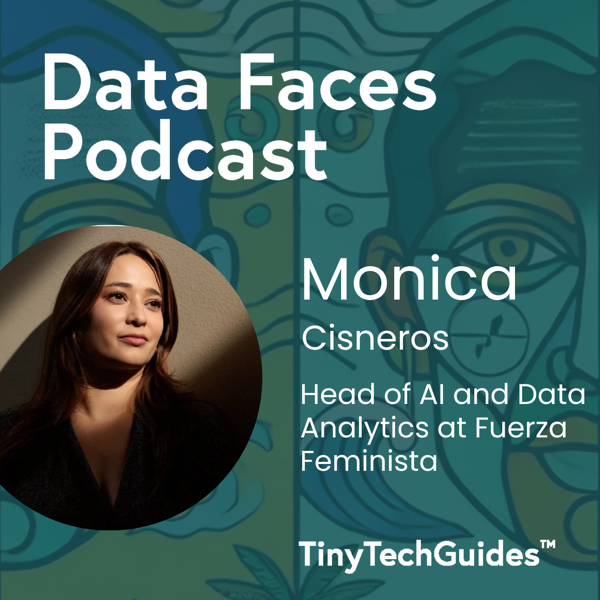
Monica Cisneros is an AI and data analytics expert focused on fairness, bias, and responsible AI. She explores how AI shapes business, ethics, and society — and why fairness in AI is far less black-and-white than it first appears.
In this episode
- Why fairness in AI isn’t black and white — the 21 mathematical definitions problem
- How AI bias impacts real-world decisions
- The leadership dilemma in defining and deploying fairness
- A thought experiment from “The Ones Who Walk Away from Omelas”
- Why understanding fairness isn’t as simple as it seems
→ Read the full article: The faces behind data: AI, ethics, and leadership with Monica Cisneros
Full transcript
David Sweenor 0:01 You Good morning, good afternoon and good evening. Welcome to the databases Podcast. I’m delighted to be joined by the magnificent Monica Cisneros. She’s a rising star in the data analytics and AI sphere, and has extensive experience supporting clients around the world. Welcome to the show, Monica,
Monica Cisneros 0:18 thank you, David. I’m super excited to be here, and I love the name databases. It’s fantastic.
David Sweenor 0:24 Thank you. Appreciate it. And so just a little bit about Monica her current role. She’s the head of AI and data analytics at where’s the Feminista. Hope I didn’t butcher that too bad. But she’s had led product marketing for AI at Alteryx, and she’s been a Solutions Consultant at Tipco, and I’ve had the good fortune to work with her at a few of these companies and and a little known fact, she’s conducted neuroscience research at Harvard prior to her career in tech. But Monica, tell us a little bit more about your current role and what you’re doing over at Forza Feminista. So
Monica Cisneros 0:59 it is a academic project by two professors, one at UTSA and another one at NMSU. And they’re looking at feminist sites in Sierra Juarez, so women who we lost to violence. And they are right now doing some research on the mothers and how, essentially, a very traumatic event, which is like losing a daughter, can lead to advocacy and leads in policy. So I’m helping out with the transcription of these interviews, with the data, sentiment analysis, text analysis of the interviews, and then hopefully we’re going to be able to have a digital exposition from these stories.
David Sweenor 1:49 That’s fantastic. And it’s a pretty, you know, it’s a, you know, I commend you for doing that. You know, we need more people like you that are doing good in the world and not just selling sod for so I’m so appreciative of you taking that real world experience you’ve had for working in software and applying it to create goodness in the world. So that’s amazing. So the reason we’re here, Monica, is you took a class and we were texting the other day. But before we talk about that class, I do want to ask you about your experience in the neuroscience realm, because I think it’s pretty unique. And you mentioned to me that you did some research at Harvard, and you once shared a funny story about the power going out. I was wondering if you could maybe share that with our listeners. Yeah,
Monica Cisneros 2:34 absolutely. So I studied biology in college, and then I was actually on route to do a PhD. I actually got into a PhD program, but I didn’t go. So one of the pieces is that I’m an animal lover, and that’s why I went into, you know, stem and I didn’t realize that Well, I was doing basic research, you know, like, you know, cell biology, genetics, et cetera, we need tissue, and we get tissue from animals. And mice are some of the most popular animal models out there. So actually, that is why I quit. But then the funny story is actually related to mice as well. So when you do genotyping of the mice, essentially, you you know, are grabbing tissue from them, and they are in these animal facilities, right? So, like, there’s 1000s of mice, add a one given room so, and as a lot of people know, in research, it takes a really long time, and it takes a lot of dedication. So one of these times, I was late in the lab, and this particular animal facility was in the basement, and was doing just, you know, doing stuff for the mice, and then out of nowhere, the light just completely goes off. Oh boy. And this is the thing that a lot of people don’t know, is that even if you have, like, a little bit of, like, reflection light all in the dark, the mice eyes actually reflect. So then, like, I turn around with my cell phone, and then, like, all the mice eyes you can, like, see, like, 1000s of mice are looking at me right now, I just completely lost it. I was so scared. And then I was like, Okay, I need to get out of here. But then to get out of there, you have to, like, take off the protective equipment and whatnot. And it was completely dark, like, call somebody. I’m like, Please somebody come and help me. After hours. It was certainly one of those times where I was like, I am never going to go to the animal facility past like 7pm I’m done, like the 10pm one. I was like, nope, not after seven anymore. And then ultimately, so that is a funny story, but because I had to, like, work with animals, and unfortunately I had to so. Say goodbye to a lot of animals. That is the reason I decided to not do my PhD, and then I just kind of fell into the tech world, and then into the AI rabbit hole too. Um, so there’s, you know, the the connections from neuroscience to AI creating, you know, the neural network. So that’s really where the connection happened. Oh,
David Sweenor 5:25 that’s amazing. Yeah, I would be scared out of my wits with the beady little eyes, and all the critters come to life in the dark. So I think you’re in a safer space now. So that’s amazing. Thanks for sharing that I want to talk about this class we were speaking about, you know, AI is such a hot topic out there. And, you know, you took a class, I believe, from Stanford on ethics, technology and public policy for practitioners tell us about it.
Monica Cisneros 5:50 Yes. And so I actually got affected by layoffs recently. And I was, you know, while I was looking for jobs, I was thinking, hey, look, this is a time for me to take some, you know, accountability in terms of, like, my learning. And I started reading again. I started to looking at courses. And then this one particularly really called for my attention. So I applied to a an AI fellowship for the government, and I started following people from those fellowships. And then this one became advertised through those same people with is essentially a course that anybody can take. You apply for the course, and then you pay, or you have, you know, a scholarship, depending on your financial status. And then, you know, you it’s cohort based. They actually have two different ones. They have a cohort, and then they have one that is self paced. Of course, I took the cohort one for me. I’m a Social Learner. I really love learning from other people. So the cohort based type of approach I absolutely loved, and I have a passion of, how can AI be used in a fairer way? How can AI be more accessible to a lot of other people and having more equity across all groups? Right? So when I saw this course, I was like, hey, this, this looks amazing. I like, let me apply for it. And I have been it wasn’t what I thought it was going to be, to be honest, I thought it the course was going to be something like, I’m going to get the answers to my questions. And it was really a course where philosophy really takes the driving seat. And philosophy, if anybody has taken any type of philosophy class, is about asking questions. So then I left with a lot more questions that I had coming
David Sweenor 7:56 in. So it was way more than the hey, we’re pro ethics. It sounds like, you know, really challenging assumptions and things like that. And there, what were some, some of the key takeaways you got from the course, besides more questions.
Monica Cisneros 8:09 I mean, for me, it was like, really, the world is very complex, and therefore our application of technology is very complex. And, you know, now we’re talking about AI, especially with generative AI, that is what brings everybody, what everybody has in, you know, in their head at the moment. So when we apply to that, and we’re thinking, this is a moment where a lot of people are actually asking those questions, right? Because it is something new. So when a lot of people ask questions like, oh, how should we implement it? What type of use cases we want to do and whatnot, what I learned from the class was that we should take a step back and actually ask more deeper questions, like, should we even apply it? What implications happen if we do apply this use case, and then it goes from the impact being positive being negative, but then there’s also a lot of neutral, a lot of gray, and that is something that I feel a lot of people don’t talk they don’t really navigate the nuance. They don’t navigate that complexity where. And we’re going to talk about a use case about this later. Right? Of you know you can make something accurate, but it might not be fair, and I do feel that that is something that we’re missing in the conversation when we’re talking about AI, just like, What does those shades of gray look like? So
David Sweenor 9:49 there’s no right or wrong answer. I mean, who’s like, Who do you whose responsibility is this? You know, I hear it talk to talk to business leaders all over the the world as. Things You have as well. And, you know, is it the data scientist or the AI engineer, machine learning engineer? Is it the business leader? Is it is it everybody? Like, who do you see, should, should own this?
Monica Cisneros 10:10 Um, you know, it’s funny that you, you asked about it in terms of, like, the class. So in the class, we actually had a lot of people come and talk to us from all walks of life. We had practitioners that took the class before. We had lecturers that came and talked to us about the theory and case studies. But then we also had a lot of like leaders, like we had, you know, VPS from Google. We had people who have created responsible practices from huge companies, we had even a prime minister come and talk to us. Oh, wow. A little side note that I actually really love about the class is that we had Chatham House rules, and I didn’t know what it was. So Chatham House Rules promotes openness and information sharing and meanings because they are essentially anonymous, so like, they’re not recorded. And then essentially everybody in the room agrees that whatever is being said cannot be attributed to a specific person, therefore allowing the people to actually speak on basically, like 30 subjects. And this, this was originated in the Royal Institute for International Affairs in London in 1927 to you know, start talking about it. So it comes from international affairs. And to answer your question, I can, so I cannot attribute it to a specific person, because, but I can tell you about what was talked about in the course. And we actually had a lot of conflicting answers to that question. We had a researcher that came and said, well, researchers, you know, academia, we’re here to post the questions, but we’re not here necessarily to create the answers. And then we had somebody from, you know, like, a really large company, and then say, like, Hey, we’re working on all this, but not everything can be solved. And we need help from, you know, NGOs, and we need help from from the government, and need help from, you know, academia. We need people, like advocates to, like, comment, help us to so, like, what I took away from that is that there’s really, again, not a real answer. Well, it’s like two takeaways. One of them is, I don’t know if you know the concept of hot potato,
David Sweenor 12:35 but like, of course, yes,
Monica Cisneros 12:37 real, like, a lot of people are doing the hot potato dance here too. Okay, um, my takeaway personally is, I think it’s a shared responsibility, um, of like, personal and institutional, of like taking accountability. Of like, what you create and do, and try to be as collaborative as possible. Call people from like, all different types of, you know, ways of life to like, come and help and actually give that um. One last thing that we could talk about is, you know, one, one of the people from the cohort itself, we have this thing called Action cycles after the after the class, where you create a project and take it on into the real world. And she was thinking about essentially creating an AI literacy coalition, because she is seeing that when we ask for help from the general public, the general public actually does not have enough maturity in their AI literacy in order to be effective in helping. So what she wants to do is create this coalition to, like, create campaigns and whatnot, to bring the general public to actually, you know when they do reporting or when they bring, for example, bugs now that you know, with AI chat bots and AI agents, every single person on earth is being exposed to AI be able to know enough to understand where problem calls from. So therefore, when it brings up to like engineers or like product people, they’re able to, you know, fix it quicker.
David Sweenor 14:16 You know, that makes, that makes a lot of sense to me. I think, you know, you and I working in tech, we’re so sort of assume, or I make the assumption a lot, that people at a certain level and and people who aren’t in tech, they’re not, there’s, there’s a lot of fear and mistrust out there, and rightfully so. We’ve seen lots of examples of AI being used for for nefarious things and causing lots of harm. But we, on the other side, we’ve seen it used for good. So it’s, it’s, I think, up to us to shape our future. But back in the class, you had mentioned a book, or something about a utopian city. What is this book, and what’s that have to do with the class? I’d love to, I was not familiar with it, so I’d love to maybe just talk about that a little bit, and how. That relates to what you’re doing in the Stanford class.
Monica Cisneros 15:03 Yeah. So the class actually is book is it called? Book ended? So, like it starts and it ends with two short stories. The first one is Ursula liquids, the ones who walk away from Omelas. And then the other short story is the ones who stay and fight at um halat. And basically there’s two sides of the spectrum within the story. So omelet. Both of them are utopias, but they approach the utopia some very different ways. I’m not going to talk too much about um palat, but I do want to touch a little bit more on omelets. So with um halat, essentially, is this authoritarian utopia where there are roles that everybody has to follow, and then there’s somebody that who is questioning that authority. And then, you know it, it breaks down into a revolution. So that is the where we end at omelet with but the one that caught my attention the most was the story about almost because I was surprised of my response to it. So, you know, you know me. I’m, you know, an optimist. I try to, like, bring energy to like your brain. I’m like always with a smile, but it has definitely been a very hard year. I lost my grandma in April, I lost my job in May, and I had somebody really close to my family be diagnosed with cancer. So, like, and my dog was sick. On top of it, she had cancer. Thankfully, she did not, but it was a lot of this year, and I had to on top of, you know, grieving my grandmother, I had to deal with, like, all the stresses, especially not having a job. And I honestly was in a really dark space. Um, so that’s just kind of to put you into context as to, like when I started reading the story. So the story is, again, almost is a utop, like utopia. Everybody’s living in complete abundance, but there is a kid who is being tortured everybody at homeless understands that that kid, that kid, needs to be tortured in order for everybody to like, live the life that they know and love without abundance. They don’t really go into the why, but it’s implicit. So, you know, the story is like, some people have the choice, and there’s a freedom to leave. And a lot like in the story, people do choose to leave homeless, right? So that as a thought experiment, especially starting an ethics class is the question about, would you stay and fight when you leave? What will you do? And my response, you know, like everybody else, was like, Yeah, let’s fight back. Let’s save the kid. Or, like, No, you know what? I would leave because I don’t want to be complicit into that. And my response was, I would probably do nothing, um, and the reason for that is, yeah, and the reason for that is because I, I’m taking accountability of like, what I would do, um, and of course, this is a metaphor of the type of life that we’re living. Um, you know, we live in a world where there’s injustice. We live in a world where, you know, there’s so many kids in hunger, so many kids are suffering. Sure, you know, like we do live in a non just world, and the reality of it is because I myself am dealing with so many issues that like I’m I’m a woman, person of color, I have a disability, I work in tech, I all the things I do are male dominated. I live in the US like I have my own problems, right? And and for me to, like, get out and be able to help somebody else, it’s like, I need my own oxygen mask, right? And I feel like I cannot actually grab that mask at the moment, because I’m dealing with all these issues, especially like grieving at the moment and grieving both the loss of my grandma and my job, sure I cannot grab that mask. And it’s like, how could I help a child where I am drowning to and it’s one of those of like, I had to really take I had to take count of where I was, like, psychologically and emotionally, and I kind of decided to sit a step back and say, You know what it’s okay for me to be and say, I will not help that child right now. Now, and for me, was basically taking what setup at a time, and by the end of the course, which was like seven weeks of creating a community, of creating a cohort, and like learning from other people that little basically like spark that had are like gone or didn’t diminish to like a, you know, pretty much darkness. It started reunite again, is it? It’s not the same flame that it was before, but it, it’s starting to, like spark back, sure, and I am feeling a little bit more hopeful now finishing the course and learning from all the people than where I was at the start of it.
David Sweenor 20:42 Well, that’s great. I mean, that’s, you know, I think there’s a lot of people in sort of the same boat you are in. And so, you know, being able to take that accountability, I guess, and say, I I’m not in a state where I can help right now. And I remember taking philosophy in college, and I didn’t take a lot of it, but, you know, they’d be like, hey, you know, stealing is wrong, right? Everybody’s like, Oh yeah, you know, you don’t want to steal. And so, okay, well, how about a loaf of bread? Yeah, that’s wrong. But what if your family was starving? You know, would you steal? Yeah, I’d probably go get the loaf of bread. And, you know, similar thing. You know, this is much more weighty what you’re talking about, but there’s all these choices. And on the surface they seem straightforward, but when you dive into them, they’re a lot more complex, as you mentioned, shades of gray. And it really does depend on the circumstances, I think each person they find find themselves in, but maybe switching to AI and a little bit about this, and we were working on a little document outline for this show. And I saw this comment about fairness, and I brought this up in one of the TinyTechGuides I wrote, you know, people like, yes, AI, we need to be fair, right? Everybody’s Pro, pro fairness, for sure, but there’s a lot of mathematical definitions of fairness. So like you talk a little bit about about that, and what you what you took from that, from from the class, yeah,
Monica Cisneros 22:08 so before I took the class, the way that I thought fairness was very black and white, right? Either or something’s not fair. But then when you’re trying to measure, when you’re trying to do algorithms, when you’re trying to, you know, measure the impact of XYZ. You know, you have to use math for that. And the second, the second lecture that we had, I think that’s the one that, like really resonated with me as a technologist, was that there are 21 so, two 121, 21 medical definitions of fairness. So, like, it’s like, not even about, like, ethical fairness, or, like, philosophical, no mathematical definitions of fairness. And we went through like, a couple, um, but there’s 21 like, that’s crazy, right? So like, you think maths is, like, black and white and like, you only have, like, one solution, and you’re great to go. It’s like, no, there’s mathematically 21 definitions of fairness. So I thought that was crazy, and I’m gonna go over a case study to actually explain, like, what this means in practice, right? So you know, because a lecture had all these definitions of fairness simultaneously. There’s a case where, like, you can improve classification parity, which means that you’re equalizing the error rates across all groups that you’re measuring. But when you increase that classification parity, so like every time that you are equalizing those errors, your calibration goes down. So calibration is that the risk score that you have everywhere is the same across all groups, right? So like the risk so the error, the least that you’re like making the errors are like equalizing all the arrows across all groups. That means that the risk score is changing, right? So, like, and if you do the opposite, it happens same, right? So, like, if you’re Hey, let me equalize the risk scores. Like, then your errors are like, all over the place. So it’s this thing called the Klein works theorem, where, essentially it, it just doesn’t work that way. Um, and there’s a real world example of this. This is a very famous case study called compass. And essentially they it when they launched it, it was great. Like, is, like, hey, like, this is, like, fair and like, we have like, 61% of correctly prediction. And essentially this algorithm, what it did was that it predicted recidivism. So like, recidivism is when somebody goes to jail and they are going to commit another crime and then they go to jail. Yeah, so, so they. We’re predicting six out of 10 times the recidivism rate of a person. But then when you broke it down by race, it was more accurate on black defendants. So why do you think is that? And then we go and break it down in terms of like, what that mathematical fairness looks like. So you have the spirit is between false positives and the false negatives. So with the false positive is when they were predicting a high score reoffending, but the person did not reoffend, right? So like, hey, this person is going to reoffend, but they, they didn’t. That’s a false positive rate. So they saw that the for the black defendants, the false positive rate was 45% and white defendants, the false positive was 23% what that means is that the black defendants were as twice as likely as white defendants to be incorrectly labeled as high risk. So in layman’s terms, is that this algorithm was saying black people are going to commit the crime more often than white people. Like, that’s essentially kind of where the false positive was going to be. And it they, it didn’t. It was just basically false. And then you go into the false negative rate, right? So, like, this means that the algorithm that predicted low risk of real funding, so the people who like are least likely to go back to jail, but the person did commit another crime, right? So like, they actually did go to jail. Boards. And for black defendants, this false negative rate was 28% and for white defendants, the false negative rate was 48% what that means is that defendants, the white defendants were that did commit another crime, were far more likely to be labeled as low risk. So like, if you’re white, you’re low risk, and then you commit another crime, whereas with like black people, or like the black defendants, it was, hey, you’re classified as higher risk, but you did not reoffend. So that is where, like, both of those concepts come in, in terms of the fairness, right, the false positives and then the FAR, sorry, the false positives and the false negatives. So really, the takeaway of this case study is that there is that inherent tension between the definitions of fairness in machine learning, right? So when decision makers are confronted in basically, you know you as a judge, right? You’re like, Okay, I’m like, peanut this algorithm. How much can I trust this algorithm to help me make a decision? And decision makers have to always, always question what the algorithm is telling them. Because although it was at surface level, like a fair algorithm at the beginning, when you look deeper, it was actually not. It was bias against black people in both those scenarios of false positives and false negatives. So with you know we can have equal you have to check what matters the most, right, either the equal error rates or an accurate calibration. And that is one thing that we don’t talk about, is the trade offs of these, like mathematical algorithms that indeed affect people’s lives.
David Sweenor 28:33 Yeah, that’s, I think that’s a tricky one, you know, and that you know think about. And there’s lots of other examples you know, beyond the recidivism, you know, we see this in medical we see it with with even images that are generated. We see it in translation services, like there’s general neutral languages out there. And if you say, what’s a doctor, and it comes out, he is a doctor, and there’s no gender in some of these languages, or she is a nurse. And, you know, there’s these things that perpetuate how, like, if people see something, and we’ve seen so much social media out there, once you see it, people tend to believe it, even if they know it’s incorrect or false. So like, you know, do you have any thoughts on what how you would approach this for the people consuming this, you know. So I think there’s responsibility of the developers and the AI engineers and things. They need to do something. But, you know, in this case of the judge, do we need to give them? There’s X percent chance, but your errors are, your error bars are, you know, 100, whatever, really wide. I’m just curious, like, what’s the solve here? Because you can’t, people just believe things they see them, even if they know that be false. There’s lots of psychology experiments to that that talk about that fact,
Monica Cisneros 29:49 yeah, and I think that the answer is as complex as the question, right? In my personal opinion, I think that there are multiple things that we can do. Um, I in my education journey, a lot of my professors really created emphasis into critical thinking. And I fear that in a lot of like the education might be missing that a little bit where you’re able to, like, poke holes and like, question the status quo in a lot of places that is not well seen because it you know they want to you to like, basically, go ahead and memo expects, right? Sure. And so I have been privileged enough to like, have an education that really values critical thinking and like questioning everything around you, it can honestly, I can make you miserable sometimes, but I do think it’s like a very good skill to have as a human just general So reading on what critical thinking is and practicing every day on critical thinking is something that I really call for anybody to do when you read a book. You know, a lot of people read books like self help books or like, Hey, I’m reading about X, Y, Z, whatever. Notice the errors. What can something be better ask questions about like is what this book telling me, or like is what this video telling me actually true. How can I see it from a different side? I think that having and asking those questions in every type of media that you consume is extremely important as a human going around, um, we and then another topic is going into AI literacy. I do think that there are a lot of nonprofits, especially in the US, that are dedicated to this um. So consuming and sharing that information for AI literacy, or like digital literacy, is very important. And then, of course, with, and I can talk about this a little bit later, um, there’s this concept called the torrent strap, um, that I can go into later. But in the case of a Jordan trap, is really questioning what the development of what I’m going to do. Does it have any, like, long term effects and me as a developer, how can I shape the society? Sometimes, especially when we’re individual contributors, we do we think that we don’t have power, but in reality, is that even if we do not have the authority from like a title, or, you know, being a manager or something like that. We still have influence and and standing and having those tough conversations with you know your manager, or your your chain of command, or you know your leadership is something very important when you go in and develop these systems. So, and that’s
David Sweenor 33:04 touring of like the Turing test. That is that where that that trap. So
Monica Cisneros 33:10 this is another thing I learned in class.
David Sweenor 33:13 You’re a fountain of knowledge right now about it, because I’m learning a lot, lot for this discussion.
Monica Cisneros 33:18 So, so, yes, actually, David, why don’t you explain to the audience, what is the Turing test, and then I can go forward with the Turing trap. Yeah, you
David Sweenor 33:29 know, I think essentially, the Turing test was just, it was, it was a test that if, if you could convincingly emulate or pretend you’re a human, you know, a robot pretending human. If you could convince a human that they were real, then, you know, that was, that was the Turing test, and that was sort of like the gold standard in, you know, computer science. For quite a while. I think it’s been beating and beaten quite especially with uh Gen AI right now. So, you know, we’re like, hey, we we passed the Turing test. Like, well, now what, you know, I spent spoke, talk about and debated for so long, yeah, and now we’re like, we’re past it. And like, oh, well, maybe that wasn’t really the the gold standard for, you know, is this an intelligent, artificial general intelligence, or whatever terms you want to use there. But I find it interesting, because we’re past it. Any of these, you know, quad or chat GPT would convince anybody that they’re human. And
Monica Cisneros 34:30 exactly so. I mean, that is essentially so that the Turing test is essentially, can you tell if it’s a human machine? That’s a test, right? The Turing trap that I learned in class was that essentially what you described right, like the gold standard of machine learning as a developer is to make it as human as possible. And basically the class and like the speaker that. Introduced the concept was like, Well, is it the golden start, the golden star? Nerd, like, do we want to do that? And I feel like this, you know, that actually bleeds in into a little bit of, like, what is the future of labor and AI, right? If we make AI more human, we’re creating more competition for humans, right? So, like, if you want AI to, like, do art and do music and do, you know, creative writing, it’s like, well, then what are humans gonna do? That is something uniquely human, right? And you get to the point where, like, you’re, you know, you might displace workers, you might displace people from their job. And there’s a lot of conversation about this, right? Some people say, like, Oh no, don’t worry about it. Like AI is not going to displace people, like people are going to get displaced by people using AI. Sure. Personally, I feel that that is completely false, because, like, there are jobs that literally are being replaced by AI, like people who are doing like, who are note takers, people who like, do like, data entry, people who basically do copy edit, like all that is being replaced by AI. Translations are getting replaced by Sure, and it might, they might not. You know, like I have my own thoughts about translation, I don’t think that you can get to the point where, you know you’re honing another language because it has cultural references, but it’s getting there, and it’s really good. And I actually use chat GPT. So I do meditations in the morning, but I like to do my meditations in Spanish, but I do my prompts in English and then the returns it back in Spanish. So, okay, like, it already works that way. So, you know, like, I do think that, like, as developers, as like people who work in, like product development for technology, we have to ask ourselves, if what we’re building, you know, beyond the bottom line, bring that, that question to senior leadership and say, Is this the best thing that we can do right now, or can we use our resources and our knowledge to build something to shape our immune society? Yeah, you know,
David Sweenor 37:24 it’s very interesting. On the say, I going to take my job, I wrote a blog on this, and, you know, AI going to take my job? Maybe, maybe it will, maybe it won’t. And, you know, the conventional wisdom was, No, hey, well, every Industrial Revolution out there, it’s created more jobs and it’s destroyed and, and, you know, there’s this, Hey, AI is gonna make everybody more productive. You know, I had this hypothesis that maybe productivity isn’t the best measure of a human. We’re not, we’re not machines. You know, that’s how that started. Is like you want machines to be more productive, but with all the advancements I’ve just seen in my career in technology, I’m more busier than ever. I don’t have this four day work week or free time that everybody says, I think what companies they’re like, Oh, well, we can do more with less. And so now they have less staff working. Essentially. That’s better for their profit, but then that just taxes the people doing the work, because you’re just hopping around from task to test to pass. So I don’t know what the the right answer is. I think there’s, I’m an optimist, so I think there’s a lot of potential for AI to improve society, but you have to be careful with it. It can make things go faster. And it’s, it’s, it’s not gonna, it doesn’t have really original thought, right? It’s just gonna pare it back. Whatever has been trained on. You know, I wrote another blog called, you know, you’re ready for generative AI mediocrity. So if you want to be mediocre, great. Let chat. GPT write your essay without thought, and that’s what you’ll get. You’re going to get an average response. And, you know, I think people that are creative and can bring their creativity and their passion to it, they can use it as an accelerator and add their own unique things on it. And you know, they’ll the high performers will be even higher performers. But people that don’t take that extra initiative, I think they’re going to be have a rude awakening, I guess. Yeah,
Monica Cisneros 39:13 definitely. So, David, I have a few questions for you.
David Sweenor 39:18 I’m scared. Yes,
Monica Cisneros 39:22 like David, you have been such a big supporter of my career, and throughout my career, I have noticed that there are three different types of supporters, right? You have your coaches, you have your mentors, and you have your sponsors. What’s your view on lifting the voices that you traditionally don’t see in leadership spaces? And how do you as a manager, help them create a voice and expand their influence? Well, Monica,
David Sweenor 39:47 first of all, thank you for the kind words. It’s been a pleasure to see you grow in your career. I feel what my only job really as a manager. Year number one is to get the people that are working with me and for me, get them to where they want to go in their career, like I want to be their biggest cheerleader. I mean, obviously there’s, there’s the work stuff, you know, we want to do what’s right for the company. But without the people, you have no company. And so if people are not happy, if they’re not in the right role, or if they’re not given opportunities to to make a difference, it’s not going to be good for the company. So I feel like that’s like one of my only job is to get people where they want to go. And obviously, you know, there’s, there’s the, you know, we want to get focused on the business outcomes, but it’s, it’s, it’s getting the people to where they want to, want to, want to go.
Monica Cisneros 40:47 Amazing. Thank you. David, another question for you, and this actually comes from the class. In class, we, we talked a lot about power, and we talked a lot about, you know, like, leadership, especially, like, you know, executives in very high positions and whatnot. And there was a concept that, you know, the the leadership thinking shifts, and it becomes thinking about the business outcomes and the bottom line, since you have extensive experience working with executives, the question is, at what point does a senior leadership experience shift in thinking? And you know, there’s a lot of people who are early in career that prioritize global and social concerns. I know, you know, I am one of them, like, you know that I work for and, you know, those entry level or, like, I see positions, they, they really, you know, go into this, but those senior leaders are thinking about business outcomes. Do you think it’s selection bias, or do you think it reflects an evolution in the mindset over time for these leaders going from, you know, I see early career to where they are at, whether they are board members like C level, VPS, etc.
David Sweenor 42:14 You know, that’s a really interesting question. Monica, and I think in my mind, maybe this is a bit cliche, but with age comes wisdom. How’s my hair? By the way? See, I don’t have any. But I think, you know, you’re right. I think when you’re earlier in career, you have sort of a project based focus, and so you can take that project, and you can do your best and put all your energy at that project or initiative, and you can, you can be an expert in it. And as you move up in your career to different levels, now you have a portfolio of projects, and you have other concerns, like, you know you want to make sure your your employees are taken care of you have to worry about budgets. You have to there’s, there’s a bunch of other things that that you need to consider. So I feel like that. I think there’s just more things that you you have to weigh as a manager. As you go, you go up your career, and then you also been, I’ll say gun shy a little bit. And what I mean by that is that I’ve tried, you know, there’s, there’s timing. Is it the right time for the organization to try to approach something and you or, Hey, I’ve tried this 20 times at five different companies. It’s not going to work here. I’m not saying we shouldn’t try again, but, you know, I think that you just get some of that experiential thing. And there’s always say, there’s and, you know, I think we’ve spoken about this, I’m always a big advocate. People have a passion to do something. Go get it, go after it. In my job as the manager, or what have you, is to, you know, help remove roadblocks and secure the resources and convince whoever needs convincing that that’s the right thing to do for the business.
Monica Cisneros 44:07 Thank you, David. I appreciate it. Do you think that you know those leaders ever go back? I mean, you know, especially with the responsible AI commitment and like sustainable commitments. Do you think that those are business decisions, or do you think that there’s a kind of boomerang effect of going back into those principles? What
David Sweenor 44:32 do you mean by that question?
Monica Cisneros 44:34 Monica, I guess, like my question is about intention. Do you, in, you know, your personal opinion, do you think that a lot of executives, and, of course, we’re making generalizations, there’s people who, like, genuinely care about the planet, right?
David Sweenor 44:50 Sure, and some that genuinely don’t,
Monica Cisneros 44:55 right, um, you know, generalization. Do you think that, you know, there’s a trend going back right now? Of like, Hey, we’re going to do our responsive AI commitments, and, you know, we’re going to put them in our website. And then there’s other ones, of like, Hey, we’re going to make a sustainable commitment, and we’re going to decrease our footprint and whatnot. Like, those commitments. We actually had a speaker that from from a, what do you call it? Like independent organization that actually, you know helps with those commitments? Um, and they said that the she does not see any change, um, coming forward in terms of, like, leaving those commitments. But I wanted to, like, get your personal opinion, since you have extensive experience working with executives of Do you think that those commitments come from a like business outcomes perspective, mostly, or do you think that there’s a shift, like a paradigm shift on corporate thinking into going back and giving back,
David Sweenor 46:04 you know, I think that, you know, it’s a super Thanks for clarifying. I think it’s a super interesting question. Let’s start with AI ethics. You know, I have this, and I think there’s probably a lot of people that would agree it’s there’s one thing to put a set of guidelines on your website. And, you know, lots of companies do that, but I think most companies, at least in the US, they don’t even pay, you just, just lip service to it. That’s sort of where they’re at. I think Europe, they’ve always been, you know, further ahead the US, you know, with GDPR and the EU AI act and things like that. So I think there’s a lot more work to do in the US sustainability, you know, I think I see the similar pattern. Europe seems to be more in tune with that than the US. I think the US is more profit motivated, but I will say I think there’s, there is hope, because I see more companies. They call their like a series, A, B, Corp. And what that means is you bake in these social and societal values into your your operating principles. And being in Vermont, you know, Ben and Jerry’s was, was a good one, you know, before that, and Gardner supply and their spear companies and whatever, there’s lots of companies or software companies now that build that into their their ethos. And I think that’s going to be a long term competitive advantage for those, for those companies, I think there’s, there’s certainly companies out there purely motive, motivated by profit, and that’s fine, but I feel like it’s like, almost like, in my mind, the farm to fork. Like it was like, Hey, let’s get our before that. Like, let’s get our food from wherever and ship it in long distances. And now you’re seeing it’s more, you know, community oriented. So you’re not shipping in your your food from, you know, halfway around the world. I think companies are realizing that the communities that’s an important part of what they want to do, and I think the smart runs will will get that right. Lovely.
Monica Cisneros 48:00 Thank you. David, alright, so you know, we’re getting close to the end, and I wanted to close out with one last question. So this question was actually posed by a VP a really large tech company, because they’re, they’re putting their own thoughts out there, and they asked a question to us about this, and basically I had to write my answer as part of an assignment. But I wanted to hear from you is in the year, it’s the year 2050, right? Um, AI has turned out to be hugely beneficial to society and generally acknowledged as such, what happened?
David Sweenor 48:46 That’s a great question. I generally can’t think beyond next week. But, you know, there’s a lot going on in AI right now, right the biases and it’s perpetuating bad things in a lot of cases. I think we’re going to fix that, and I think we’re going to put the humans back at, you know, more of a human centered design principle, I guess would be the way to call that. You know, there’s a result you mentioned, you know, sustainability earlier. You know, we got, we now we have companies opening up, reopening nuclear power plants so they can fuel their, their AI needs. I think maybe quantum computing is going to address some of that. It’s going to be much more efficient, you know, it’s not going to, you know, be such a intensive from an energy consumption. I think people will become more educated. Or the AI literacy that you you spoke about, data literacy, digital literacy, I think that’s going to be baked into the school levels. And I think, like digital watermarking technology, I think that’s going to help with that. We see the technologies there, and I think it’s going to be, you know, if you see something, gee, clearly, know if it was, was, was fake or not. I mean, there’s always going to be fraudsters out there that are going to try to game the system, but I think, you know, you’re generating an AI. Image, or whatever fine it should be, be labeled as such and going on there in terms of, you know, globally, have mixed emotions on if we’re going to have, like, you know, what role will the UN or some other potential organization play in this? I think in my mind, it comes down to the different cultures and countries have different set of more principles, and so we’ll wrestle with that. But I think hopefully, you know, I think there’s just a huge potential for Rai to be as, I guess, thought of as a is another tool, like, like the internet is, you know, the Internet was going to destroy everything when that came out. And we see this over and over again. So I think we’re going to, we’re going to settle down, we’re going to work out the kinks. And, like I said, I’m an optimist, so I think people are going to, you start to think about it as as a tool, and use it appropriately.
Monica Cisneros 51:00 Nice. Thank you. And
David Sweenor 51:01 what was, what was your answer, Monica, since you wrote a paper on it,
Monica Cisneros 51:06 it was just a couple paragraphs. So actually, we just had a speaker talk about international collaboration of agencies and AI. And actually my response was very much so influenced by by the recent lecture, and for me, was establishing a very like robust Task Force. Right? One of them is an innovation, and then the other ones oversight. So like both of them work together and against each other, right? Kind of, like, checks and balances. So, like, for innovation, they really look into sustainable technology development. They create research centers, and, like, you know, they collaborate with tech companies. And you know, they really make sure that so companies, they will still do their own thing, right? But this innovation Task Force, it would be focused only in the benefit of the people from that government. So, like, that’s an international coalition, and then every country has, like, their own task force, and it’s for the benefit of their own society, for the benefit of their own natural resources, etc, right? So, like, you’re using AI for good, essentially, and then you have the oversight, the oversight task force, which is, it monitors the adherence of ethical standards, privacy and equitable tech and access. I have a book recommendation that I’ve just started, so I don’t, I don’t know what happens next. Started is the weapons of math destruction, by Catherine O’Neill. I’m really excited to go look at it. And then another book on masking AI by Dr Joe bulinwini. I finished that one excellent book, the best book I’ve read all year. And really this is they touch both of them on this type of oversight mechanisms that can happen, whether through private or governmental institutions, and they arrest address risks like job displacement and unequal tech distribution and also misuse of technology. So that’s kind of where, like, both of those is like, hey, let’s, like, look for solutions. And then the other ones like, let’s make sure that there’s no misuse in anywhere else. And then that coalition, I went a little crazy with the name. I called it the League of Nations of technological advancement. There you go. And again, I’m, like, very inspired by Dr Joe Bullock Winnie’s book, because she has a nonprofit called the just, like, basically is from the Justice League. So algorithmic justice and just kind of, you know the parallels there. And essentially, like, they conduct peer reviews, they share privacy frameworks, and they set standards for AI, data privacy and fair tech access, and then the outcomes from that will be sustainable economic growth, environmental protections, global ethical standards with, you know, those frameworks and and the peer reviews, and then public trust and adoption. So I don’t, I do not mean to get political. But the one thing I really love about this politician in Mexico, we just we so the election had only two women. So we have our first woman president, or like President. And the one thing I really love about their how they’re doing, you know, their policy one, one thing is that every morning they go out and they give an overview to the public. And they say what they’re working on, they say what happened, and it’s just, you know, just an overview every single day of what’s going on. And I think that that is a great way to create trust with the public and create adoption of whatever, you know, initiatives they have. And with that, you know, whatever it is, within AI and those coalitions, then that communication, one on one with the people, I think could be very beneficial.
David Sweenor 55:30 Oh, amazing. Well, Monica, I think we’re about at time, but this has been a delightful conversation. I want to thank you wholeheartedly for being the first on the databases podcast was a great conversation, and I think our listeners will learn a lot from this. So I appreciate you joining me for the episode number one.
Monica Cisneros 55:56 Thank you, David, thank you for having me have a ton of fun. So Alright, have a great day. You too. Bye.
David Sweenor 56:07 John,
Monica Cisneros 56:08 that was actually really good. I like.